

You Either Die A Hero... Or You Aggregate Long Enough To Become The Villain

Follow me here… or on LinkedIn
It has been an interesting week in gaming.
First, a real thank you. I got a ton of feedback on the Xbox ads piece, and some of it was exactly the conversation I was hoping to start. The people I figured would never be talked into ads were, predictably, not talked into ads. That is fine. What surprised me, pleasantly, was how many folks who came in skeptical walked away at least tilted a little in my direction, willing to sit with the POV even if they did not fully buy it. That piece was a genuine undertaking to research, so to everyone who read it, pushed on it, or argued with me about it, thank you. It meant a lot.
And with that, I think I am finally taking a break from XBOX. There is not much left to say about them right now, and honestly the next chapter is a grim one. We are heading into Microsoft‘s annual fiscal turn, and that has come to mean layoffs, the now-ritual culling that funds the next leg of the AI chase. A lot of people in this industry, including people I know, are about to have a very hard summer. That sucks, and I do not have a clever framing for it. It just sucks.
So let me move to something with a little more life in it. Or at least more headlines.
GTA VI Has Gone Post-Marketing
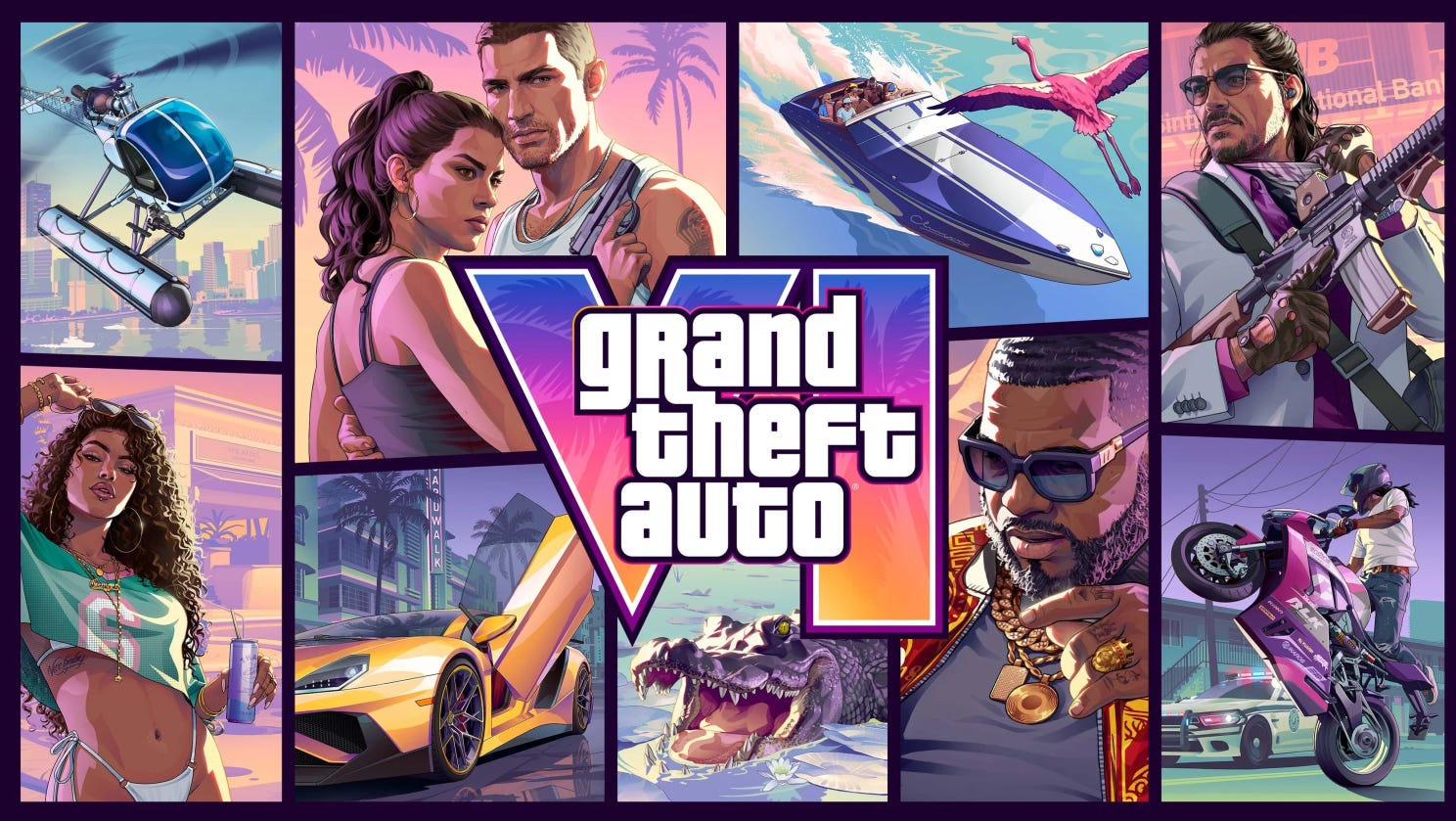
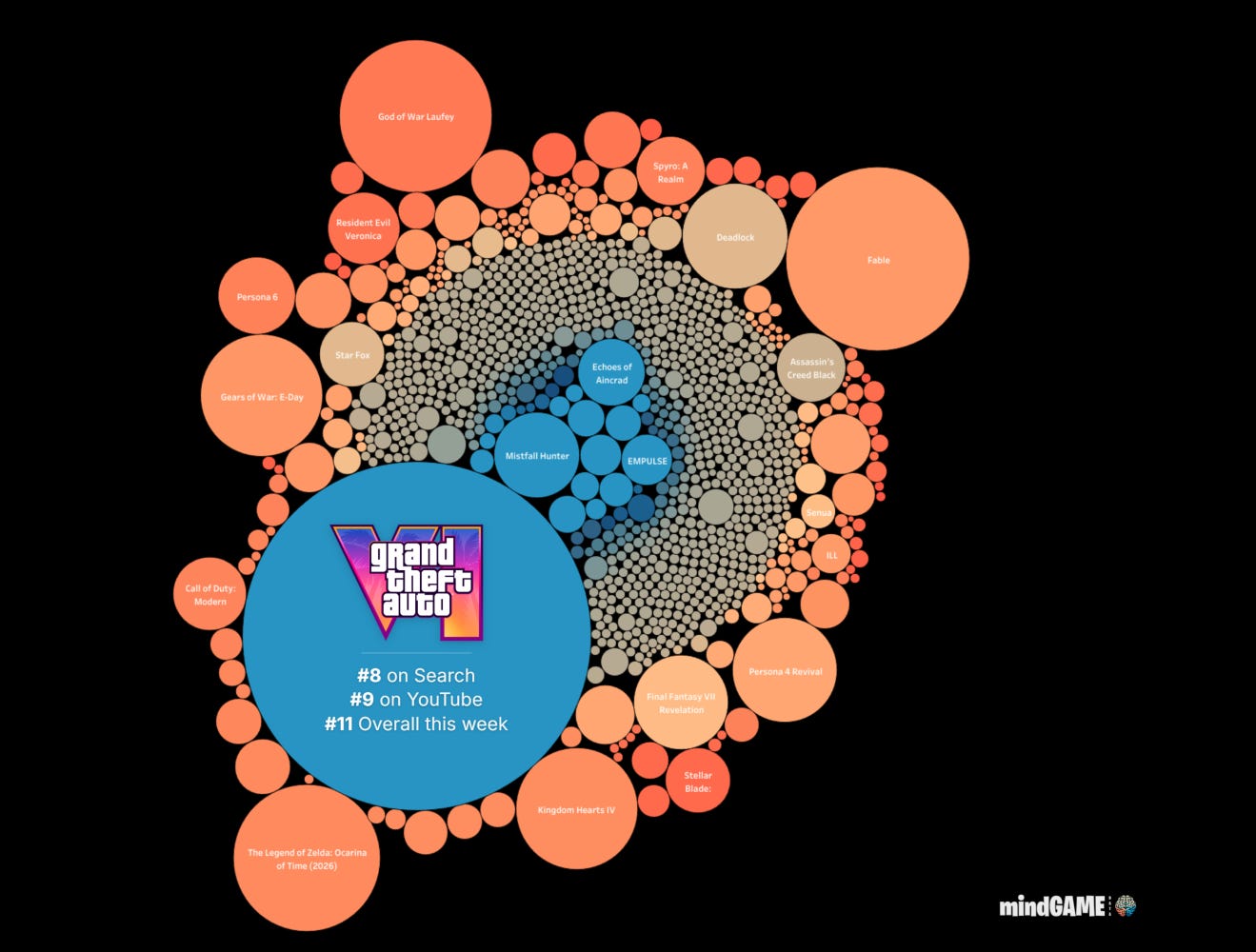
GTA VI started its GTA-ing this week. Grand Theft Auto VI rang the bell on its pre-order date and its price, and that single Instagram post... just the pre-order date and the cover art... generated nearly as much mindSHARE as God of War: Låufey did in its opening salvo at State of Play, the kickoff to this whole stretch of Summer Game Fest. Sit with that. A post. Not a trailer, not a gameplay reveal, an Instagram post about a date, pulling the kind of numbers most games never see at their actual launch.
It pushed GTA VI to number eight on Search and number nine on YouTube, which is the wild part, because cover art is not a video asset. There is nothing to watch. The Internet just took a static image and spun up an entire ecosystem of fan-theory videos around it anyway, enough to rank GTA VI number eleven across every game we tracked all week, launches included. The GTA cottage industry is nothing to scoff at. These folks make content out of nothing and turn it into something. They have already tracked down the apparent real-world inspiration for the cover-art woman, a Venezuelan DJ and model named Gabriela Chiquin, off a green-top Instagram post she put up back in 2024. Rockstar has said nothing, which, after the Lindsay Lohan likeness suit over GTA V, is exactly what you would expect them to say.
Here is my actual take, and I know the pushback before it lands. Someone is going to say Rockstar spends a fortune on marketing, and yes, historically, Grand Theft Auto has spent enormous money marketing its games. But GTA VI, so far, has spent almost nothing on what looks like nothing. Two trailers that broke the Internet. One Instagram post about a pre-order date that nearly broke it again. And now a price, eighty dollars standard, a hundred for the Ultimate Edition. That is the whole campaign to date, and every beat of it has generated more interest than most finished games manage on their best day.
GTA VI has gone post-marketing. It is not buying attention, it is not paying anyone, it is barely doing anything. What you are watching is the most successful earned-media run I have ever seen in this industry, because the game itself has become content so engaging that the Internet runs the campaign for free. They will absolutely spend real money to widen the net eventually, probably in the fall, lined up with the NFL season if I had to bet, maybe another trailer if the rumors hold. I am dubious it comes at the World Cup, but we will see. For now, GTA is the shadow game that let everyone else have their summer moment and is now drifting back in to block out the sun.
Which, funny enough, is roughly how my six-year-old has been playing Batman this week.
A LEGO Batman Detour
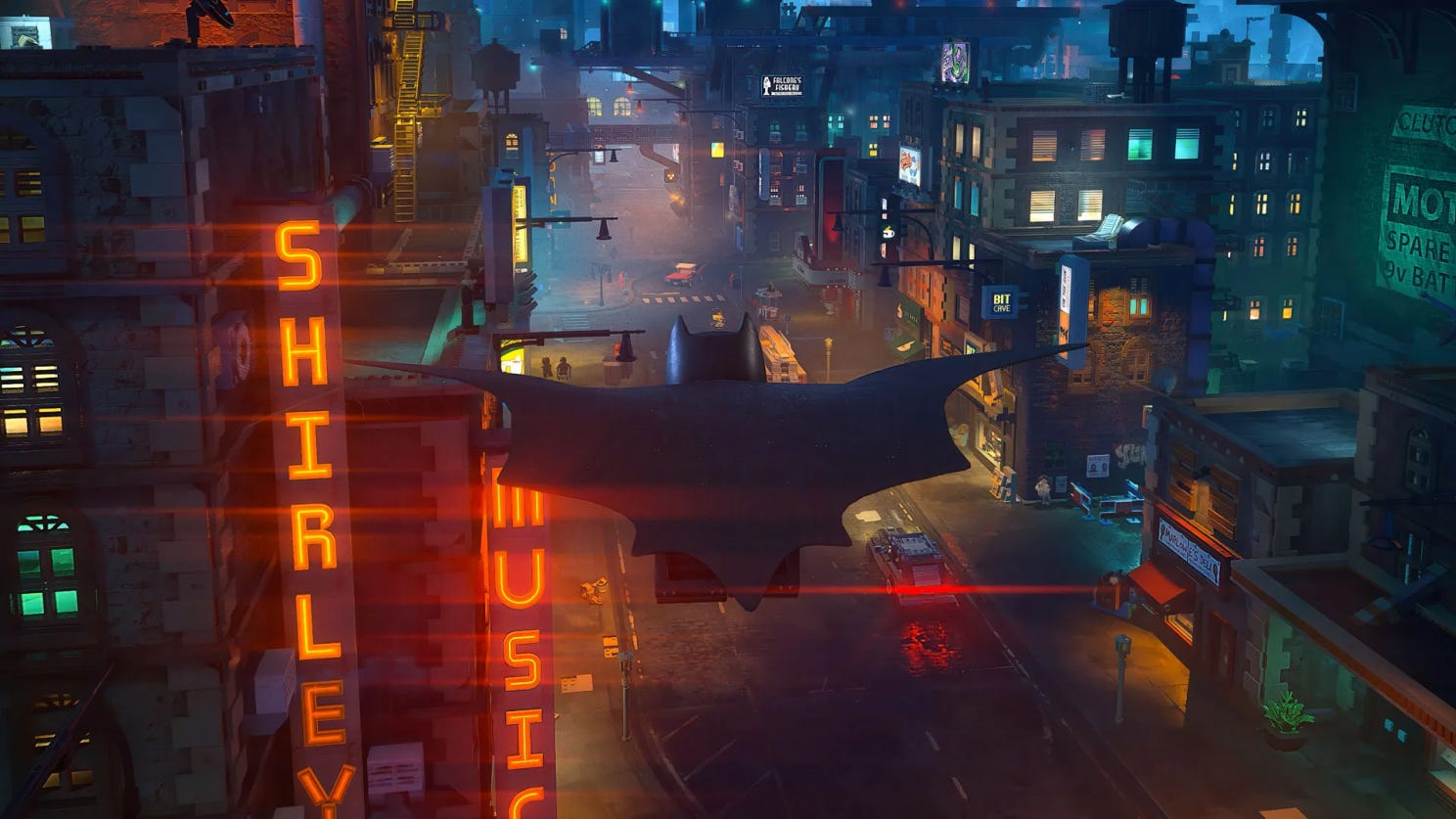
Come with me on a quick detour, because this is how I get to the company I actually want to talk about.
I am still deep in LEGO Batman with my son, the game I broke down a few weeks back as an Arkham game for kids. We are further in now, somewhere in the stretch clearly inspired by the Christopher Nolan films, the Dark Knight part of the universe. And my kid, bless him, has decided the Batmobile is less a crime-fighting vehicle than a battering ram, plowing through every pedestrian and lamppost in LEGO Gotham, reducing the whole city to loose bricks. He is, in other words, playing the most wholesome Batman game ever made exactly like Grand Theft Auto. Good co-op partner. Questionable hero.
But playing through that Nolan stretch with him shook something loose, because Batman is a story full of shadows, and the best line that whole saga ever produced has been rattling around my head all week.
“You either die a hero, or you live long enough to see yourself become the villain.”
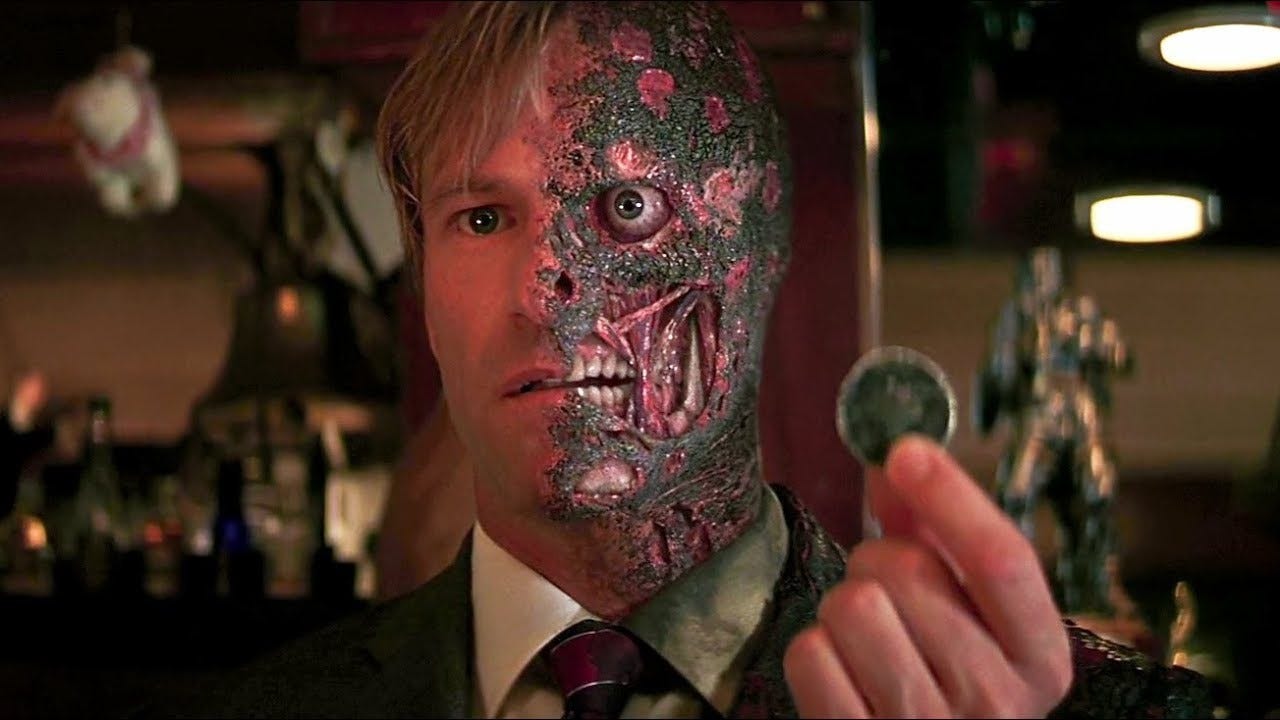
Harvey Dent says it right before he becomes Two-Face and proves his own point. And the reason it has been stuck in my head is the other big company in the news this week.
Earlier this summer, when the antitrust stuff around Valve started surfacing, I clocked it as interesting and moved on. Then Bloomberg ran a full feature on Valve that, if you have not read it, is a genuine must-read, and I will be leaning on it throughout this piece. A few weeks later, the Steam Machine pre-order and price landed, and I will cop to being part of the commentary class that mocked the thing. But man, has the Internet turned on it. And it all kept reframing itself in the back of my mind through that Harvey Dent line.
Has Gabe lived long enough to become the villain? Has Steam? Because there is a real argument that Valve is becoming the villain of gaming, and I think that is a hypothesis worth digging into.
So let’s get into it.
Valve Was The Best Thing That Ever Happened To PC Gaming
Before I get to where Valve is now, I want to spend real time on where it came from, because the back half of this piece does not work unless you understand the front half. You cannot tell the villain story without first telling the hero story. And the hero story is real. I lived it.
Here is the thesis, and I am not inflating it to set up a fall. In the late 1990s and early 2000s, PC gaming was fragmented, piracy-riddled, a pain to patch, and genuinely at risk of losing a generation to consoles. Valve is a big part of why it did not. The company everyone is mocking this week for a thousand-dollar box is the same one that, twenty years ago, quietly saved the platform it now rules.
A Harvard Dropout, A Microsoft Fortune, And A Grudge Against The Middleman
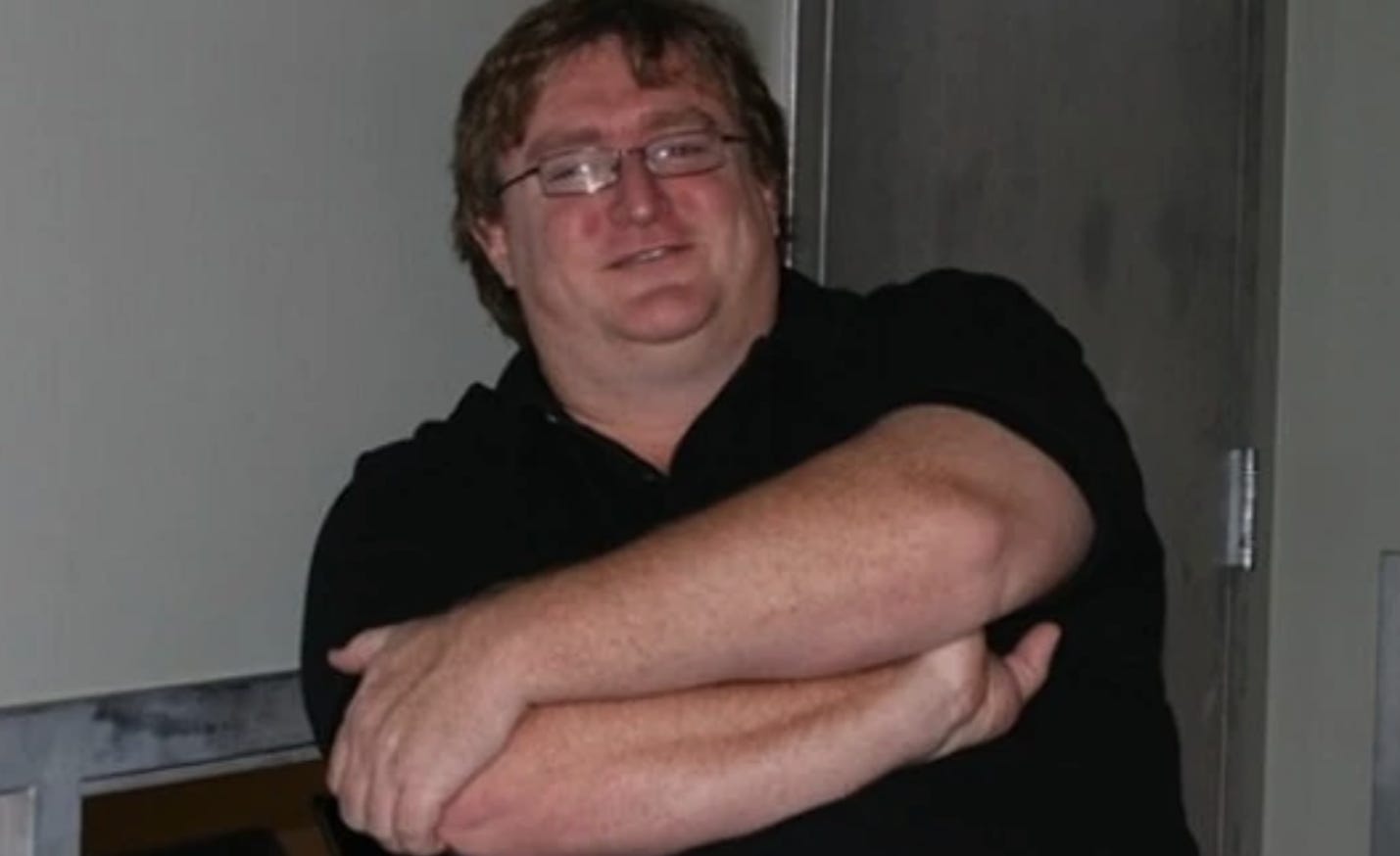
The origin reads like Valve corporation designed it to be likable. Gabe Newell was a Harvard kid who figured he would be a doctor, fell into programming as the thing he did when he should have been studying, then went to visit his brother at Microsoft and basically never left. The way he tells it, the company’s most infamous executive made the call for him:
“I was visiting my brother and I thought he and I were going to just hang out... Steve Ballmer got mad because I was distracting Dan from doing his job and said, ‘If you’re going to be hanging out here, why don’t you do something useful?’ So I said, ‘Fine, I’ll do a little work.’ And decided I’d take the quarter off and just work at Microsoft. But I kept saying, I have to go back and finish my degree. And 13 years later, I still had to go back and finish my degree.” — Gabe Newell, 2025 interview
Pause on that, because the irony is delicious. Steve Ballmer is, by my reckoning and plenty of others’, one of the worst CEOs of all time. Ben Thompson more or less put him on the Mount Rushmore of bad tech CEOs, and if there were a Hall of Fame for shareholder value destroyed, Ballmer would have his own wing. I buy that completely. And yet the guy who fumbled mobile, missed search, and sat on Microsoft’s stock for a decade is the same guy whose offhand “go do something useful” accidentally launched the most important figure in PC gaming. History has a sense of humor.
What actually pulled Newell out of Microsoft was a single realization, and it is the seed of everything Valve became. Watching id Software ship Doom directly to players, outside the entire retail apparatus, he saw the old model was about to break:
“There was this whole phenomenon where it was outdistributing Microsoft with Doom... they had a completely alternate model of how to reach customers. The way that Microsoft thinks about these things in terms of distribution and sales force and resellers was missing the opportunity represented by the advent of networking.” — Gabe Newell, 2025 interview
That is the founding insight, right there. Distribution was the opportunity, and the middleman was the thing in the way. Years later he put it even more bluntly, that retail was not the goal but an impediment, “somebody who sits between you and the customer.” Hold onto that sentence, because it is going to come back around. The man who built his company on killing the middleman runs the company now accused of being the most powerful middleman in gaming.
We will get there. For now, just know that in 1996 Newell left Microsoft a millionaire, teamed up with fellow Microsoft veteran Mike Harrington, and set up Valve in Kirkland, Washington, a few miles down the road from Redmond. They had no idea if they could even make a game.
They Were “Pretty Sure We Were Gonna Fail”
Half-Life, in 1998, was the unlikeliest of triumphs. Newell is refreshingly honest about how little they expected from it:
“With ‘Half-Life,’ we were pretty sure we were gonna fail. And then ‘Half-Life’ was successful. It was like a lot more successful than we had any reason to expect. And now we had to follow it up.” — Gabe Newell, Half-Life 2 documentary
Successful undersells it. The game was a masterpiece, a shooter that fused real narrative with real gameplay and made everything around it look clumsy. But the more telling move, the one that shows you who Valve would become, was what they did next. They gave the tools away. Valve released the Half-Life development kit for free, let players build on top of it, and out of that ecosystem came Counter-Strike, Team Fortress, Day of Defeat, a whole generation of games made by the community itself. Then Valve did the smart thing and hired the best of them, turning a Counter-Strike mod into a franchise that still prints money today.
That is the first time you see the real Valve. The company did not just make games. It built the place where games happened and let everyone else do the building. For a certain kind of millennial, and I count myself here, this was the Macintosh-pirate-flag story. Not two kids in a garage, but a renegade crew breaking away from the corporate mothership to build the thing that mothership never would. Steve Jobs once flew a literal Jolly Roger over the Mac building because it was better to be a pirate than join the navy, and Newell, a Microsoft insider who left to build the anti-Microsoft a few miles down the road, was running the same play. He became Lord GabeN, the gamer who happened to run a company, the anti-corporate folk hero in an industry that trusts no one. And the affection was earned. That part matters for everything after.
Valve Almost Died, And A Publisher Nearly Killed It
Now for the part most people do not know, and it is the most important beat in this whole section, because of what it sets up. Right as Valve was building Steam and finishing Half-Life 2, the company nearly went bankrupt. The villain was a publisher.
Vivendi, through its Sierra subsidiary, held the retail rights to Valve’s games, and had quietly started licensing Counter-Strike out to cyber cafes across Asia, which Valve argued fell well outside the deal. So Valve filed a narrow suit, just to get a judge to read the contract language and settle the question. The negotiations had already been ugly, and the lawsuit, in COO Scott Lynch’s telling, was the match on the gasoline. Vivendi went to war, and it went straight for the people. As Valve COO Scott Lynch later recalled the threat from Vivendi's side:
“We’re going to put Valve out of business, and we’re gonna bankrupt the two of you.” — Scott Lynch, COO Valve, via PC Gamer, November 2024
The counterclaims that followed were existential, and they were sweeping. General counsel Karl Quackenbush watched a small contract dispute mutate into a takeover attempt:
“Here comes this big stack of counterclaims... everything from canceling the 2001 agreement to obtaining ownership of all the Half-Life IP to keeping us from doing Steam.” — Karl Quackenbush, Valve general counsel, via GameSpot, November 2024
Read that last clause again. Keeping us from doing Steam. Vivendi understood what Steam could become and tried to strangle it in the crib, alongside a play to seize Half-Life outright and name Newell, Lynch, and their wives personally as defendants, with process servers sent to their homes at night. None of it was really a legal strategy. It was a financial siege, and Newell named it for exactly what it was:
“This was really about an assertion of power... they were just trying to crank up our legal costs as another way of draining the company.” — Gabe Newell, via Game Developer, November 2024
It nearly worked. Newell burned through his liquid assets and started weighing whether to put his house on the market just to keep the lights on. He describes the whole near-death stretch with this almost alien calm, the same calm he brings to a literal shark, recounting a dive in South Africa where “a shark tried to bite me a couple of times, and the people around me were way more freaked out than I was.” He even owns the cost of being wired that way, admitting you can “wreck a bunch of other people’s lives being in the neighborhood of your risk indifference.”

Then came the fluke that saved everything. During discovery, Vivendi buried Valve under millions of pages of documents, much of it in Korean, betting the volume and the language barrier would break them. Instead, a summer intern named Andrew, a native Korean speaker who happened to be majoring in Korean language studies, found the needle in the haystack: an internal email in which one Vivendi executive confirmed to another that he had destroyed documents related to the Valve case, as directed. Judge Zilly handed Valve the facts of the case outright. The settlement returned Valve’s IP, ended the cyber cafe deal, and gave Steam its runway.
Sit with that irony, because it is the engine of this entire piece. Valve nearly died because a giant, litigious publisher tried to crush a smaller player with overwhelming legal firepower and a naked assertion of power. The company survived, built Steam on the freedom it won, and is now the giant being sued by smaller developers who say it is crushing them. The Wolfire of 2002 became the Goliath of 2026. Nobody planned that. It just happened, the way these things tend to.
Steam Was Hated Before It Was Beloved
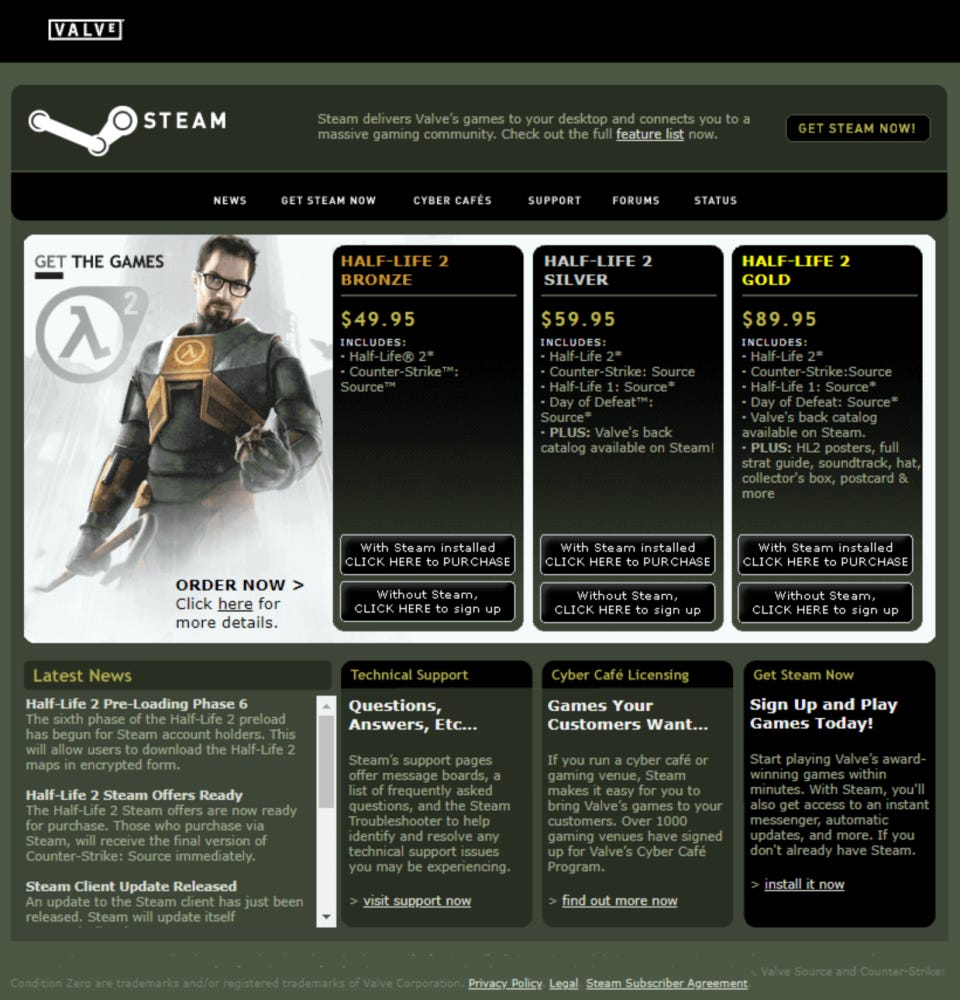
People forget that Steam, the thing now synonymous with PC gaming, launched in 2003 to a chorus of complaints. It was not a storefront. It was a patch-delivery tool built to keep Counter-Strike updated and cheat-free. Early Steam was buggy, shipped with DRM and online-authentication that loyalists resented, and when Valve made it mandatory for Half-Life 2 in 2004, the backlash got loud. Everyone bought Half-Life 2. Everyone tried to log in at once. And, as Kotaku put it later, “Steam fell over.”
That forced install and launch-day collapse left a mark that lingered for years. Players wrote furious letters. PC Gamer ran a now-legendary batch of reader mail in 2005, one of which summed up the whole mood as “What a load of crap!” The first major DRM platform meant your games were tied to an account, no resale, no escape, and a loud slice of the community swore it would ruin PC gaming. Kotaku’s verdict on those doomsayers, looking back from a decade on, is the one I am keeping:
“You can still find, if you look, forum posts from the time complaining about Steam, complaining about Valve, talking about how the service would ruin PC gaming, how it had ruined Half-Life. In hindsight, these prophets of doom turned out to be so wrong it’s adorable.” — Kotaku, September 2013
But sit with it for a second, because it matters for the back half. The most beloved distribution platform in gaming history began life as the thing players felt coerced into. The hero stood accused, at the very start, of exactly the kind of coercion the antitrust suit alleges now. What changed is that Steam got good, fast, and the resentment evaporated under the sheer weight of how much better it made everything.
“Piracy Is A Service Problem,” And The Trap That Came With Solving It
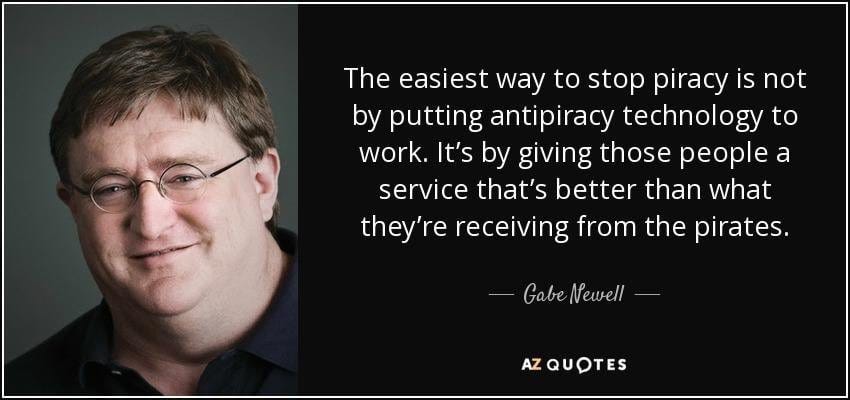
To understand why the worship was earned, you have to remember how Newell talked when he still talked freely. His worldview was genuinely different from everyone else’s in the industry, and he said it plainly. His most famous line, from a 2011 talk at Cambridge, reframed the entire piracy debate:
“We think there is a fundamental misconception about piracy. Piracy is almost always a service problem and not a pricing problem. If a pirate offers a product anywhere in the world, 24/7, purchasable from the convenience of your personal computer, and the legal provider says the product is region-locked, will come to your country three months after the US release, and can only be purchased at a brick-and-mortar store, then the pirate’s service is more valuable.” — Gabe Newell, via The Escapist, November 2011
His proof was Russia. The industry had written it off as a piracy black hole not worth localizing for. Valve launched there day-and-date, in Russian, and watched the country become one of its biggest markets in Europe. Pirates, in Newell’s framing, were just offering a better service than the legitimate companies, and the fix was to out-serve them, not to lock everything down.
I cannot read that quote without thinking about Spotify. Music piracy did not die because the labels finally won the lawsuits. It died because Spotify made the legal option so frictionless that stealing music stopped being worth the effort. Everything, in one place, instantly, for a monthly fee. That is the day a whole generation, me included, quietly stopped pirating for good. Steam did the same thing for PC games most of a decade earlier. Make access so easy that piracy becomes the dumber choice, and you win the customer permanently.
Here is the thing, though, and it is the whole trap. Solving the service problem is exactly what turned Valve from a game company into the inescapable layer underneath PC gaming. And the way Valve’s peers played it tells you why that was a choice, not a fate, because Valve did not save PC gaming alone. Three companies held the platform together through the 2000s and 2010s. Blizzard was a pillar, with World of Warcraft launching in 2004 and becoming its own reason to own a gaming PC, a gravity well that held millions of us on the platform through the years when the console pull was strongest. Riot was the third leg, with League of Legends arriving in 2009 and doing the same job for the next cohort, a free-to-play juggernaut that made the PC the home of competitive online gaming in a way consoles never answered.
Here is the part that matters... Blizzard Entertainment built Battle.net and Riot Games built its own client, and both of them kept those storefronts as walled gardens for their own games. The Riot client serves League, Valorant, and the rest of Riot’s catalog, full stop. Battle.net is essentially a Blizzard club, Overwatch, Diablo, Hearthstone, World of Warcraft, with only a handful of corporate-sibling exceptions ever let through the gate. Blizzard could have become the third-party marketplace. It launched Battle.net years before Steam existed and deliberately declined to sell anyone else’s games, guarding its quality bar instead. The road not taken was right there, and Blizzard refused to pave it.
Valve paved it. And it used the same wedge the other two did to get going, killer first-party games, because you do not pull tens of millions of accounts onto a storefront with no reason to be there. So Valve led with Half-Life, then Counter-Strike, then bought Dota and turned it into Dota 2, then Team Fortress. The first-party catalog drove the initial install base. But then Valve did the thing Blizzard and Riot never did. It threw the doors open and let everyone else sell through it too. By 2005 third-party publishers were on Steam, and the studio that made games quietly became the platform every other studio had to be sold through.
So sit with the shape of it, because this is the seed of the entire piece. The frictionless access that made Valve beloved, everything in one place, finally a reason not to pirate, is the identical thing that made it the middleman nobody can route around. Newell set out to kill the gatekeeper between developers and players, and he built the most powerful gatekeeper PC gaming has ever had. And that promise he made to partners back in 2011, that they could “trust us not to take advantage of the relationship that we have with them,” is precisely what the developers in the antitrust suit say Valve eventually broke.
The Company That Designed Itself To Have No Bosses
One last piece of the hero era, because it explains both why people loved Valve and why the company is so impossible to pin down now. In 2012, Valve’s internal handbook leaked, and it was unlike anything else in corporate America. The whole pitch was radical flatness:
“Hierarchy is great for maintaining predictability and repeatability. But when you’re an entertainment company that’s spent the last decade going out of its way to recruit the most intelligent, innovative, talented people on Earth, telling them to sit at a desk and do what they’re told obliterates 99 percent of their value. That’s why Valve is flat. We don’t have any management, and nobody ‘reports to’ anybody else. We do have a founder/president, but even he isn’t your manager.” — Valve Handbook for New Employees, 2012
Desks had wheels so employees could roll themselves onto whatever project they found most valuable. Teams formed and dissolved as “cabals.” Game credits ran alphabetically, no titles. The handbook even joked that if Gabe told you to put a custom knife design into Counter-Strike, you could just say no. It read like a utopia, and for a long stretch it worked like one, producing Half-Life, Portal, Left 4 Dead, Dota, and the most profitable-per-employee operation in all of tech.
Read it closely, though, and you find the seed of the defense Valve leans on today:
“Valve is not averse to all organizational structure. But problems show up when hierarchy or codified divisions of labor either haven’t been created by the group’s members or when those structures persist for long periods of time. We believe those structures inevitably begin to serve their own needs rather than those of Valve’s customers.” — Valve Handbook for New Employees, 2012
The handbook even lists, in plain text, the things Valve is bad at, and near the top sits “disseminating information internally.” Put it together and Valve declared, on the record and a decade before the antitrust suit, that nobody there fully knows what the other hand is doing. That was sold as a feature. We will see it again, in a courtroom, repurposed as a shield.
I Left PC Gaming, And Steam Is Why I Came Back
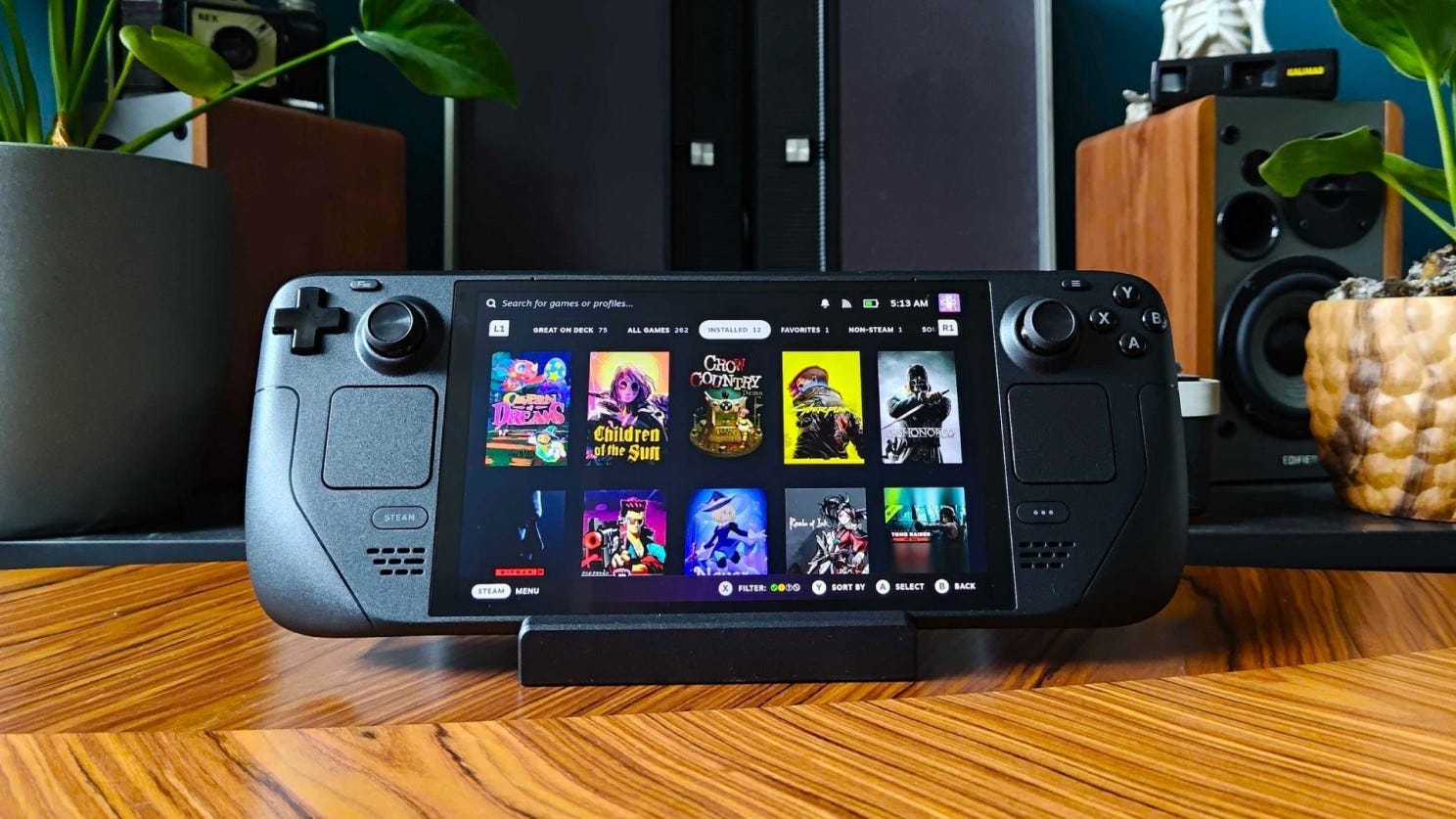
Let me get personal, because my own arc mirrors the one I am describing. I came up a PC gamer, and I was an enormous Steam guy early. The sales, the library that traveled with you, the sense that this scrappy company was building something for us and not for shareholders, all of it landed exactly the way Valve intended. I bought in, literally and emotionally.
Then I drifted to console for a long stretch. What pulled me back was, of all things, Xbox, once Microsoft decided to put its games on every device and the whole walled-garden logic of owning a box fell apart. I had already pulled the trigger and built my own tower around 2017, back in my Twitch days, which fit exactly where my life was at the time. These days I have migrated from that build to a prebuilt gaming laptop, and I am thrilled with it. I also have a Steam Deck, which has quietly become my RPG machine, the way I get to sink into the big single-player stuff without monopolizing the living room TV my kids have firmly claimed. So I am not writing this from the outside. I am writing it as someone who plays nearly everything through Steam right now, today.
And that is the point. If I am playing a game on PC, I am launching it through Steam, unless it is specifically a Blizzard or a Riot title. Steam is the default, and I am one of the tens of millions for whom it is the default. The majority of PC players are on Steam, and I am one of them. That is not a complaint. That is the aggregation working exactly as designed, demand pulling in supply, year after year, more games stacking onto the one storefront because that is where the players already are.
So let me be unambiguous before this piece turns, because the turn does not work unless this part is honest. From roughly 2000 to 2020, Steam was one of the best things that ever happened to PC gaming. It was amazing for discovery. It was the reason live-service games could exist at all, the persistent connection to the customer that made constant updates possible. It flattened the world, letting me play with people on every continent without thinking twice. A huge slice of the modern industry simply would not exist without what Valve built in those two decades. None of that is revisionist, and none of it is grudging. It happened, and it was genuinely great.
Which is exactly why the turn is so interesting, and why that Harvey Dent line will not leave me alone. Because the very things that made Valve the hero of this story, the aggregation, the convenience, the protective layer over a once-scary platform, are the same things now being read as the villainy. The hero and the villain are not two different Valves. They are the same Valve, seen from two different points in the arc.
So let’s talk about the turn.
Live Long Enough, And You Become The Villain

Here is a thing that is true in 2026, fair or not. If you are rich enough, you are the villain. We are living through a moment of real, sharpened resentment toward billionaires and the platforms they own, and that sentiment does not pause to check whether the fortune was earned honestly or built on something genuinely good. Gabe Newell is worth somewhere north of four billion dollars. He lives, by his own cheerful description, on a boat, splitting his days between scuba diving and running one of the most profitable companies per employee on the planet. None of that is a crime. I will argue later that Valve earned an enormous amount of it. But earned or not, the public has already cast the verdict, and the costume fits. The folk hero is a billionaire on a yacht now, and the crowd has noticed.
That is the backdrop. The foreground is the turn itself, and the turn was not a single moment. There was no scandal, no afternoon where Newell twirled a mustache and decided to become the thing he built Valve to destroy. The heel turn is an accretion. It is a stack of small abdications laid down over a decade, and if you line them up, they all rhyme. The company that won everyone’s love by serving the people at the edges, the modders, the small developers, the players retail would not bother with, slowly stopped serving them. Not loudly. Valve simply stopped steering. And on the rare occasions it did grab the wheel, it was never for the harassed developer or the kid losing his savings. It was for whoever held power above Valve.
None of what follows is the thing that actually threatens the company. We will get to that, and it lives in a courtroom. But you cannot understand why the Harvey Dent line is suddenly everywhere without walking the exhibits first. So let’s walk.
The House Always Wins, Especially When It Built The House
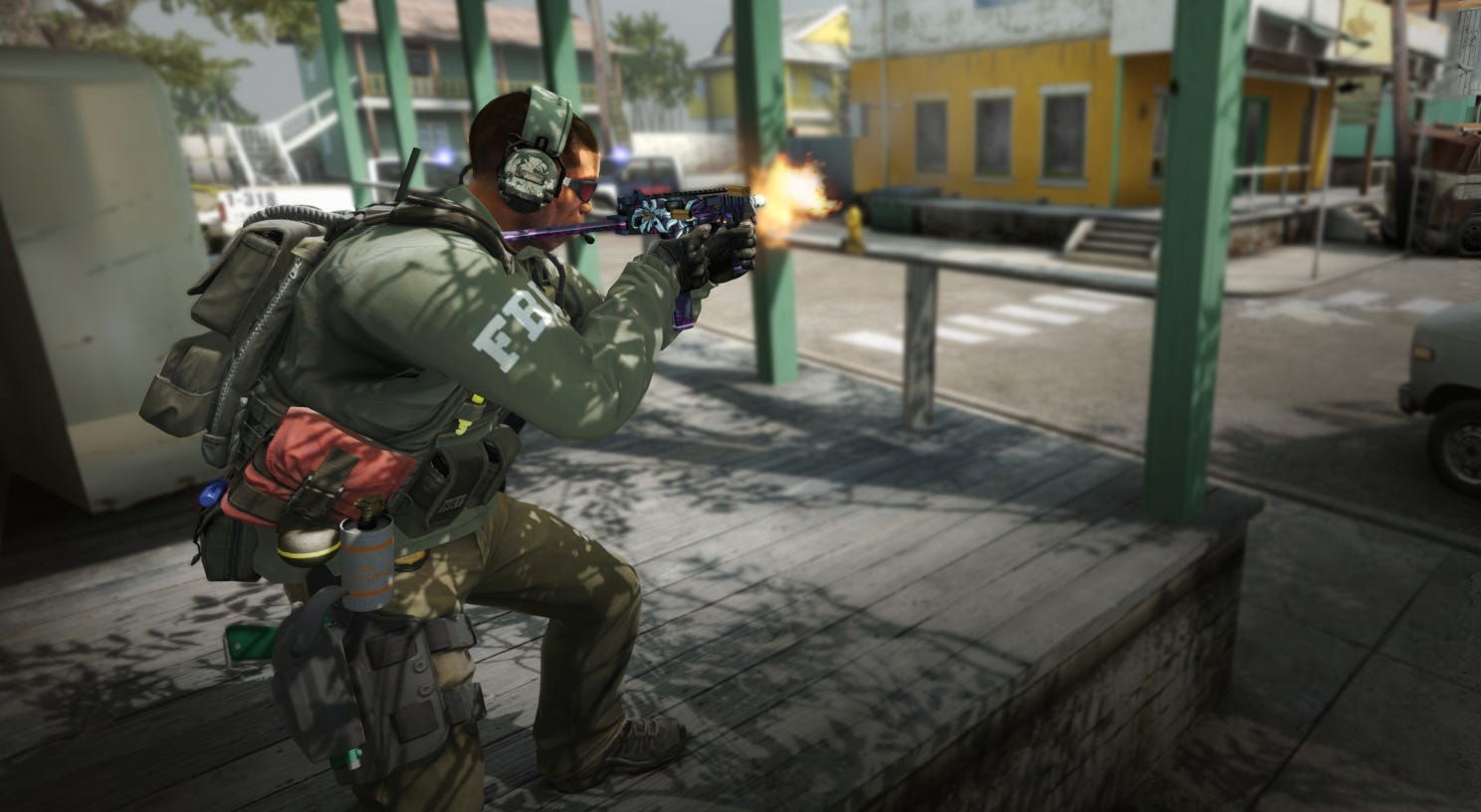
Start with the skins, because it is the oldest tell and the freshest wound at the same time.
When Valve added decorative weapon skins to Counter-Strike in 2013, it did something no major studio had done before. It let those virtual items be bought, sold, and cashed out for real money, and it built the marketplace they traded on. The pitch was a joke. In its own announcement, Valve said the skins would let players experience “all the thrills of black-market weapons trafficking without any of the hanging around in darkened warehouses getting knifed to death.” That joke aged into prophecy.
I had a front-row seat to how big this got. During my time at Twitch, Counter-Strike was consistently one of the largest games on the platform, and the data still bears that out today. In our mindGAME tools, Counter-Strike is a permanent fixture of the top ten, holding a 1.584% mindSHARE and ranking #1 in Streaming, our Twitch signal, basically every week, while sitting comfortably inside the top twenty on both Search (Google) and Video (YouTube). More than two decades after launch, the game is still a beast by every attention measure we track.
What makes it relevant here is not just the size, though, it is the shape of that audience. Pull up the country-level popularity and the map tells the story in one glance:
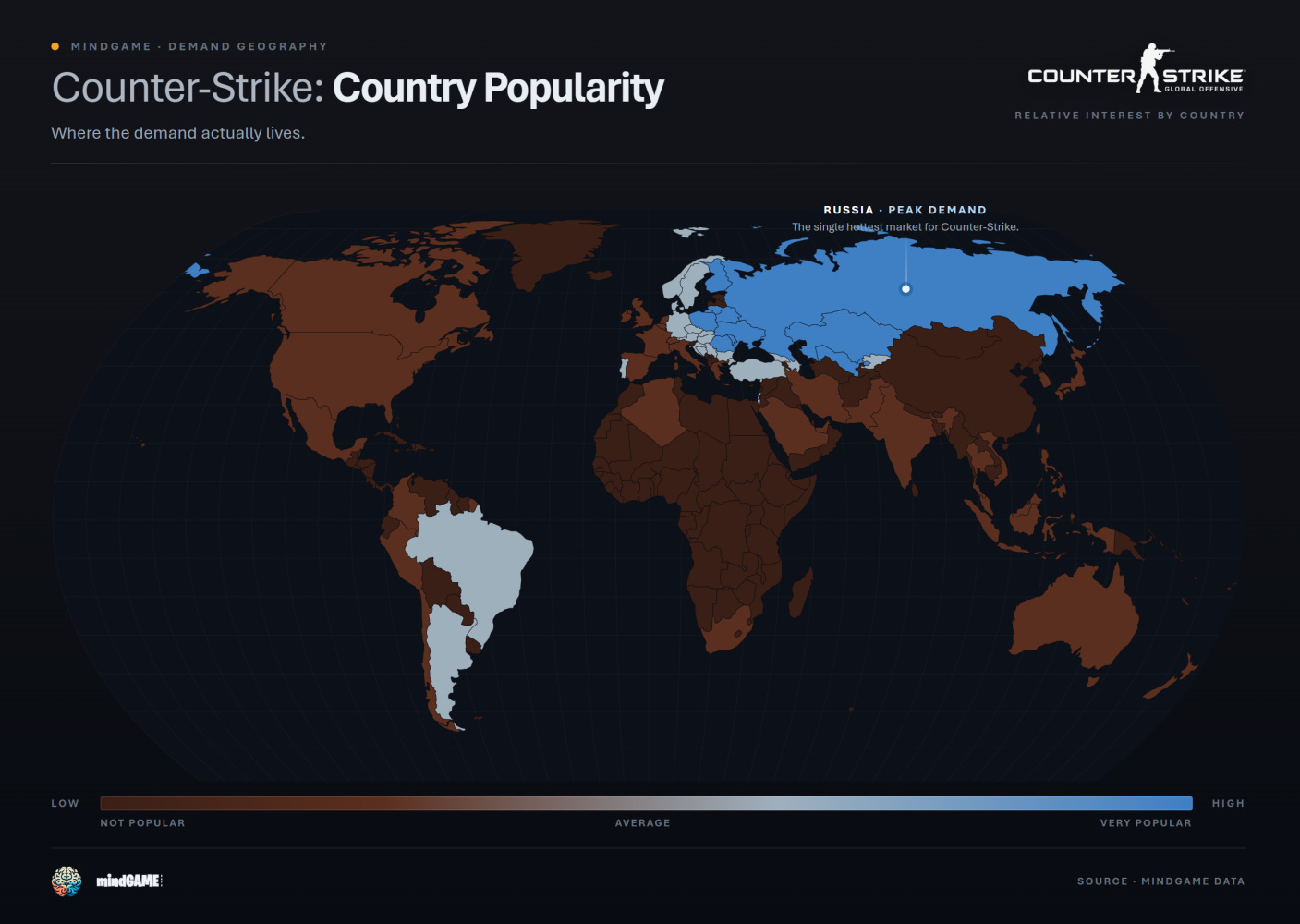
The deepest blue, our highest-intensity popularity band, sits squarely over Russia and Eastern Europe. This was never a primarily American phenomenon. Counter-Strike is a genuinely global title with its dense core in exactly the regions most US publishers never learned to serve, and that global wall of attention is the substrate the entire skins-and-betting economy grew on top of. So when I tell you the skins economy mattered, I am not reading it off someone else’s chart. I watched the eyeballs at Twitch, and I can still see them in our data now.
Did the skins make Counter-Strike as big as it became? You cannot prove a counterfactual, but they were unquestionably a massive part of it. You add gambling mechanics, you monetize those mechanics, and you hand a global creator economy a constant reason to make content about winning and losing real money. That flywheel pulled in people who were not even Counter-Strike players, drawn by the betting more than the shooting. The skins built a casino, and the numbers got big fast. Bloomberg’s Joshua Brustein and Eben Novy-Williams laid out the machine back in 2016:
“According to research firm Eilers & Krejcik Gaming, more than 3 million people wagered $2.3 billion worth of skins on the outcome of e-sports matches in 2015. This, too, has contributed to Valve’s bottom line. The gambling sites run on software built by Valve, and whenever CS:GO skins are sold, the game maker collects 15 percent of the money.” — Bloomberg, April 2016
Read that last sentence again, because it is the whole game. The gambling ran on Valve’s software, and Valve took a cut of every trade that fed it. This was not an accident of the system. It was the system. At Valve’s 2014 developer conference, employee Kyle Davis explained the strategy in language that reads very differently now:
“This is not an accident. This is by design. We see more and more e-mails from our players saying, ‘I’m not really sure what happened but I’ve been playing DotA for the last week or two, and I made $100 selling these items that I got.’ This is hugely successful for us.” — Kyle Davis, Valve, via Bloomberg, April 2016
I am not going to relitigate the full decade of skins-gambling coverage, the CSGO Lotto influencer scandal, the FTC settlement, the cease-and-desist letters, the Washington State Gambling Commission. It has been told a hundred times, and Valve mostly skated, in part because it never technically operated the gambling sites, just built the rails they ran on and collected the toll. The part that matters here is who was at the table, and how Valve compares to its peers. The Counter-Strike audience, and the betting economy bolted onto it, skews young, teenage boys and men under twenty-five. And the contrast with the two companies that held PC gaming up alongside Valve is damning. Bloomberg put it plainly:
“Other prominent game makers, including Zynga, Riot, and Activision Blizzard, have been aggressive about keeping virtual currencies separate from real ones. Valve has not: Its software enables an explicit connection between in-game goods and off-line cash.” — Bloomberg, April 2016
Now bring it current, because the oldest grievance just produced its sharpest example. On a Wednesday evening in October 2025, Valve pushed an update that shifted the exchange rates between item categories in Counter-Strike. That was the entire action. Bloomberg’s Cecilia D’Anastasio reported what happened next:
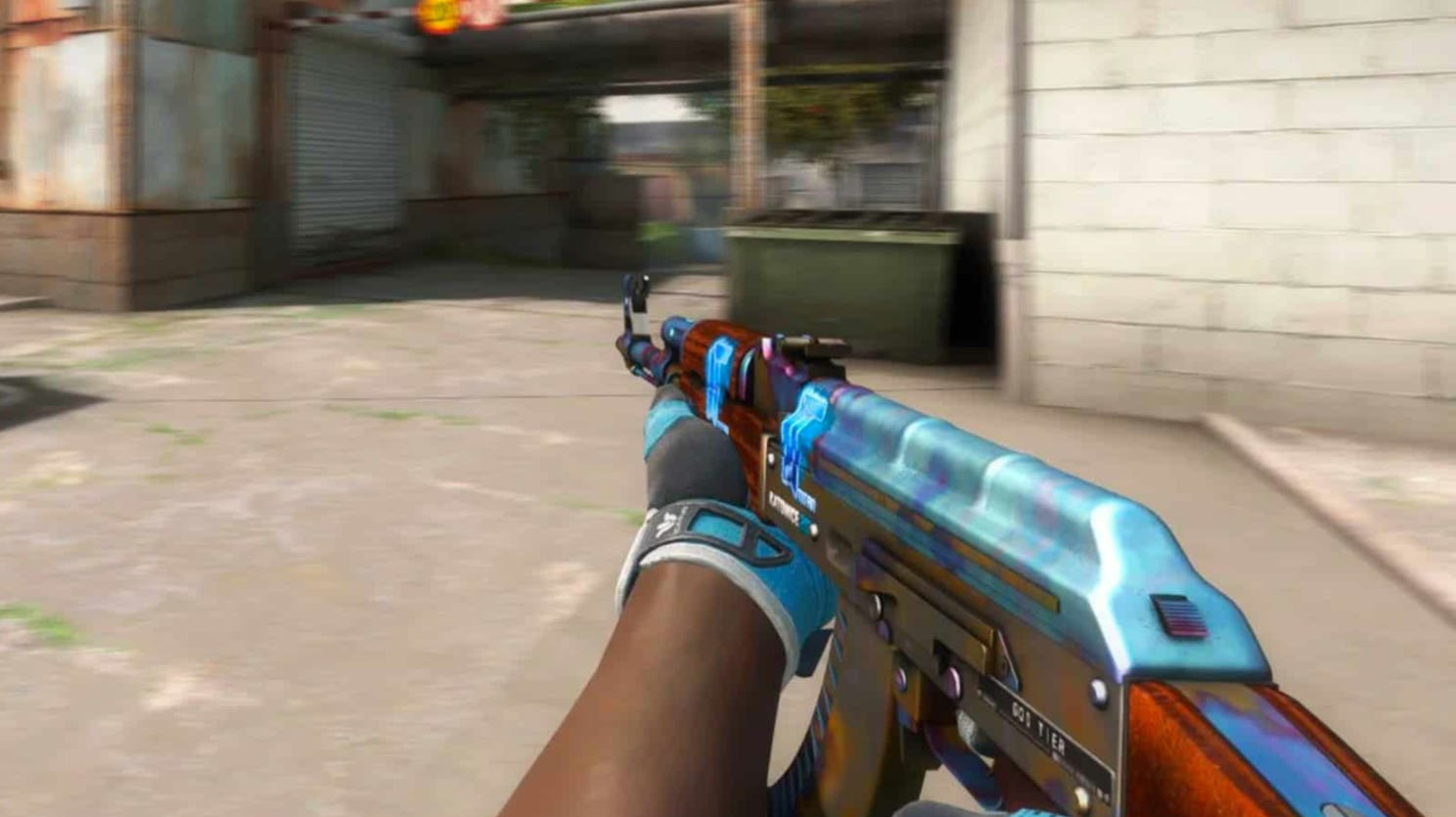
“An update from Valve shifted the exchange rate between various categories of items, such as knives and gloves. Afterward, prices plummeted, erasing roughly $3 billion in value by Friday morning.” — Bloomberg, October 2025
Three billion dollars, gone by Friday, off the back of one patch. This was not some peripheral economy, either. Months earlier, in March 2025, the same market had hit an all-time high above $4.3 billion, with investors fleeing crypto and equities and parking money in digital knives, and a single skin had sold for over a million dollars in 2024. So this was a real, multibillion-dollar speculative market full of young people treating cosmetic weapons like a brokerage account, and one of them, a twenty-year-old in London, watched $270,000 evaporate in under twenty-four hours.
Sit with the shape of that. A market that size, cut nearly in half by a single balance update from a company that insists it is barely involved. That is not malice. Newell did not wake up wanting to vaporize anyone’s savings. It is something stranger and harder to defend, godlike power over a market Valve pretends it only lightly touches, exercised with the casual shrug of a studio pushing a routine patch.
So let me ask the question the whole saga begs. Is Valve really there for the player? The company sells itself on freedom, openness, neutrality, choice, but it is also collecting a percentage on a quasi-gambling economy aimed largely at young men, which gives it a direct financial incentive to keep that economy humming for as long as it possibly can. Once you see the incentive, the hands-off posture starts to look less like principle and more like positioning. And here is the part people miss, because it is the part that ties back to the thesis of this whole piece.
The skins economy is not a weird side quest in Valve’s story. It is aggregation.
You run a micro-transaction casino, you pull in a global wall of demand, the gamblers obviously, but also a secondary ecosystem of traders moving real money through digital knives across borders with, let’s say, varying levels of scrutiny. I am not going to stand here and call it a money-laundering machine. But I am not an idiot, and neither are you. The house did not just win. The house built itself by aggregating every kind of demand it could find and kept its fifteen percent.
The Storefront That Only Steers When It’s Told To
The skins economy is Valve refusing to police a market it profits from. The store itself is the same instinct, scaled up to the whole platform.
Go back to 2018, when Valve faced a messy run of controversy over what it would and would not sell, school-shooter games, sexually explicit visual novels, the usual edge-case fights. Rather than draw lines, Valve drew a philosophy. In a blog post that has aged into the company’s entire governing ethos, it announced that almost anything goes:
“We ended up going back to one of the principles in the forefront of our minds when we started Steam... Valve shouldn’t be the ones deciding this. If you’re a player, we shouldn’t be choosing for you what content you can or can’t buy. If you’re a developer, we shouldn’t be choosing what content you’re allowed to create.” — Valve, June 2018
Everything would be allowed, the company said, “except for things that we decide are illegal, or straight up trolling.” It sounds principled. Libertarian, even, in the flattering sense, a neutral platform that trusts its users to sort it out. In practice, “we shouldn’t be the ones deciding” is a posture that produces two very different outcomes depending on who is doing the asking.
When the asking comes from below, from the developers and players actually on the platform, the answer is almost always no, we will not act. The clearest version of this is the flood. Nearly 19,000 games shipped on Steam in 2024, the most ever, and by SteamDB’s accounting roughly 80 percent of them were “limited,” barely played, barely bought, the asset-flips and shovelware that a hands-off store inevitably fills with. The neutrality that sounds like freedom in a blog post looks like an unnavigable junk heap on the actual store page.
It gets worse when the thing going unmoderated is not slop but abuse. A February 2026 Guardian investigation documented developers, many of them trans, describing Steam’s moderation as a place where bigotry sails through and “anti-woke” review campaigns tank a game’s visibility, since reviews directly drive a title’s sales. One developer summed up the lived reality of the platform:
“Valve’s refusal to moderate any of this is making Steam reviews and forums the battleground for some kind of culture war, and is making them unsafe for marginalised people and regular gamers trying to simply enjoy the game they bought.” — Émi Lefèvre, Studio Plane Toast, via The Guardian, February 2026
Valve’s own support responses, quoted in that piece, are the philosophy in action. The company told one harassed developer it does not “moderate reviews based on accuracy,” and that pulling abusive reviews could amount to “censorship.” A platform reaching almost 42 million concurrent players, fielding hundreds of thousands of support tickets a week, reportedly run by fewer than 400 employees, has decided that the safest thing it can possibly do is nothing. Neutrality, conveniently, is also the cheapest option.
Now watch the same company move at lightning speed, in the one situation where the power is coming from above. In July 2025, after a campaign by an Australian anti-porn group, Visa, Mastercard, and other payment processors pressured storefronts to drop adult content. Steam did not deliberate. It did not appeal to principle. The Guardian reported that Steam removed an estimated hundreds of titles within days, the platform that “shouldn’t be the ones deciding” deciding instantly, because the credit card companies told it to.
There is the contradiction, clean as anything. Valve will not lift a finger to remove documented hate aimed at its own developers, citing free expression. But it will purge hundreds of games overnight the moment Visa and Mastercard raise an eyebrow. The neutrality is real in only one direction. It bends to power above Valve, never to the people below it.
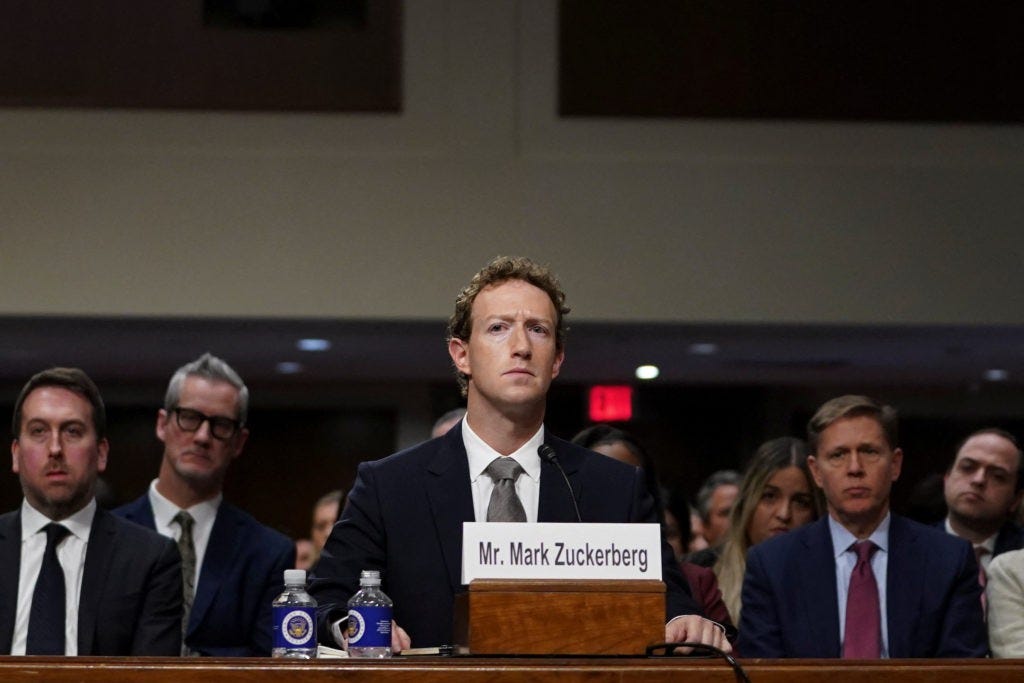
And if that ethos sounds familiar, it should, because Valve was early to it. The “we shouldn’t be the ones deciding” posture is now the default crouch of half of Silicon Valley, but Steam struck it in 2018, years before it became fashionable. Watch Mark Zuckerberg in January 2025, announcing Meta would gut its fact-checking program in language that could have been lifted from Valve’s blog:
“The recent elections also feel like a cultural tipping point towards once again prioritizing speech. So we’re going to get back to our roots and focus on reducing mistakes, simplifying our policies, and restoring free expression on our platforms.” — Mark Zuckerberg, January 2025
Zuckerberg called his old moderation approach “censorship,” the exact word Valve’s support team reached for when it declined to pull abusive reviews. Meta borrowed its Community Notes model from Elon Musk’s X, the platform that made “free speech absolutism” a branding exercise. The whole industry has converged on the same convenient gospel, that a global platform has no business refereeing what its users say or sell, so let the users decide.
Valve just got there first. And the eerie part is what the gospel quietly leaves out. None of these companies are neutral utilities. They are profit engines, taking their cut while waving the free-expression flag, and the flag comes down the instant a government, an advertiser, or a credit card network applies real pressure. Principle for the people below you, compliance for the power above you. Valve did not invent that trade. It just ran the beta.
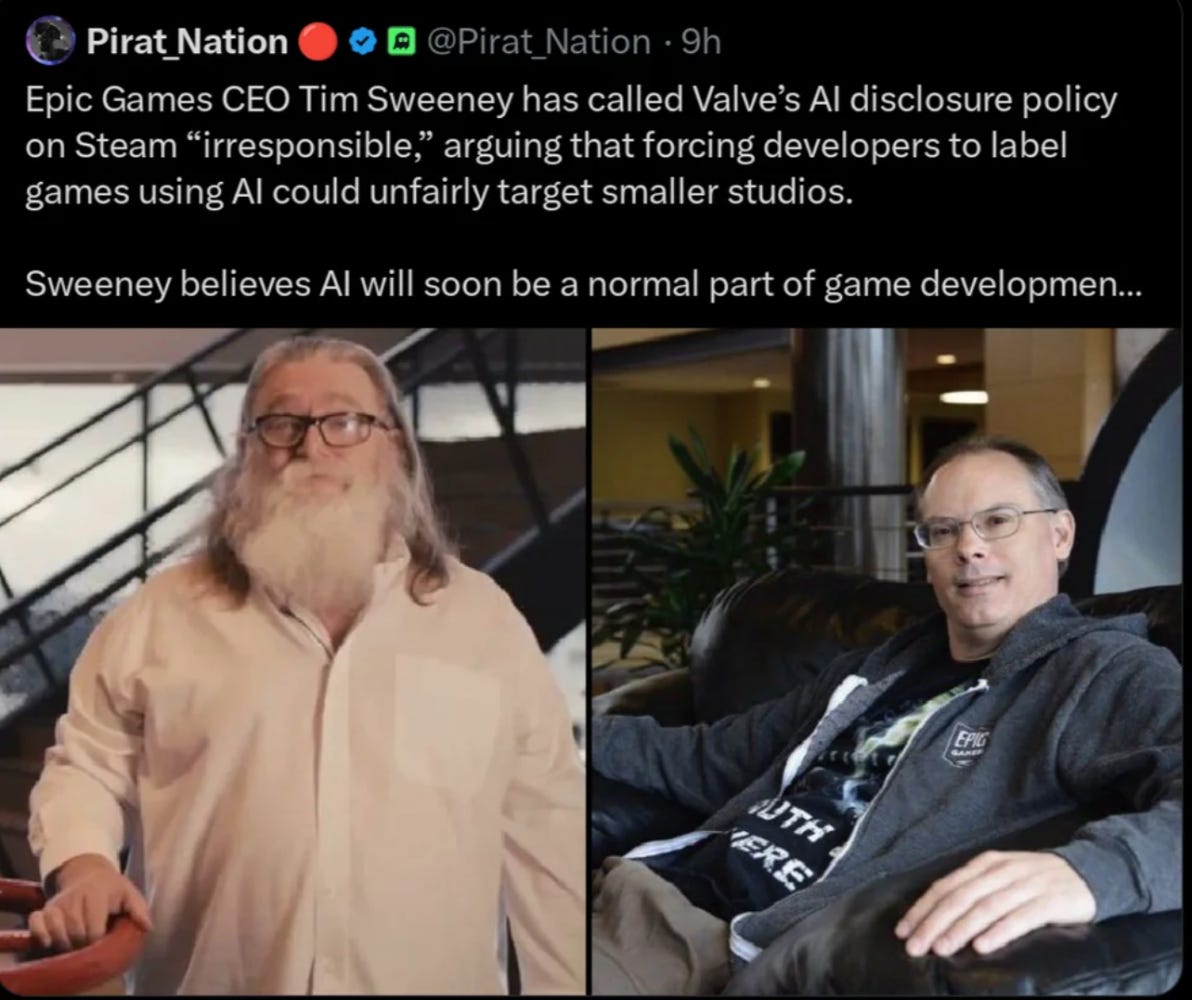
The newest frontier of the same shrug is AI, and it has Valve taking fire from every direction at once. The company spent the pre-2024 era quietly blocking AI-generated games from Steam, then reversed in January 2024 to allow the “vast majority of games” using AI, provided developers disclosed how they used it. Then, in January 2026, Valve loosened even that, dropping the requirement to disclose AI used for routine “efficiency gains.” Each step pointed the same direction, less friction, less labeling, less of Valve standing between an AI tool and the store. The anti-AI crowd says Valve is not labeling enough. Epic’s Tim Sweeney, no friend of Steam, says it labels too much, calling the remaining disclosure a “Scarlet Letter” that hands a game’s haters a reason to kill it. Valve’s position satisfies nobody, which is usually the sign that the position was never about principle in the first place.
Because here is what is actually consistent across all of it, the skins, the slop, the moderation, the AI. It is not free expression. It is friction. The less Valve stands between a developer and the store, the more games flow onto Steam, and the more games flow onto Steam, the more transactions Valve clips a percentage of, at almost no marginal cost. That is the through-line. And I want to be clear that I am not scolding Valve for being a business. We are all capitalists here. But I am deeply skeptical of any platform that claims to be anti-censorship right up until the money is on the line, and then quietly takes the money. That is not a principle. That is a price. Gabe Newell, personally, has been telling the world to run toward AI as fast as it can, and in a 2025 interview he was almost evangelical about it:
“If I had to point to a technology transition to get in front of, it’s to figure out how to use AI to do anything better... essentially AI is going to be a cheat code for people who want to take advantage of it.” — Gabe Newell, 2025 interview
So the founder is a true believer, and the platform underneath him keeps clearing the runway. None of this, to be clear, is denting Valve’s bottom line. We will get to why the moat holds no matter how loud the grievances get. But it is absolutely feeding the other thing, the slow conversion of a beloved company into a suspect one. Every one of these episodes is another brick in the villain wall, not because Valve is bleeding money, but because the public is quietly revising the story it tells about who Valve is. Valve does not steer for the people on its platform. It steers when steering protects the margin, and it lets everything else ride.
A Thousand-Dollar Box From A Man On A Boat
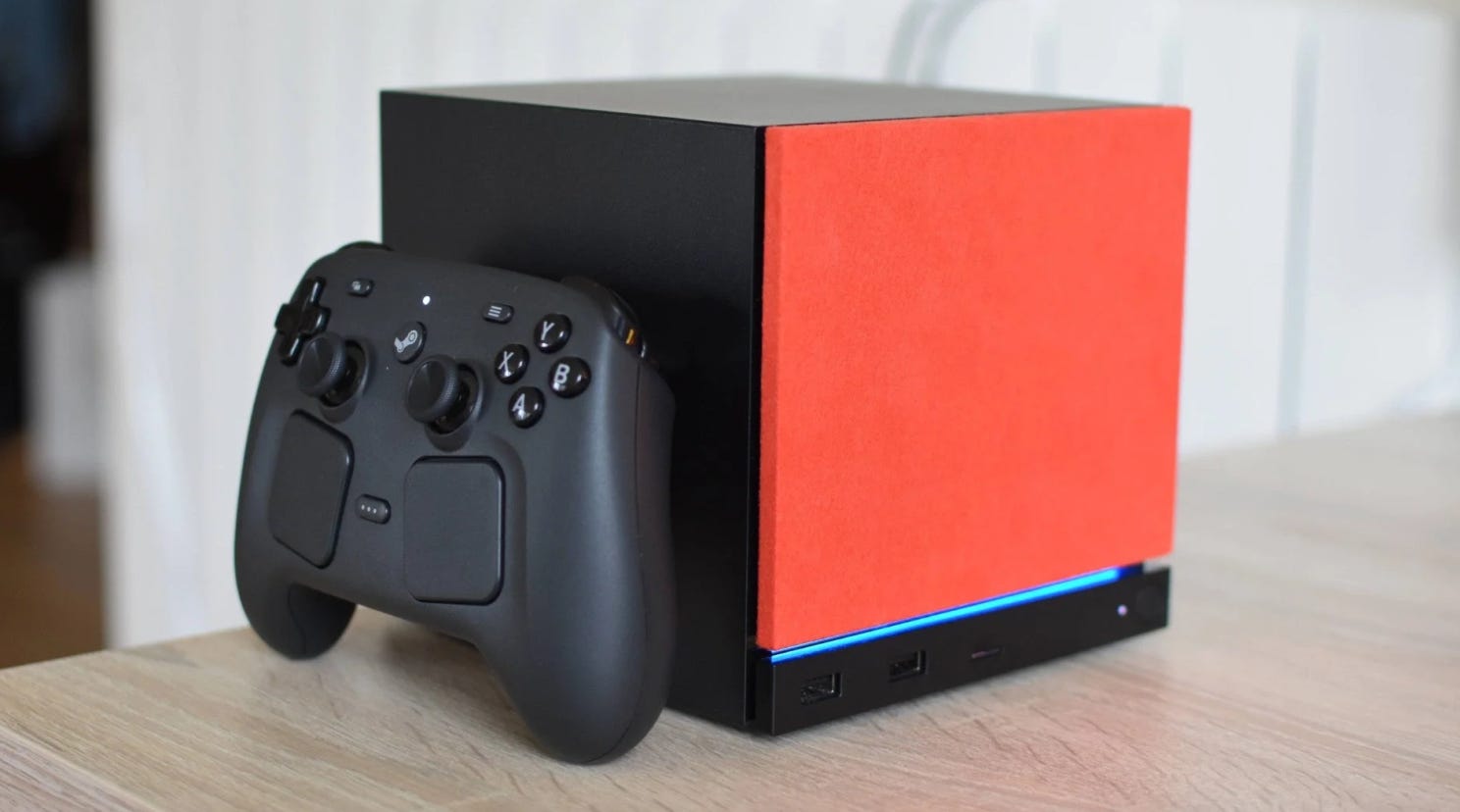
Which brings us to the exhibit that put the Harvey Dent line back in everyone’s mouth this week.
On November 12, 2025, Valve revealed the new Steam Machine, a compact living-room cube meant to bring your Steam library to the TV. Then it went quiet on price for seven months. When the number finally landed on June 22, it landed hard. Bloomberg’s Chris Welch reported the damage:
“The Steam Machine will cost $1,049 for a base model with 512 gigabytes of storage, and Valve is also selling a $1,349 model with two terabytes of space... The company also indicated that supply will be heavily constrained at launch, saying ‘there were periods where we found we couldn’t source some of our components at all, at any price.’” — Bloomberg, June 2026
Valve owns the cause, a genuine, brutal memory and component shortage driven by the AI industry’s appetite for the same chips, and the company conceded its original target was gone, telling buyers “our original goal for the price of Steam Machine is no longer viable.” The reservation lottery, a randomized queue meant to throttle scalpers, closes today, and Valve has said it may not clear the backlog until 2027.
I want to be honest about where I am coming from here, because I am not a hardware skeptic taking a cheap shot. I am a hardware bull... someone who wanted this to be great. I have a Steam Deck I adore, believe in the living-room PC as a category, and when Valve teased a return to the Steam Machine, I was exactly the customer they should have closed. So this is not a hater writing. It is a believer who got handed a thousand-dollar box and a shrug.
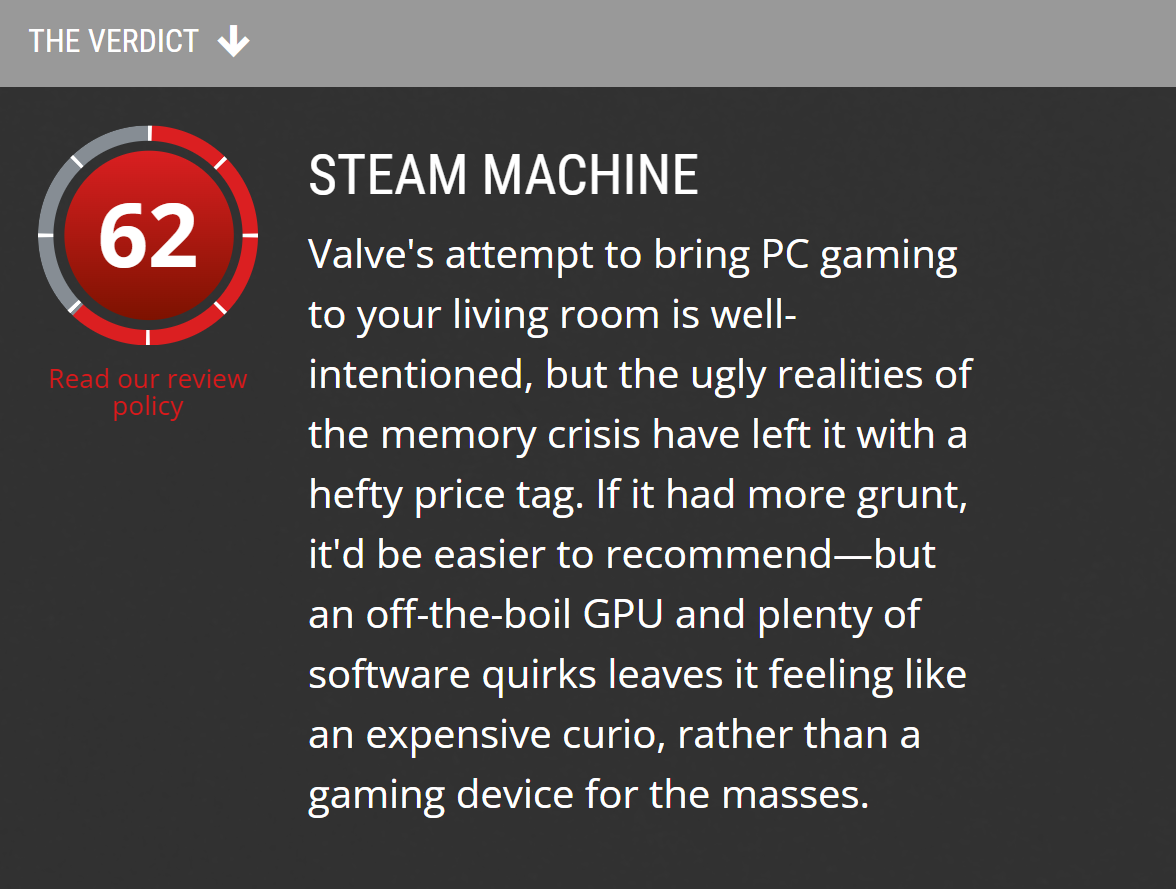
The box does not earn the grand. PC Gamer’s review, from a writer who clearly wanted to love it, ran the benchmarks and could not square them with the price. The Steam Machine managed 21 frames per second in Avatar: Frontiers of Pandora at Ultra, while a similarly-priced mini-PC packing a current-gen RTX 5060 more than doubled it, and even a budget tower running a last-generation RTX 4060 left Valve’s cube behind. The reviewer’s verdict was the part that stuck with me, because it is my own fear in one phrase:
“The Steam Machine will sell... There are enough well-heeled enthusiasts out there to swallow up whatever launch stock Valve has on offer, even if it ends up being more of an executive-level desk toy than the great equaliser the rest of us might have hoped for.” — Andy Edser, PC Gamer, June 2026
That is the heartbreak in two sentences. The people’s champion turned into a curio for the well-heeled.
Hardware leakers did the math out loud and were less gentle about it:
“Either Valve has a fat profit margin on the Steam Machine, or they’re getting absolutely rinsed by their suppliers.” — Kepler_L2, via GamingBolt, June 2026
Valve’s defense is that it refuses to subsidize hardware, on principle, because subsidizing builds closed systems. Here is how the company put it:
“When companies sell their hardware under cost for competitive advantage, or buy exclusive content for it, they’re doing that to build a more closed system, one where you don’t get to choose what software you want to use. We don’t want that for PC hardware, and we don’t think you should want it either.” — Valve, via GamingBolt, June 2026
And the mission-statement version, the one Valve reached for to crown the whole argument:
“If there’s anything we’re religious about at Valve, it’s our belief that open systems are better in the long run, for ourselves and customers.” — Valve, via PC Gamer, June 2026
Sit with that word, “religious,” for one second, because the logic falls apart the moment you do. The most open thing Valve could possibly do with this box is the exact opposite of what it did. A truly open move would be to drive the price as low as humanly possible, near-cost or subsidized, and flood living rooms with SteamOS hardware until the closed gardens Valve claims to oppose, PlayStation and Xbox, are surrounded. That is the entire Android playbook. Google did not win mobile by selling a premium phone on principle. The company put Android on every OEM device it could reach, scaled until the install base was unignorable, and turned openness into a weapon against iOS. Yes, you ended up with a duopoly, but Android exists everywhere, in a hundred forms across a hundred manufacturers, precisely because the strategy was scale. Scale was the point.
Valve had that move available and passed on it, and the reason is not philosophical. It is margin. The company that calls itself “religious” about open systems just priced its open system exactly like a closed one, and the only thing the high price actually protects is Valve’s cut. The short version is that this reeks of no strategy at all, just a desire to keep the box profitable. One of the leakers, Moore’s Law Is Dead, said the quiet part with a knife in it, joking that the Steam Machine’s pricing will fund Gabe Newell a new superyacht rather than any real fight against Xbox or PlayStation.
That joke is doing more work than it looks like. Here is what the Steam Machine actually is, stripped of the open-platform poetry. It is a funnel. Valve does not need the hardware to make money. Steam already does that. Every Steam Machine sold is just one more living-room anchor for the storefront, another door into the place where Valve clips a percentage on everything you buy. The box is not the product. It is a turnstile, and you are paying a thousand dollars for the privilege of walking through it into the mall Valve owns.
Then comes the contrast that makes the whole thing land. Think about what Steam was when it arrived on PC. Downloading it was free. It ran on free games, Counter-Strike, Team Fortress, the mods Valve scooped up and handed back to players. The price of entry to the most important platform in PC gaming history was zero, and that is precisely why it swallowed the market. Twenty years later, the entry point is a thousand-dollar box that underperforms the consoles it is supposedly here to challenge, aimed squarely at the diehards who already live inside Steam, the faithful who treat it as a casino and a catalog. The free, open, everyone-welcome platform grew up into a premium turnstile for the people already through the door.
So will the thing sell out? Of course it will. We just spent this entire section explaining why. This is the box that plugs you into the never-ending gambling economy humming away in Russia and Eastern Europe, the living-room key to the libertarian playground where anything goes and the slop stacks to the ceiling. Die-hard Steam faithful, the people most wired into the casino and the catalog, will clear Valve’s reservation queue without blinking. The house always wins, and the house just put a thousand-dollar turnstile in your living room. It will sell. Valve usually does win.
And that is the thing to sit with as we turn the corner. Every grievance in this section, the casino, the slop, the selective steering, the overpriced cube, is loud, and real, and damning in the court of public opinion. None of it touches Valve’s bottom line. You can be furious about all of it and still launch Steam tomorrow to buy your next game, because anger is not the same as leaving. So if the noise does not move Valve, what does? Only one thing has ever come close. Not a boycott, not a bad review, not a billionaire on a yacht. A courtroom, and a theory about the one number that actually matters... the cut.
The One Grievance That Aims At The Money

Everything to this point has been about perception. The casino, the slop, the selective steering, the thousand-dollar cube... loud, real, damning in the court of public opinion, and completely powerless against Valve’s actual position. The lawsuit is different, because it is the first thing in this entire story that aims at the only number Valve truly cares about, the cut.
The short version is that a group of game developers is arguing in federal court that Valve built an illegal monopoly, and for the first time in five years, a judge has agreed the question is serious enough to put in front of a jury. In late March 2026, Judge Jamal N. Whitehead of the Western District of Washington denied Valve’s motion for summary judgment in the consolidated antitrust litigation that began with Wolfire Games. That denial is the whole ballgame procedurally. It does not mean Valve broke the law. Rather, it means a court looked at the evidence and decided a reasonable jury could find that it did, which means Valve no longer gets to make this go away quietly. The certified developer class numbers roughly 32,000 publishers and studios, with a parallel consumer class riding alongside it.
Here is what they are actually fighting about, and it is not really the 30% on its own. It is the rule that protects the 30%. The plaintiffs allege Valve enforces a “Platform Most Favored Nation” policy, a parity rule that stops a developer from selling the same game more cheaply anywhere else, not on Epic, not on GOG, not even on the developer’s own website. Pull that rule out, the argument goes, and stores would have to compete on price, and Steam’s cut would get bid down the way every other storefront’s has. Leave it in, and 30% quietly becomes the floor the entire industry stands on, a floor that consumers ultimately pay for too. The plaintiffs put Valve’s haul from that arrangement at more than $6 billion in annual revenue, on an estimated 75% share of all PC game spending.
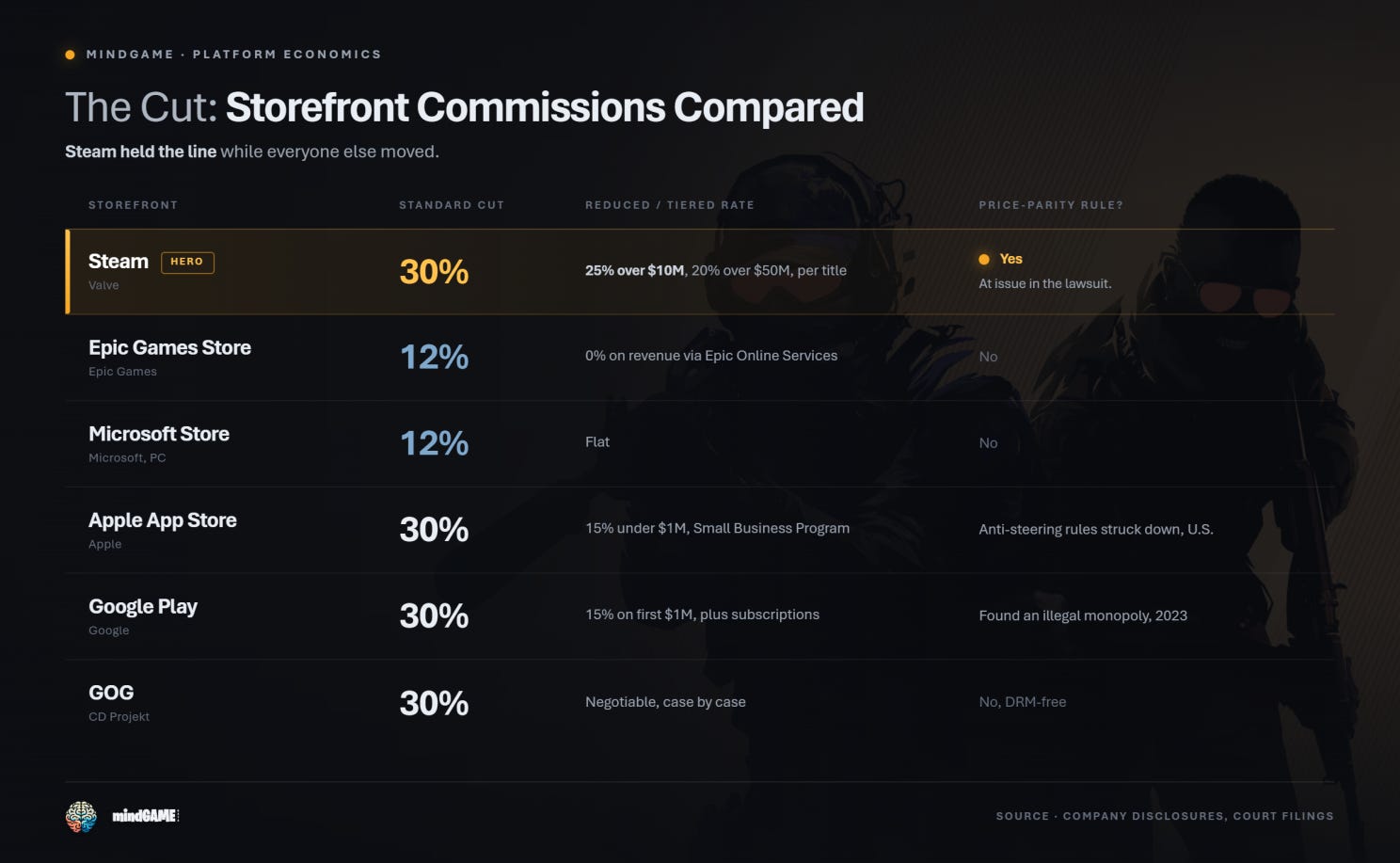
Look at that table for a second, because it is the plaintiffs’ entire case in one glance. On PC, Epic charges 12%. Microsoft, on its own PC store, charges 12%. Both have competed against Steam for years, at less than half the rate, and neither has dented it. To the plaintiffs, that is the smoking gun, if a 12% store cannot pull developers off a 30% incumbent in a technically open market, then price is not what is holding the price in place. Something else is. They say that something is the parity rule and the network effects underneath it.
Then there is the part that turns a dry antitrust case into a story, which is what Valve’s own people said under oath. When Newell was deposed, he was presented with the parity rule and simply denied it existed. Per a previously unreported transcript surfaced by Bloomberg, he testified that “Valve does not have a policy or practice of dictating prices to third-party software developers on other platforms,” and when shown internal communications of Valve employees appearing to enforce exactly that rule, he repeated the denial, at times verbatim, over and over. His colleague Kassidy Gerber, who works in Valve’s business development, ran the same play and got caught harder. Asked whether Steam had a parity policy, she said:
“I don’t really know what you mean by ‘policy.’ In general, I don’t feel like we have a lot of policies. That sounds kind of bureaucratic to me.” — Kassidy Gerber, Valve, via Bloomberg, June 2026
Then the plaintiffs’ lawyer read her own words back to her, from a message she had sent a developer: “Steam’s policy has always been to require material parity for things we sell on the Steam Store.” Valve had to invoke this rule so often that, according to a filing in the case, one Steam business employee joked he was going to get the parity language “tattooed on my back like it’s the Declaration of Independence.” You cannot simultaneously not have a policy and need it tattooed on your body for convenience.
This is where the no-bosses architecture I walked you through earlier stops being a charming quirk and becomes a legal strategy. Remember the 2012 handbook, the desks on wheels, the cabals, the company that proudly admitted it was bad at “disseminating information internally”? In deposition after deposition, attorneys tried to pin down who at Valve actually decided things, and ran into a wall of consensus and shrugs. Employees claimed there are no real higher-ups, just loose groups making calls verbally, by feel. A former engineer told Bloomberg the flat structure was, in the end, a way to obfuscate accountability. The thing Valve sold as liberation in 2012 turns out to be remarkably useful in 2026, when a lawyer asks you who approved the rule and the honest answer can always be “nobody in particular.” Flatness as a feature, repurposed as a shield. I told you it would come back.
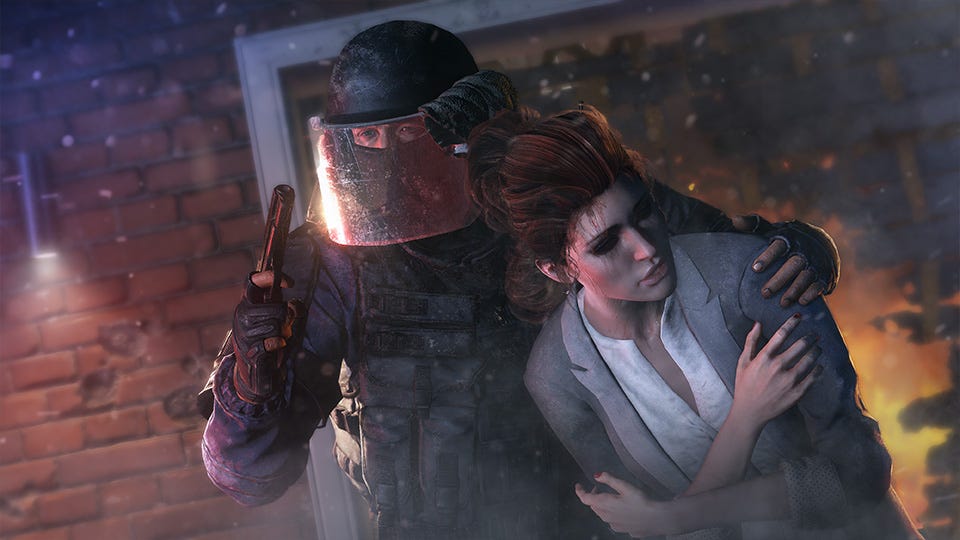
The pressure was real, and the documents show it in Valve’s own words. According to emails surfaced in the case, when Ubisoft tried to sell a $15 Rainbow Six Siege starter pack exclusively on its own Uplay store, Valve employees threatened to pull the entire game, every edition, off Steam:
“Valve employees once threatened to delist all editions of Ubisoft’s Rainbow Six Siege ‘by end of day tomorrow’ after they learned the publisher was marketing a separate $15 ‘starter pack’ exclusively on its in-house Uplay store.” — Bloomberg, June 2026
Warner Bros. got the same treatment. In 2017, that same Kassidy Gerber emailed the publisher to inform it that preorders for one of its biggest releases had simply been deleted:
“Kassidy Gerber, who works in business development at Valve, wrote to Warner Bros. executives that preorders for its new Middle-earth: Shadow of War game had been deleted from Steam because the price was ‘significantly higher than what was available at other retailers for the same version of the game.’ Within hours, Warner Bros. Interactive Entertainment President David Haddad was trying to get on the phone with Gerber to make amends.” — Bloomberg, June 2026
These are not tiny indies getting pushed around. They are some of the largest publishers on earth, rearranging their pricing strategy across the entire market to avoid angering a company of fewer than 400 people. That is what market power looks like from the inside, not a fee schedule, but a delist threat that lands by end of day.
But here is the detail that makes this whole thing land for me, the one that closes the loop on the history we walked through at the top. The developer driving this case is not Tim Sweeney. Epic, for all of Sweeney’s years of public thundering about the “30% store tax,” most of it piped out on X at whatever hour the mood strikes him, is notably absent from this suit and declined to even comment on it. Sweeney is the loudest voice in this fight, and he is also the least credible one, a man running his own competing 12% storefront, with every commercial reason in the world to want Valve’s number dragged down. The real war is happening in sealed filings and sworn depositions. Sweeney is happening in the replies.

The actual plaintiff is David Rosen of Wolfire Games, an indie developer who got his start distributing games on Mac forums, who co-built Humble Bundle and ran it on a 5% cut, and who, years ago, emailed Valve cold to get his rabbit game onto Steam. Newell signed that contract himself. What turned Rosen from partner to plaintiff was a single phone call, after he asked Valve in 2018 how it would react to him selling his game Overgrowth at a discount on Humble Bundle’s store:
“They replied that they would remove Overgrowth from Steam if I allowed it to be sold at a lower price anywhere.” — David Rosen, Wolfire Games, via Bloomberg, June 2026
That is the parity rule, stated plainly, by the man it was used against. (Valve disputes Rosen’s description of the call.) The developer Newell personally welcomed onto the platform is now the one dragging him toward a jury. The Wolfire of 2008 became the lead plaintiff against the Goliath of 2026. History, as I keep saying, has a sense of humor.
To be fair to Valve, because this section does not work if I am not, the company has a real defense, and parts of it are strong. Valve argues the 30% buys something genuine, the Steamworks tools, automatic patching, Workshop mod hosting, cloud saves, refunds, regional pricing, the best storefront infrastructure in the business, and that the parity rule is not a weapon but a promise to gamers that the Steam version will never be the rip-off version.
It leans on the Apple precedent, where a court found that 30%, by itself, is not illegal and that the rate predated the dominance. And it has one genuinely powerful fact on its side. PC is open. Windows lets anyone install anything. Steam cannot block a rival store from existing the way Apple blocks sideloading on the iPhone. If Valve were really extracting a monopoly tax, the open platform should have let a cheaper competitor win. That is Valve’s best card, and it is not a weak one.
The plaintiffs’ answer is the answer that matters for the rest of this piece. Technical openness, they say, is not economic openness. Sure, you can install Epic or GOG with a double-click. But every game you have ever bought is on Steam. Every friend on your list is on Steam. Every review, every saved game, every digital knife is on Steam. For a developer, “not being on Steam” is commercial suicide no matter how low a rival’s fee goes, and the parity rule then makes sure they cannot even pass a discount along somewhere else. Joost van Dreunen, who runs the analytics firm Aldora and who I have known since my Twitch days, put the whole thing in four words to Bloomberg:
“Valve became a landlord more than anything else.” — Joost van Dreunen, Aldora, via Bloomberg, June 2026
A landlord is the right word, and it is the hinge into everything that comes next. You do not beat a landlord by arguing about the rent.
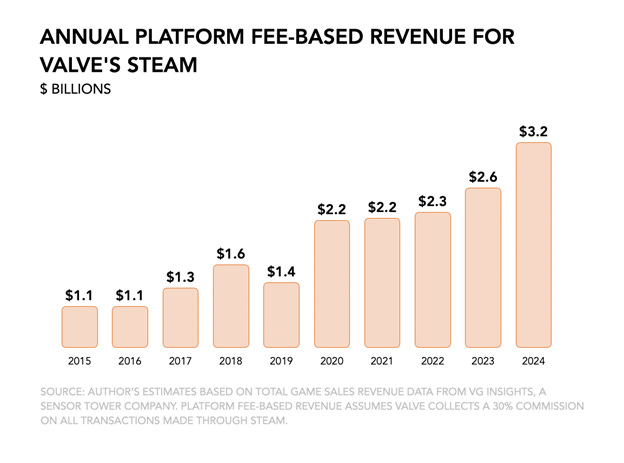
So what is at stake? If Rosen wins and a court strikes down the parity rule, the immediate effect is price competition between stores for the first time, and the damages, across 32,000 developers and potentially trebled under antitrust law, run into the billions. A separate UK case could add a penalty of up to $900 million. This is, by a wide margin, the most serious threat Valve has ever faced, because it is the only one pointed directly at the margin instead of the reputation.
And yet. Here is the thing I cannot shake, and it is the bridge into everything that comes next. Going after the cut has become the standard way to attack a dominant platform. It worked, partly, against Apple. The same play worked against Google. It is the move everyone reaches for, the 30% is the villain, drag it down, free the developers. But the cut is not actually where an aggregator’s power lives. It is just the most visible place that power shows up.
Notice that one of the most dominant aggregators of the last twenty years, Meta, takes no cut from anyone, and is no less of a gatekeeper for it. You cannot sue your way out of the fact that the customers are all in one place. Even if Rosen wins, even if the parity rule dies and the cut comes down, the thing that actually makes Valve Valve, the demand, the 42 million people who open Steam without thinking, the libraries and the friends lists and the decades of accumulated gravity, none of that is on trial, because none of it is illegal. It is just true.
Which is the most important thing to understand about Valve, and about every company like it. To see why the fortress holds even when the lawsuit lands, we have to talk about what an aggregator actually is.
How You Actually Beat An Aggregator
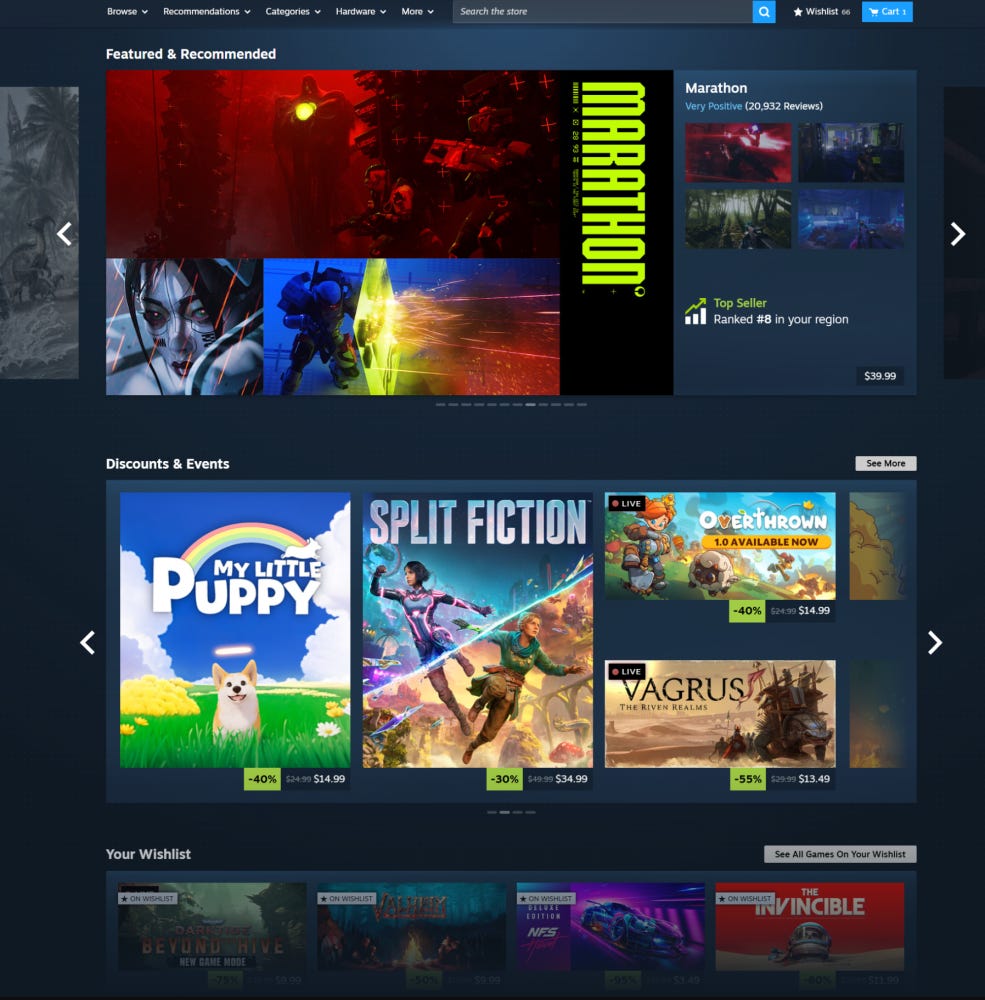
To understand why the lawsuit, win or lose, does not save anyone from Valve, you have to understand what Valve actually is. Not a store. Not a game company. An aggregator.
I have run nearly every media business I write about through aggregation theory, because it is the single most useful lens I own, and it comes from Ben Thompson, who has been building out the framework at Stratechery for more than a decade. If you have somehow never read him, fix that. The foundational 2015 piece lays out the whole mechanism:
“The best distributors/aggregators/market-makers win by providing the best experience, which earns them the most consumers/users, which attracts the most suppliers, which enhances the user experience in a virtuous cycle... aggregators who aggregate modularized suppliers — which they often don’t pay for — to consumers/users with whom they have an exclusive relationship at scale.” — Ben Thompson, Stratechery, “Aggregation Theory,” July 2015
Read that and then read the word “Valve” over the top of it, because it describes the company perfectly. Google aggregates the open web. Meta aggregates social. Amazon aggregates retail. On PC, Valve aggregates games. The suppliers are the 32,000 developers in that lawsuit, modular, interchangeable, and largely uncompensated by Valve for the privilege of being there. Consumers are the 42 million people who open Steam without thinking about it. The virtuous cycle is the whole machine, the best experience pulls the most players, the most players pull the most developers, the most developers make the best experience, and around it goes.
Here is the part that matters, and it is the part the lawsuit cannot touch. Valve did not win by aggregating the supply side. Anybody can host files. EA tried it, Epic tried it, Microsoft tried it, and all of them could match Steam’s server costs and storefront features without much trouble. Honestly, have you used Steam lately? The UI is stuck somewhere around 2004 and has shown zero interest in leaving. It is the Craigslist of gaming, ugly, ancient, faintly confusing, and completely impossible to kill, because the thing holding it up was never the design. Valve won by aggregating the demand side. Players are the asset. What Valve owns is not a catalog of games, it is the default place tens of millions of people go when they want to play one, and every library, every friends list, every achievement and saved game and forum post is another rivet bolting that demand in place.
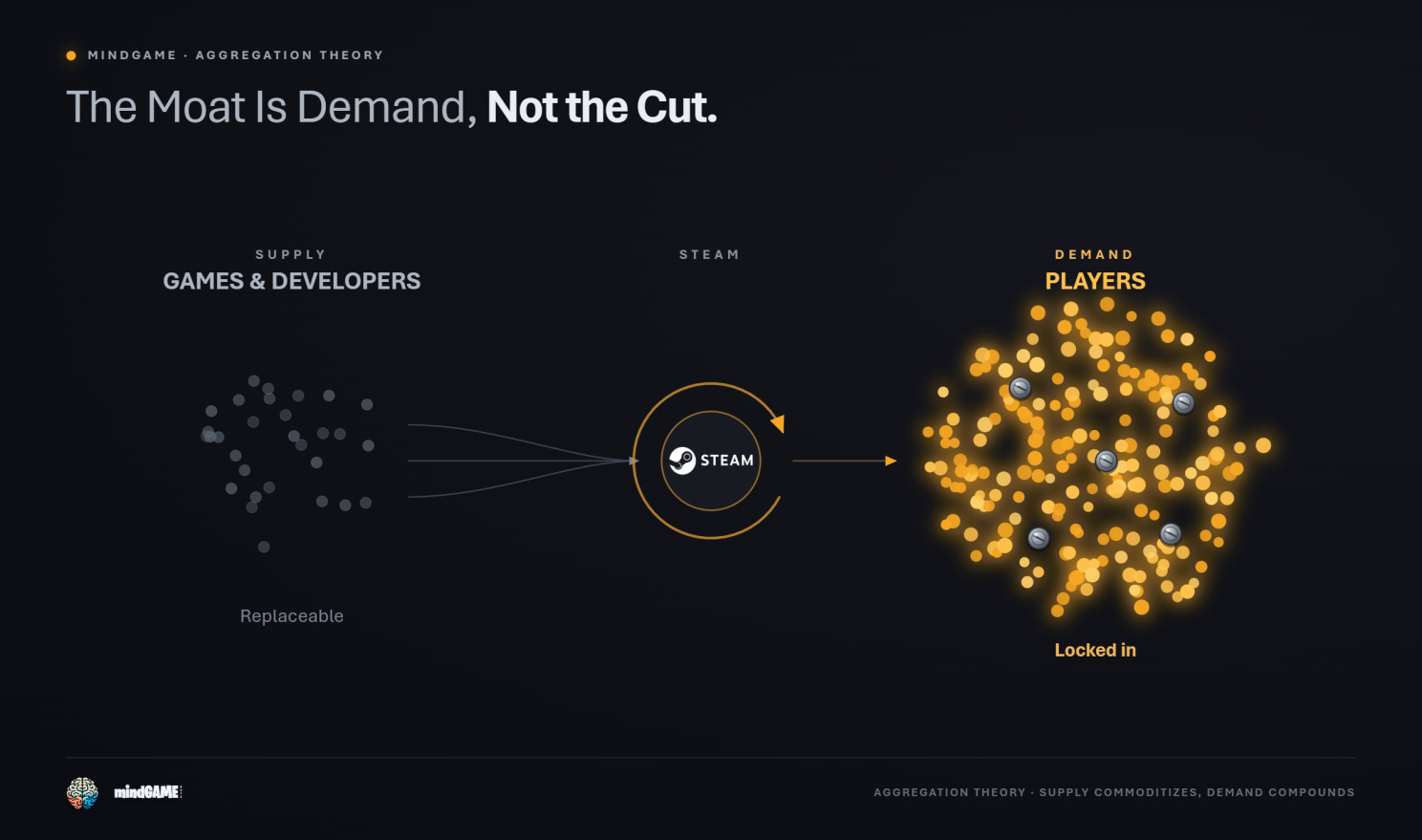
This is why the cut is a sideshow. Say the plaintiffs win outright. Picture a court striking the parity rule and Valve dropping its commission to 12% to match Epic and the Microsoft Store tomorrow. What changes? For developers, real money, and good, they deserve it. As for Valve’s position, almost nothing. The players do not leave because the rent went down. They were never staying because of the rent. Steam keeps them because their entire gaming life lives there, and a cheaper commission at a competitor does not move a single one of those rivets. You can win the antitrust case and still wake up to find the fortress exactly where you left it. The cut is the most visible expression of Valve’s power. It is not the source of it.
And the proof that the cut is not the moat is sitting one industry over. Meta is one of the most dominant aggregators of the last twenty years, and it takes no cut from anyone. There is no 30%. The product is free. Zuckerberg built an unkillable position purely by owning the consumer relationship and monetizing the attention that comes with it, no toll required. Aggregators do not need a commission to be aggregators. The commission is just one way Valve happens to harvest a moat it would still have at zero percent. You cannot litigate away the fact that the customers are all in one place.
Which is exactly Ben Thompson’s point about how this ends, and I think he is right. In a recent piece, writing about Apple and the EU, he made the argument plainly:
“The only possible way to curb Apple’s dominance is through competition, and if Apple wants to open up a vector for competitive hardware to arise, that’s fine! And, if in response to competition, they open up their platform, that’s great too. This has always been the only answer to dominant platforms; trying to make competition happen by government fiat simply squashes the innovation that actually provides the solution.” — Ben Thompson, Stratechery, June 2026
Swap “Apple” for “Valve” and the logic holds without a single seam. You do not litigate an aggregator to death. Instead, you out-compete it, and you do that by attacking a weakness the incumbent cannot or will not defend.
So here is the only question that actually matters. What is Valve’s weakness?
It is not price. Nor is it features, or the catalog. Valve has two real soft spots, and they are related. The first is that the company is barely in the living room, and the Steam Machine just confirmed it, a thousand-dollar box that will sell to the faithful and reach no one new. Second, and bigger, is ads. This one is not a vibe or an inference. It is written into Valve’s own developer documentation, in the first sentence of the page on advertising:
“Steam does not contain any paid advertising, nor are advertising models supported in games distributed on Steam.” — Valve, Steamworks Documentation, “Advertising on Steam”
Read the rest of that page and the line hardens. Developers cannot build an ad-supported business model on Steam. No requiring players to watch ads, no gating gameplay behind them, no rewarding players for engaging with them. If your game runs on advertising elsewhere, you have to strip that out before it ships on Steam. And honestly, I get the instinct. Open that door and you risk turning a clean storefront into the junk-strewn experience that ruined the open web, the pop-ups, the autoplay, the whole miserable apparatus. The no-ads stance genuinely protects the user, and I would not want to defend the opposite at a dinner party.
But a moat with a deliberate gap in it is still a moat with a gap. Valve has decided, as a matter of written policy, never to monetize attention, only transactions. That principle is real, and it is also the exact underbelly a competitor could pry open, because the question Valve has ruled out by fiat is the most dangerous one anybody could ask it. What if you did the opposite? What if free, ad-supported, and good actually beat clean, paid, and convenient?
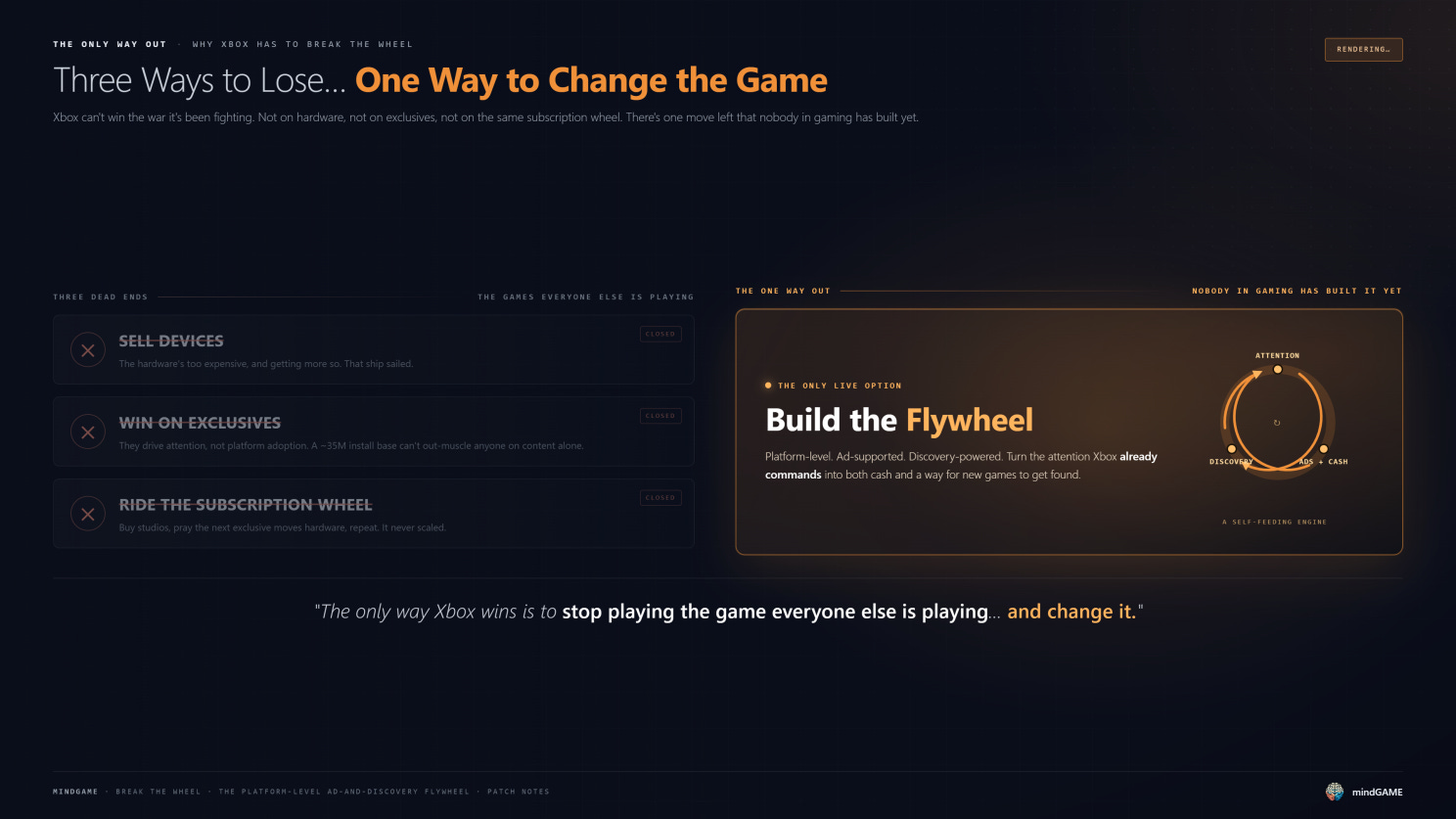
I wrote about this last week in the context of Microsoft, so I will not relitigate the whole thing here. The through-line, though, is the same. The thing that actually beats Steam, if anything ever does, is not a cheaper store. It is a free one. Picture a genuinely free, ad-supported gaming ecosystem spanning PC and console, the games subsidized by advertising the way streaming video finally went, the entry price dropped to zero the way Steam itself once dropped its own entry price to zero and took over the market. That move bypasses the moat entirely, because it does not try to out-store Steam. It changes what people are willing to pay to play at all, and free beats convenient every single time it has been tried.
Valve cannot answer that, because answering it means becoming the thing Newell built the company to avoid. The aggregator’s greatest strength, an owner so principled he turned down every easy dollar that would have compromised the experience, is also the exact door left standing open. Somebody is going to walk through it eventually. My bet, for whatever it is worth, is that the thing which finally beats Steam is not a rival storefront, not a lawsuit, and not a better box. It is free, ad-supported games at scale.
A Quick Detour, Because I Cannot Help Myself
One more thing before I let you go, because it follows directly from everything above and I have been sitting on the data.
Every aggregator breeds its own metric. Not a real one, a native one, a number the platform generates and then teaches everyone to worship. YouTube has the view. Meta has the like, across Facebook and Instagram both. These numbers feel like demand, and marketers build entire strategies around moving them, but what they actually capture is activity inside the platform’s own walls.
There is a tell that comes with every manufactured metric. The moment a number becomes the thing everyone chases, it also becomes a thing you can simply buy. You purchase YouTube views to get more eyes on a video, on the assumption that more views means more awareness, and sometimes that logic even holds. The trouble is what happens when you hang a whole strategy on a number that is that easy to manufacture. This, by the way, is a big part of why mindGAME exists, and what it is not. We do not measure a single purchasable signal and call it demand. mindSHARE is a composite, built across Google, YouTube, Twitch, TikTok, and the rest, and deliberately not beholden to any one metric a team could juice on its own. We are also platform-agnostic by design. We do not care whether a game lives on mobile, browser, Switch, PlayStation, Xbox, or Steam. We care how it is doing against the entire field, wherever the players actually are.
Which brings me to Steam’s version of the like. The wishlist.
Right now the whole indie industry treats the wishlist as the truest read on a game’s future, and Next Fest, Steam’s recurring demo festival, has become the single most important date on the calendar precisely because of what it does to wishlist counts. This June’s edition was the biggest yet, with GameDiscoverCo counting 4,382 demos, up 66% year over year. Developers pour months into hitting that window, because a strong Next Fest means wishlists, and wishlists, the thinking goes, mean a launch.
Here is the catch. The wishlist is a like. It is costless, frictionless, one click, and it converts to actual sales far worse than the number lets you believe. GameDiscoverCo’s own work puts typical conversion somewhere around 10 to 15 sales per 100 wishlists in the launch window, and it is frequently worse than that. Sit with that for a second. Marketers chase the wishlist, build the whole campaign around it, and then act surprised when it does not convert, when the metric they were chasing was never going to convert more than about one time in ten. That is a thin reed to hang a launch on.
So I did what we do at mindGAME. I took the Next Fest demo field and ran it against mindSHARE, the demand that exists out in the open, beyond Steam’s walls.
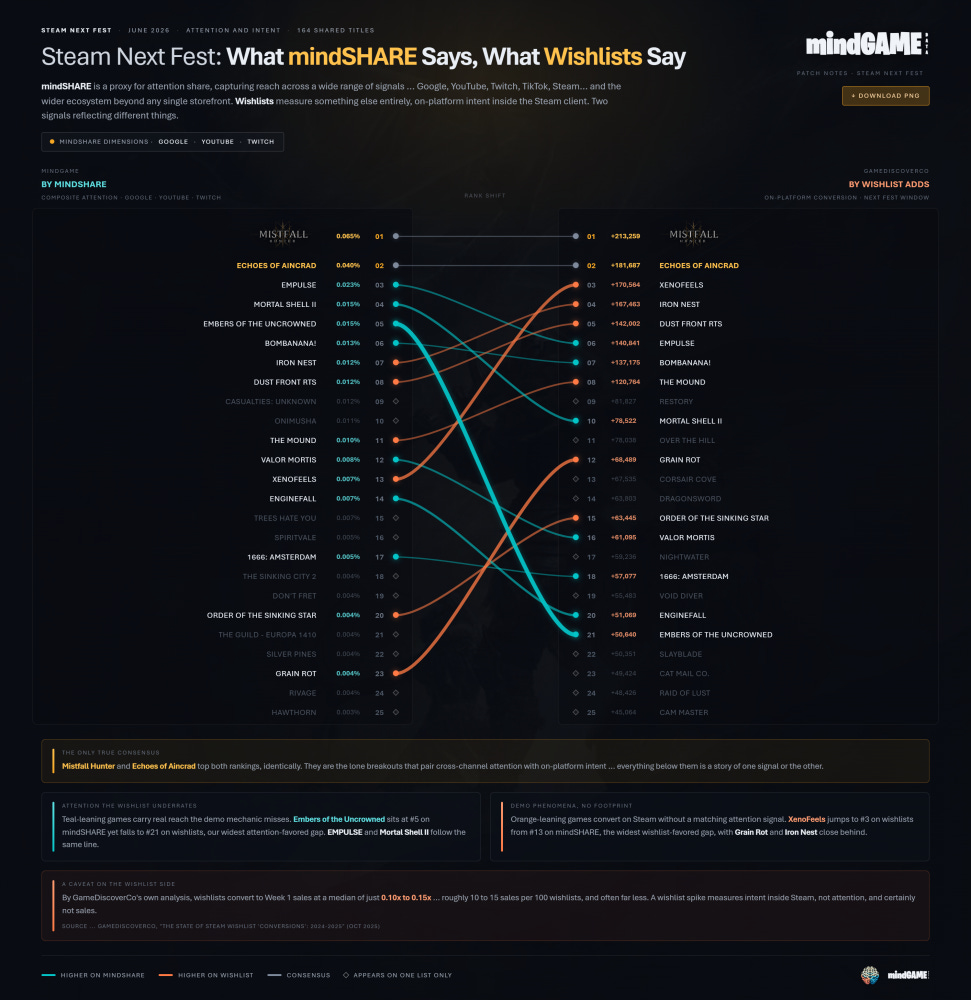
Here is the cleanest way to read it. The number-one game of the entire June Next Fest, the breakout everyone pointed at, lands at 0.065% mindSHARE. Out in the wider field, that is roughly a top-25 game at Summer Game Fest, respectable, real, a genuine win for that team. And then, behind it, a cliff. The mindSHARE falls off a ledge almost immediately, and the rest of the festival is thousands of games stacked underneath, each one a fraction of a fraction. One of my clients put it better than I could, describing the position their game was in. You are a needle in a haystack full of needles, trying to be the tallest needle in the haystack. Even when you win Next Fest, that is the prize. You are the tallest needle. You are still in the haystack.
That is what the wishlist obscures. The number can climb and climb and still tell you almost nothing about whether you will break through, because breaking through, in a field of thousands of demos fighting for the same sliver of attention, is the actual hard problem, and a platform-native vanity metric is not built to measure it. I am not the only one starting to say this out loud, and credit to the people in this space being honest about what the wishlist does and does not mean. There is a real conversation forming here, and it is overdue.
I will do the full autopsy another day, because there is a lot more in this data and it deserves its own piece. For now, hold the one idea. When a platform hands you a number and tells you it is demand, ask who made the number, how easily it can be bought, and whose walls it lives inside.