


Follow me here… or on LinkedIn
We’ve reached the end of the dog days of summer, and the fall slate is basically set (minus a potential Xbox surprise!?!)... with GTA VI still dominating the conversation, though not for the reason anyone wanted this week. Gameplay... the map... entire systems of the game all leaked this week (I literally can’t escape it on my socials)... and now the leakers are threatening to put out more each day, up to and including the ending of the game... which may have already happened by the time you read this.
It’s not good... it’s not funny... it’s sad. I don’t care that Take-Two is a multibillion-dollar corporation, and what the “leakers” are asking for is fundamentally stupid. Thou Shalt Not Sell Digital Preorders? Why? Serious question... why? Who are you to tell me (or anyone else) how to spend their money? Me buying a digital preorder is a choice made by me, and I don’t want some random hacker conclave telling me how to support organizations, companies, and artists. If I want to give them my money before the product is done, that is my choice, not yours.
The rest of the asks are even dumber, so I’m not going to spend any more air on them.he When most of the industry, including Stop Killing Games has come out against you and is telling people not to send you money for your meme coin, that should tell you everything about how serious this “cause” is. To be blunt, a f***in team spent over a decade building what is probably a masterpiece... or at least the apex of everything Grand Theft Auto can be... and it’s getting thrown out there in low-res fragments, stripped of all context, as leverage in an ask that is both disingenuous and not serious.
Ok, but are you a true white hat, Colan? No.
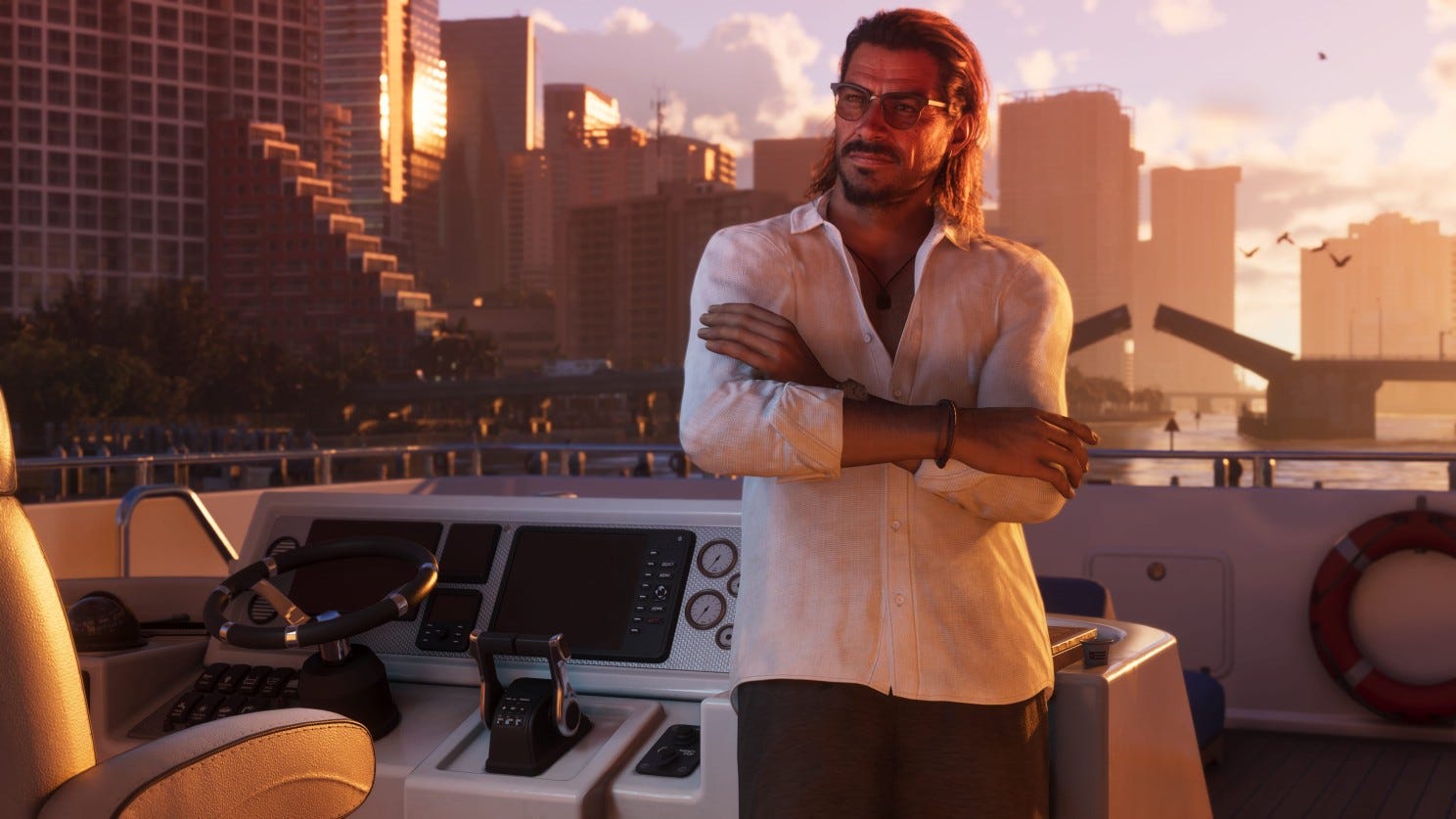
Did I watch any of the leaks? Yeah... honestly, it was hard to escape. Beyond X, where GTA VI leaks have littered my timeline with autoplaying video, the entire gaming journalism ecosystem has basically converged on covering this beat by beat as an ongoing story. So here is where I am at, about 24 hours into it (as of this writing)... I’m done. I’ll ignore what crosses my timeline as best I can, because Rockstar Games is going to show me the real thing soon enough... the Netflix special lands right after Gamescom. GTA VI is going to be amazing, and the commercial impact of these leaks is going to be negligible.
Anyone who thinks this game isn’t going to make billions... put it on Kalshi if you’re serious and DM me the link. I don’t want to know anything about the story... I could not care less about what you can or can’t do in the game... I don’t want to see any of the maps. I’m done, and I’ll wait to engage with this game exactly the way Rockstar built it to be engaged with.
So instead of dwelling on leaks... let’s talk about what actually has my attention this week.
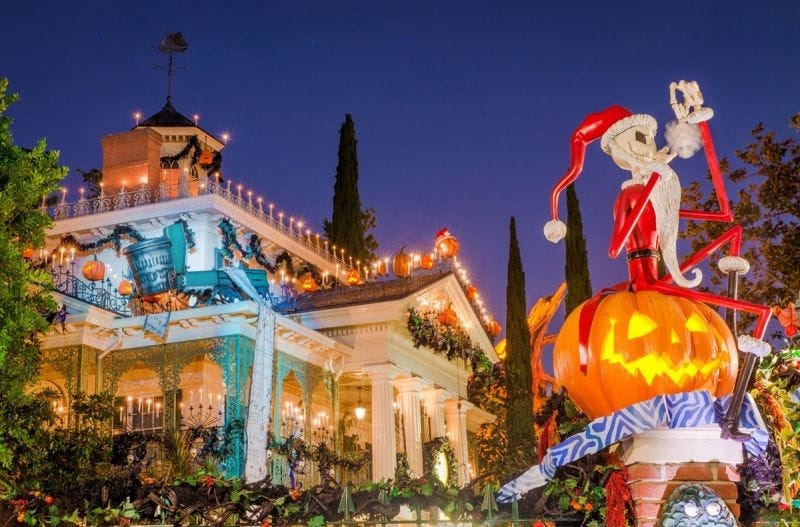
There’s something in the air at my house... booking season. Every year we take the family to Disneyland in the fall... which is the best time to visit Disneyland... for my daughter’s birthday. She’s our Halloween / Nightmare Before Christmas baby (literally, one of her favorite stuffies is Oogie Boogie)... Honestly, we are at the point where this trip has become old hat. We book the Bibbidi Bobbidi Boutique for my daughter... we lock in the World of Color Dessert Party and plan our days at the park as seasoned vets. And judging by my feed this week, I’m not the only one deep in Disney logistics right now.
My friend Amir spent the last week fighting the Walt Disney World reservation system and lived to post about it. Booking a Disney World vacation, in his words, becomes a second job (not wrong!). You chart every ride, plan logistics for kids and grandparents, then hit the restaurant portal at exactly 60 days out... and discover that for a party of seven, nothing beyond a buffet is available. He logged in at 7am on day one and still got shut out of the dessert party his family had wanted for two years. While I wish him the best in getting his tickets for this sought-after dessert party (get a sherpa, Amir)... he did call out something at the end of his post that hit home.
“It is really wild how much value they extract from fans or that there is no way to make any of this less extractive or annoying for customers who are paying a fortune for once-in-a-lifetime trips” — Amir Satvat, via LinkedIn
Is it though? Disney reported earnings two weeks ago, and the parks tell a different story than the frustration on my feed. Experiences revenue grew 10% in the June quarter... domestic park attendance up 3%, per-capita spending up 4%... all while international visitation to the domestic parks remains a headwind. Disney’s CFO told the Wall Street Journal the company is more than filling that gap with domestic guests. Guests like Amir... guests like me.
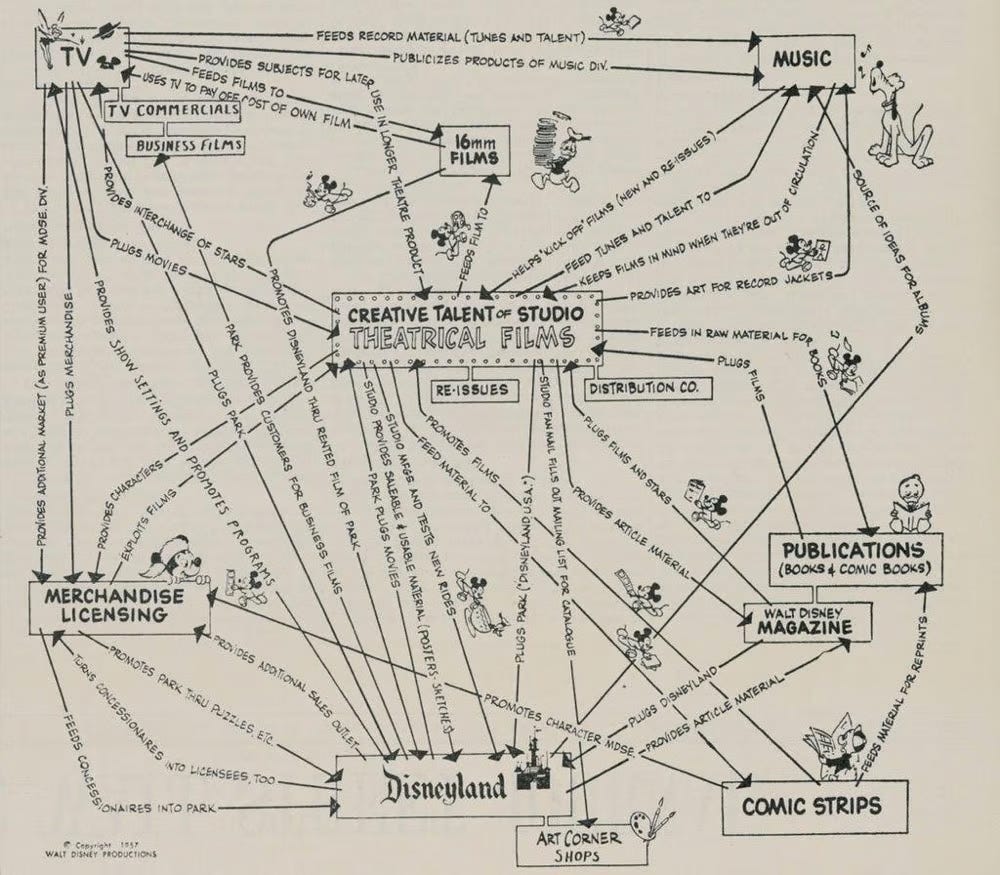
So while I sympathize with Amir... the booking gauntlet isn’t a system failing. It’s a system where demand keeps outrunning supply, the prices keep climbing, and we... the Disney fandom (I can’t bring myself to use the term ‘Disney adults’)... keep showing up anyway. That’s not extraction... at least I’d like to not think so... but really it’s an illustration of a flywheel in motion.
Which raises the better question... how did Disney get here? How does a company reach the point where the reservation portal is a battlefield and attendance still grows? Because this is the oldest flywheel of them all. People who grew up on Disney are now raising kids on Disney... who were themselves raised by parents who grew up on Disney. Multiple generations deep, all of them flooding these parks in greater numbers every year.
Here we are, then. Two weeks ago I wrote about Spider-Man, Nintendo, and the flywheels that endure. Last week, Bandai Namco and the flywheel it runs on its own IP. If you’d told me at the beginning of August I’d spend three straight weeks on flywheels, I’d have called you crazy... but D23 happened, and the OG of flywheels came into full view. While I don’t think they shared the literal diagram Walt sketched in 1957... Disney doesn’t have to at this point. The superfans (again, not saying Disney Adults) came... and Disney spent a weekend conducting the hypetrain to end all hypetrains. So... this week... I am going to make Patch Notes a flywheel trilogy.
So... let’s get into it.
The Ultimate Disney Fan Event... A Weekend Inside The Machine
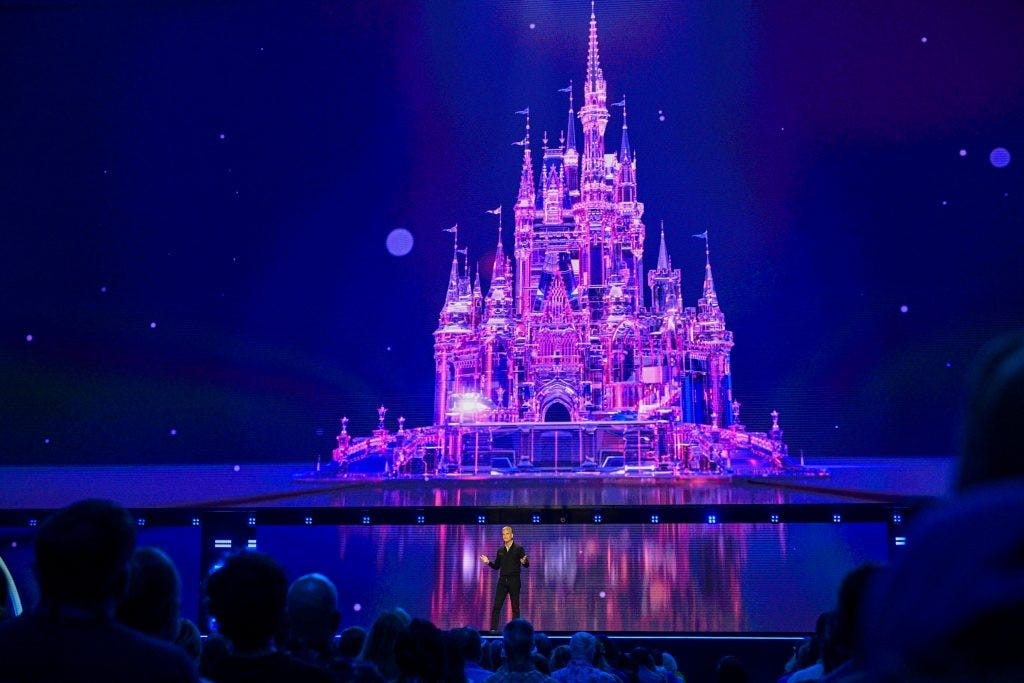
For the uninitiated... D23 is Disney’s official fan convention. The name comes from the company’s own origin story: D for Disney, 23 for 1923, the year Walt founded the studio. The fan club launched in 2009, the expo followed that same year, and it has run roughly every two years since... always in Anaheim, at the convention center across the street from the park my family invades every fall.
The modern version, rebranded as D23: The Ultimate Disney Fan Event, sprawls across the convention center by day and sells out the Honda Center... the neighboring hockey arena... by night, drawing crowds north of 100,000 across the weekend. It’s Disney’s Comic-Con, except Disney owns everything being promoted inside the con. At D23 every arm of the flywheel gets a stage... movies, television, streaming, parks, cruise ships, games... and every announcement lands in front of a ravenous audience that flew (or drove) in specifically to cheer for it. For the Disney Adults (gah, I tried)... this is their Super Bowl.
New CEO Josh D’Amaro opened the weekend with a line that best summarizes everything:
“Right now, nearly half a million people are in our parks and on our cruise ships. Millions more are watching our stories in theaters or at home. Someone right now is seeing The Lion King on Broadway for the very first time. When you add it all up, Disney has something no other brand on Earth can claim. Not just a customer base, not just an audience, but an actual connection. A connection that reaches every single corner of the globe, spans every age and every background, and becomes part of people’s lives and the memories that they carry with them. A connection with more than four billion fans. That’s half the world’s population who don’t just look to us for entertainment; they look to us for inspiration.” — Josh D’Amaro, CEO, The Walt Disney Company, via D23
Four billion fans... that’s a big number, and while the math is squishy... the framing isn’t. D’Amaro skipped right past customers and audience and went straight to connection... a CEO five months into the job, standing in front of the most faithful, describing the company as a relationship.
That’s flywheel speak.
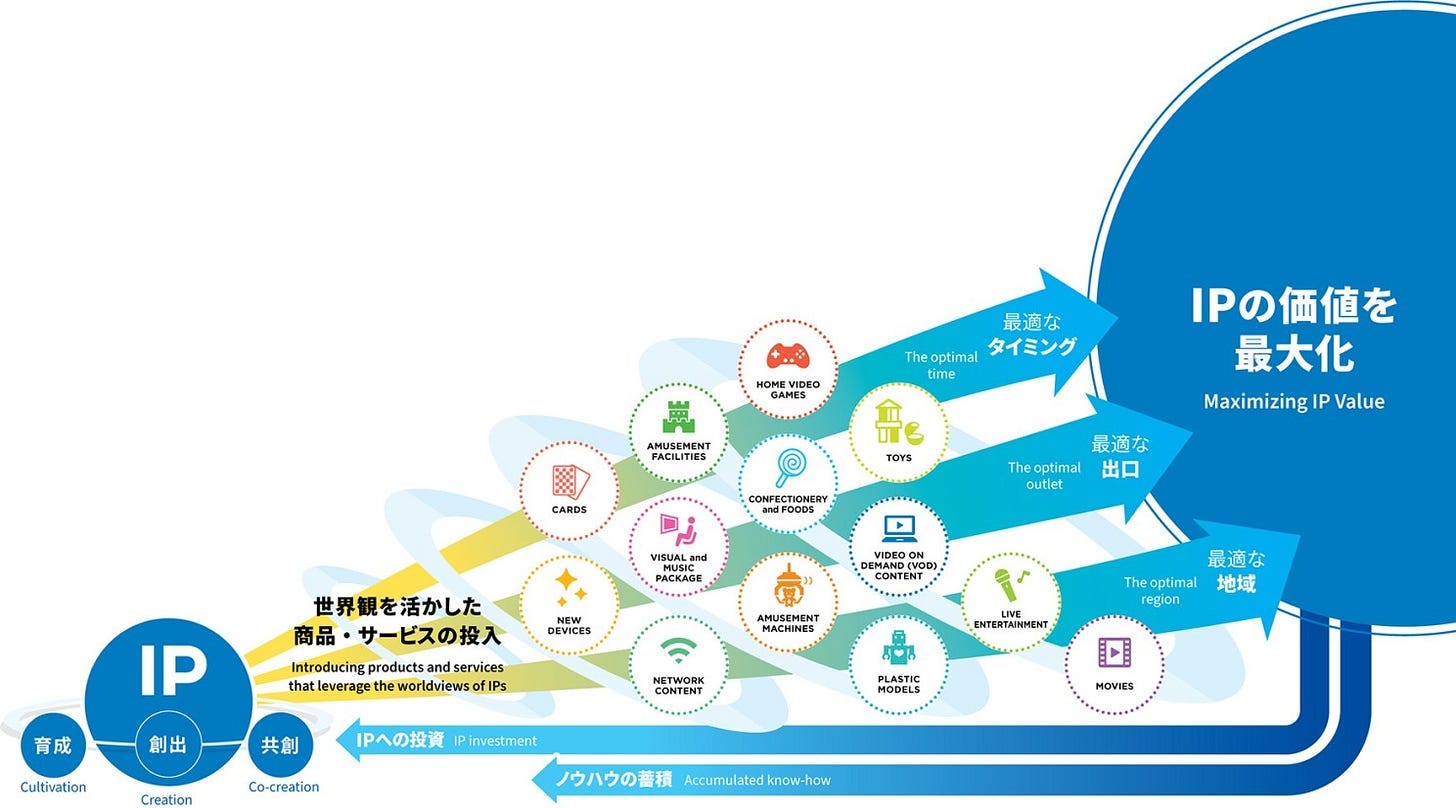
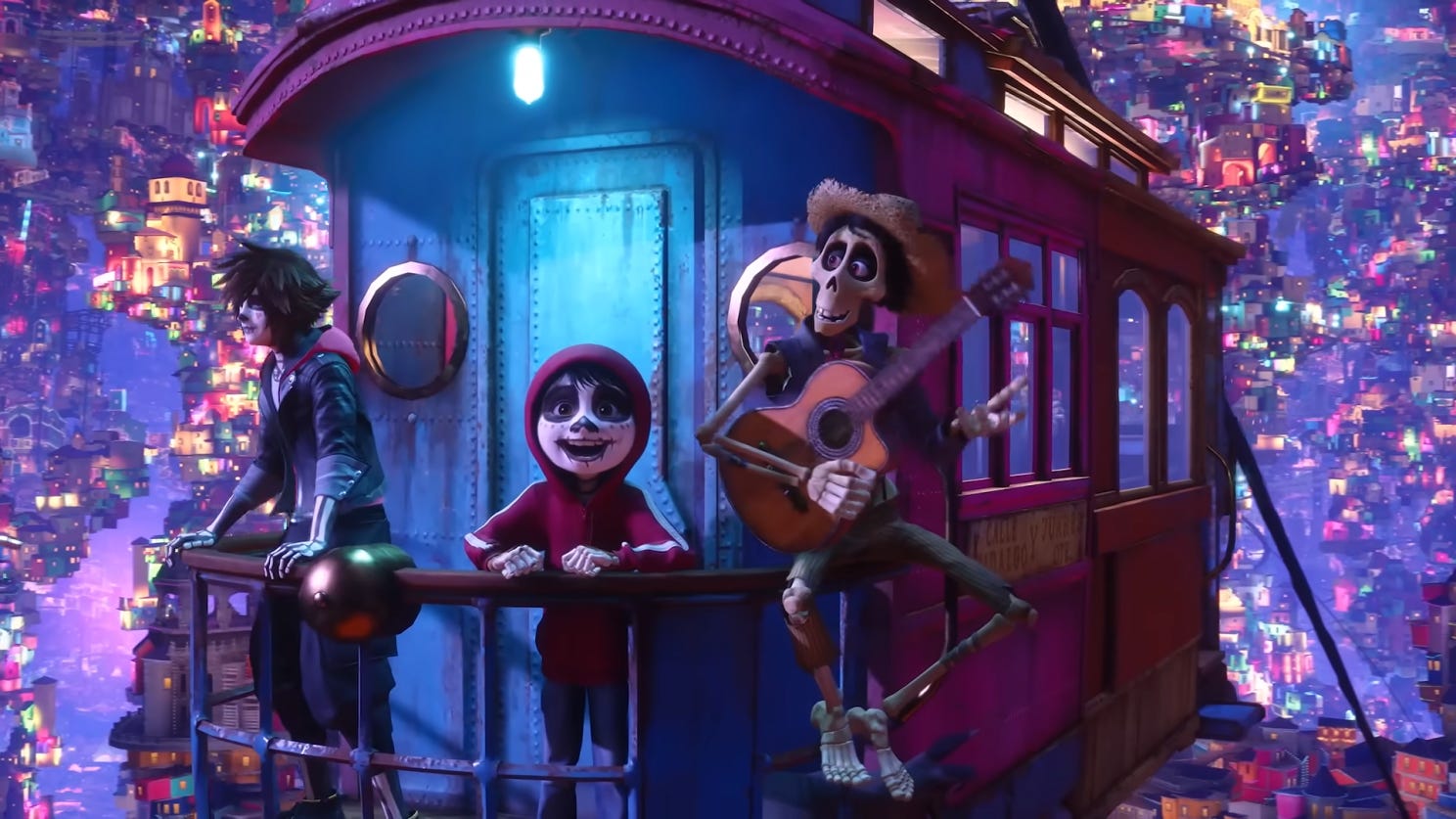
Last week I wrote that Bandai Namco’s entire conglomerate rests on one idea... the fandom is the asset, everything else is just the format... and D23 is Disney echoing the same message, just in an arena instead of an earnings report. D23 works on two levels: it rewards the fandom for its engagement (lots of excited Coco fans out there), and it loads the flywheel to spin for the next two years (see X-Men).
Movies and TV, parks, and games all got their turn... and it’s hard to argue this was anything but a wildly successful D23. Gaming was the most interesting thing to come out of the weekend for me (seriously, I can’t recall gaming getting this level of attention before)... but first, a quick run through the other announcements that caught my eye.
Movies & TV... The X-Menaissance Rolls On
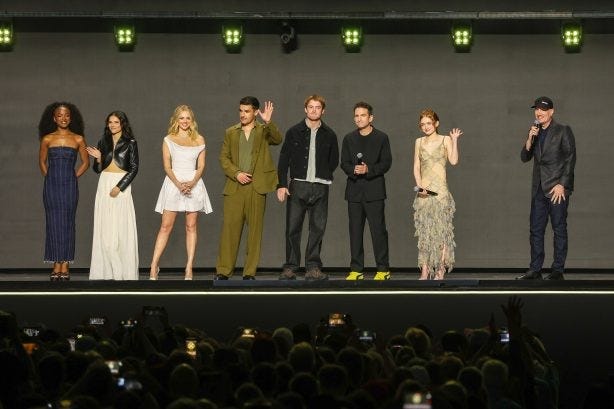
The X-Menaissance is just getting started. We just finished X-Men ‘97 Season 2... which was fine but not great. Next up is Wolverine, which comes out in a few weeks, followed by Doomsday in December. All of that was known, though... the big announcement, and the worst-kept secret of the weekend, was the reveal of the untitled X-Men film and the accompanying cast that filled the stage. Of everyone rolled out there, I was most excited about Adam Driver joining as Nathaniel Milbury (aka Mr. Sinister), and I am super interested in seeing where this goes. I’ve written plenty about the X-Men era Marvel is building toward, so I won’t relitigate it here, but the casting keeps backing up the ambition.
Outside of the X-Men, VisionQuest was the pleasant surprise of the showcase. I fully expected it to look rough... instead, the trailer looked genuinely interesting. No knock to Agatha All Along, but VisionQuest looks like a true sequel to WandaVision in tone and vibes. I say this to people all the time... the Disney+ Marvel shows have gotten better over time... which ultimately is too little, too late, as it’s reported that live-action Marvel... outside of the Daredevil universe... is not long for Disney+.
Speaking of last gasps... Ahsoka Season 2 hit me with a strange feeling. I know these characters, and some of them are among my favorites in the Star Wars canon (Thrawn specifically)... and yet... this has the feeling of being the end. Look... I can’t defend Star Wars on Disney+. It’s been bad outside of Mando and Andor. The Disney+ era has made Star Wars more like Star Trek than I’d like to admit (hitting a quality level south of .300). Which is why, like Marvel... I’m not shocked to hear this is likely the end for Star Wars as a TV enterprise outside animation. And you know what? That’s a good thing. Will Ahsoka be good? I hope so... at least the fan in me hopes so, given how much I love Thrawn... but will it be? Eh. And that’s just where we are at as a Star Wars community.
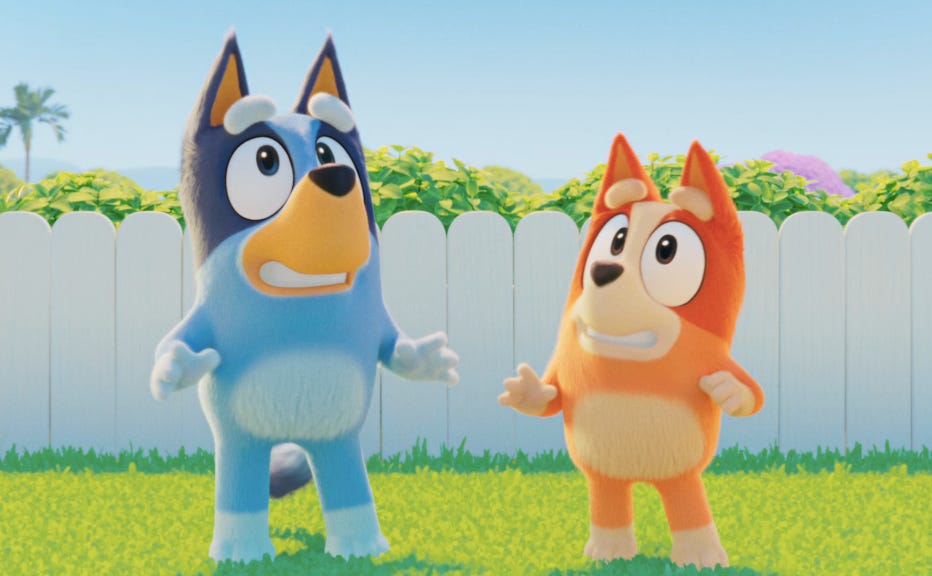
Finally, the animation slate. First... Bluey. Am I thrilled that it’s 3D animation? No... it’s an odd choice in what is the most layup movie ever made. Just give us an hour and a half of Bluey... you left the end of S3 in such an interesting place, for both kids (Bluey and Bingo don’t have to leave their childhood home!) and adults (are Stripe and Trixie getting a divorce!??). That said, until proven otherwise, I’m not betting against Bluey creator Joe Brumm.
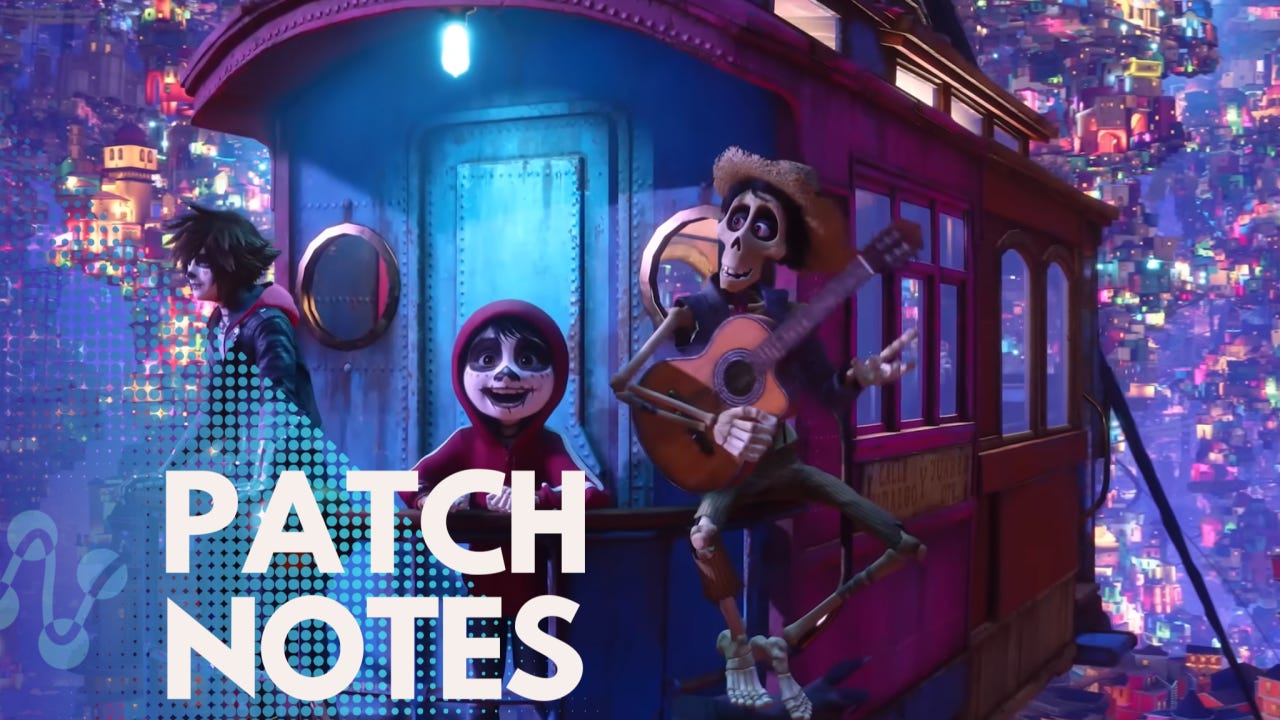
Beyond Bluey... Disney had the most no-brainer greenlight of the weekend. No... not Frozen 3 or Zootopia 3. That honor goes to Coco 2, dated for November 2029. Coco is the best Pixar movie of the last fifteen years... and Disney clearly knows what it has, because Coco showed up three separate times across the weekend. First, the sequel. Second, an appearance I’m putting a pin in for later. And third... a ride.
Speaking of rides...
Parks... Every Park Should Be Unique
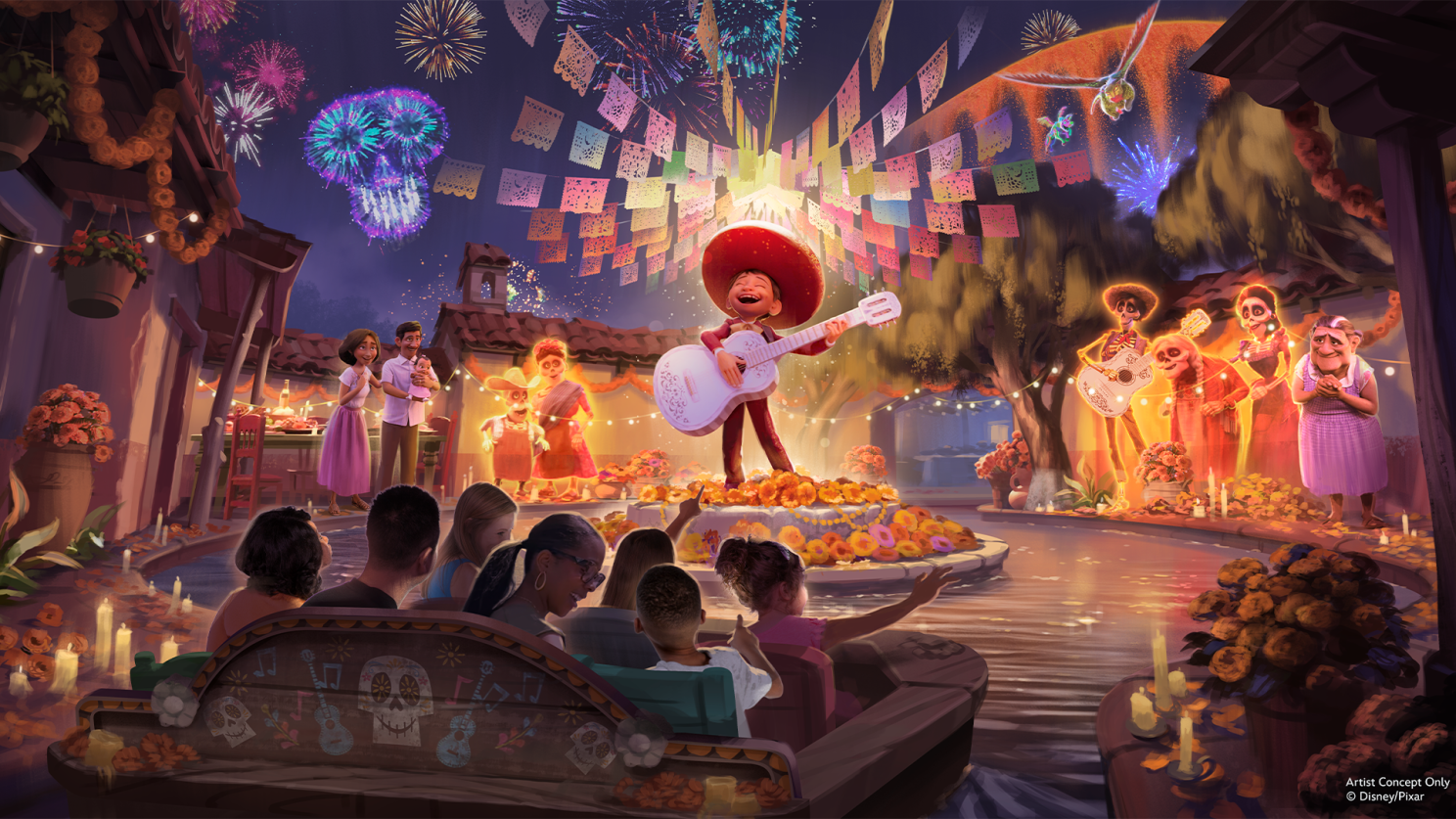
The Coco boat ride was technically announced back at D23 2024, but this weekend is when it became real... construction is underway behind Pixar Pier, and we finally got the story. The ride picks up one year after the film, with Miguel traveling by boat through his memories of the Land of the Dead, a queue built as a casa museo honoring Héctor, and nods to Coco 2 woven in with Pixar’s help. The Imagineers are name-checking Pirates of the Caribbean and Haunted Mansion as inspiration... setting the bar pretty high. No opening date yet (the construction sequencing points to 2029)... which means years of material for the park-content creators my kids follow religiously. When it opens, it’s the most popular ride at that park... and it won’t even be close.
The bigger Anaheim surprise came in the showcase’s closing moments: Tomorrowland is getting reimagined, and Disney is delaying the Avatar project at California Adventure to prioritize it. The vision, per Disney’s own announcement:
“The plans for Tomorrowland will restore the spirit of optimism, innovation, and possibility that inspired Walt Disney to create “a vista into a world of wondrous ideas…” in 1955 and have defined this land for decades.” — via Disney Parks Blog, August 2026
Getting nerdy for a second... Tokyo Disneyland is mid-rebuild on its own Space Mountain right now, reopening in 2027 as Space Mountain Earthrise with an entirely new Tomorrowland plaza around it. My head went straight to that being the template for Anaheim. Between Coco, a rebuilt Tomorrowland, and Avengers Campus doubling in size by 2028, the two California parks are each getting their own thing... which is the part I care about most.
That same reason is why the Disney World news made me happy for Florida... given my well-documented feelings about those parks. Villains Land got its official name and its first two rides: a Maleficent coaster racing through the enchanted briar around her mountaintop fortress, and an Evil Queen Magic Mirror dark ride stuffed with the full rogues gallery. Add the Monsters Inc land at Hollywood Studios and a Cars area in Frontierland deliberately different from DCA’s Cars Land... none of it cloned from Anaheim, and that’s the whole point.
World’s problem has always been that too much of it is a carbon copy of Disneyland with more square footage, and the parts of World worth defending (Epcot, basically) are the parts that exist nowhere else. Every park getting its own identity gives me actual reasons to visit both coasts... Villains Land alone will eventually put Florida back on my family’s map.
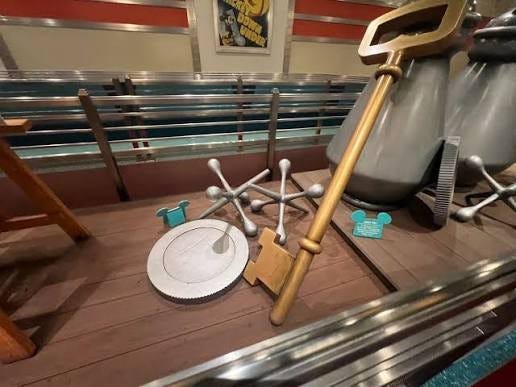
One more thing about the parks, though... look at how much gaming is bleeding into them. For years, the best I got was a slight nod to Kingdom Hearts inside the queue for Mickey & Minnie’s Runaway Railway at Disneyland... a Keyblade sitting on a shelf among a pile of other Mickey memorabilia.
The week of D23, Epic and Disney turned Galaxy’s Edge into an unlock mechanic... ride Smugglers Run at the park, earn the Forsworn Trooper skin in Fortnite. The parks and the games are starting to feed each other the way the movies and the parks always have... the flywheel adding a spoke in real time. Disney spent decades treating gaming as licensed merchandise.
This weekend made clear that era is over.
Disney... Finally Takes Games Seriously
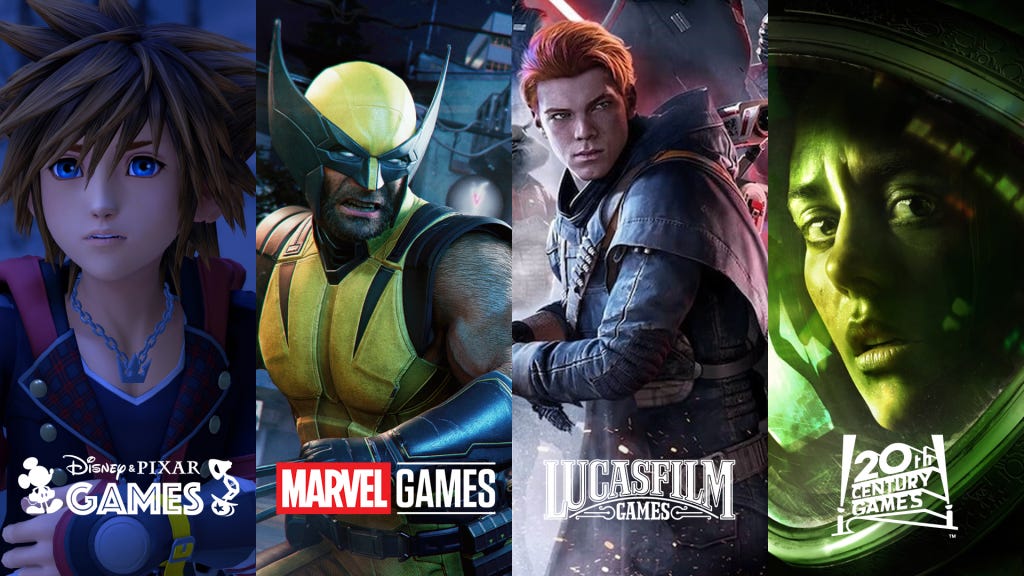
And nothing made that clearer than the games themselves getting showcase real estate. Marvel’s Wolverine had a big moment at the Entertainment Showcase... a new trailer, in partnership with Sony Interactive, three weeks from launch. I’ve covered Wolverine extensively already... including this week... so I’ll leave it linked and move on to the two stories I haven’t told.
Kingdom Hearts got a full panel, a four-minute trailer, a locked release window, and... to be frank... a shocking... and long overdue... anime series announcement. The often overlooked and underappreciated Disney Dreamlight Valley got its own panel and a content roadmap stretching into next year. Gaming hasn’t commanded this much D23 real estate since 2015... back when Disney Infinity headlined and Disney still made its own games. In the licensing era since, gaming mostly lived on the show floor... a booth here, an Epic Mickey panel there. This weekend it was on the marquee, twice.
Disney also did something it has never done before... it bragged. A blog post published the week of D23 put numbers on the operation for the first time: nine billion-dollar game franchises, and consumer spend that crossed $4 billion this past fiscal year. You don’t publish a victory-lap blog post about your t-shirt business... and for most of Disney’s history, that’s exactly where games sat, somewhere between the plush aisle and the action figure line. Sean Shoptaw, the EVP running Disney Games, sees it differently:
“The way Disney is shaping the future of interactive entertainment through games is really acknowledging that games have become a foundational part of the broader entertainment landscape... We’ve built a really foundational footprint in games today... nine games that have grossed over $1 billion at retail. So, it’s about telling truly original stories that really are unique to this medium, specifically.” — Sean Shoptaw, EVP, Games and Digital Entertainment, The Walt Disney Company, via Disney, August 2026
The same post describes games as increasingly the first place new audiences discover Disney’s characters and worlds. The licensing outpost became a front door.
The two doors I want to walk through this week are the ones D23 spent the most time on... Kingdom Hearts, the strangest and most durable partnership in gaming, and Dreamlight Valley, the quiet machine most people have never thought twice about. Both are licensing plays... are wildly successful... and only exist because of a decision Disney made a decade ago that looked, at the time, like surrender.
To understand where they’re going, start with where they came from... because the road here runs through some of the most expensive failures this industry has ever produced.
How Disney Learned To Stop Making Games
Disney has been in and around games since the NES era, and for most of that history the best Disney games were made by other people. Capcom gave us DuckTales... still one of the most iconic platformers ever made... and one of the good Aladdins. Virgin gave us The Lion King (a game with a difficulty reputation that traumatized an entire generation of kids). Squaresoft, which became Square Enix in 2003 (more on them in a bit), gave us Kingdom Hearts. Disney supplied the characters... the craft came from somewhere else.
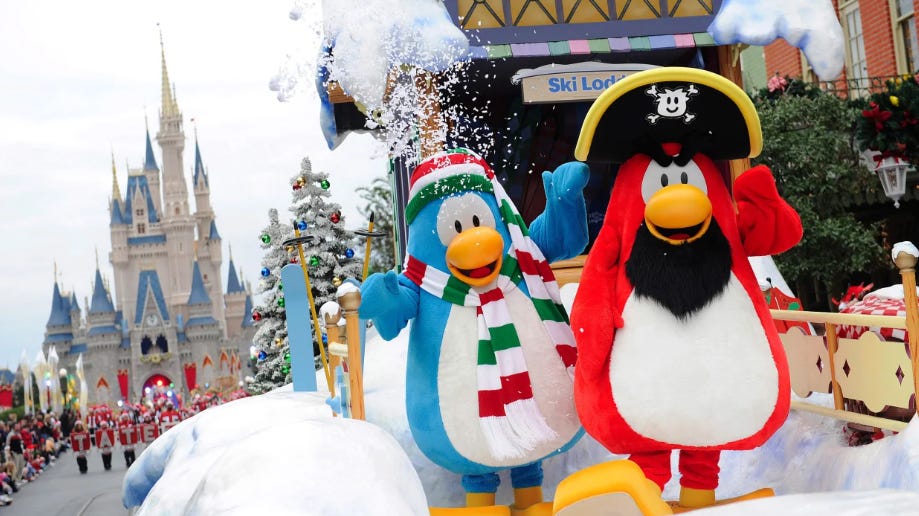
The 2000s are when Disney decided it wanted to own the whole stack... acquiring Avalanche Software in 2005, dropping $350 million on Club Penguin in 2007 (up to $700 million with earnouts) while the kid-MMO was thriving with hundreds of thousands of paying subscribers, adding Warren Spector’s Junction Point that same year to build Epic Mickey, and topping it off with $763 million for social gaming company Playdom in 2010. Disney Interactive became a real publishing operation with real studios... and it bled money the entire time, losing $1.4 billion between 2008 and 2013 while the rest of the empire (i.e. cable TV & ESPN) propped it up.
Even the crown jewel acquisition got the same treatment. When Disney bought Lucasfilm in 2012, it inherited LucasArts... one of the most iconic studios in gaming history, a genuine creative institution... and Iger told analysts on the acquisition call that Star Wars gaming would focus on social and mobile, with console handled “opportunistically” through licensing. LucasArts was dead within six months, and I still consider that decision a crime. I wrote an entire love letter to LucasArts and what Star Wars gaming lost earlier this year, so I won’t relitigate it here... but the EA exclusive that replaced it is a wound Star Wars gaming still hasn’t fully healed from.
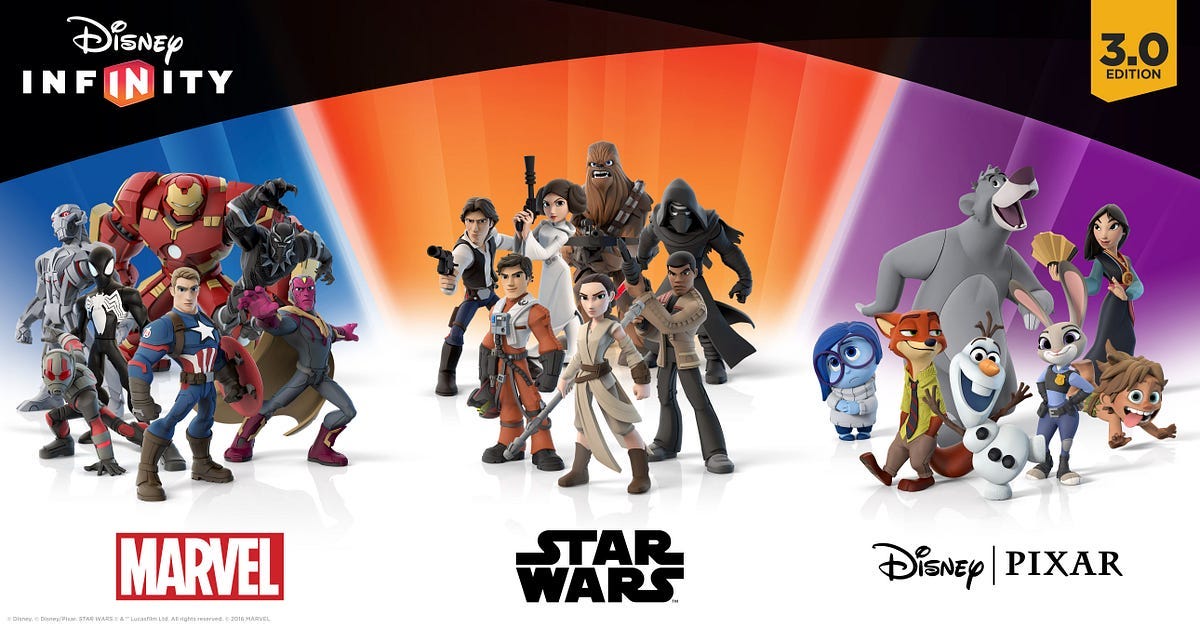
In 2013 Disney finally found a hit... in the form of Disney Infinity which rode the toys-to-life wave Skylanders started, and it worked... the first release sold well, the figures moved, and the interactive division touched profitability for the first time in years. For a moment, Disney was a real video game publisher with a real platform.
That moment lasted about three years. In May 2016, Disney killed Infinity, closed Avalanche, laid off close to 300 developers, and took a $147 million bath. The Wall Street Journal’s Ben Fritz called it the end of Disney as a video game publisher. Bob Iger explained the decision to analysts:
“We just feel that it’s a changing space and that we’re just better off at managing the risk that that business delivers by licensing instead of publishing. It’s just that simple.” — Bob Iger, CEO, The Walt Disney Company, via Game Informer, May 2016
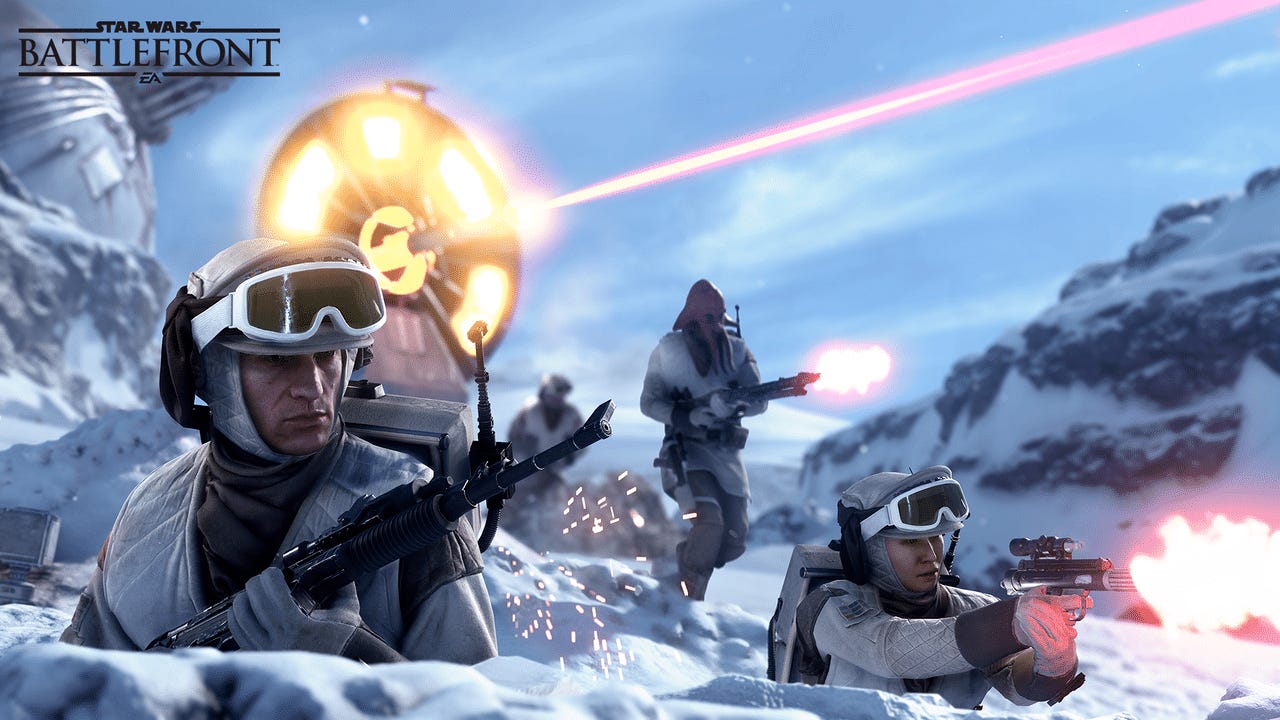
It read as surrender at the time... a $180 billion company admitting it couldn’t compete in an industry built on its own core competency, which is making people love characters. Battlefront had already made the case internally... EA sold 14 million copies in fiscal 2016, with Disney collecting royalties on every one, while Infinity was drowning in inventory risk. To put it another way... one business made money when a game hit and carried little to no risk on the Disney balance sheet, whereas the other side owned warehouses full of unsold Buzz Lightyear figures.
Three years later, an analyst asked Iger whether games were even still on Disney’s radar. His answer is the most honest thing any Hollywood executive has ever said about gaming:
“We’ve tried our hand in self-publishing. We’ve bought companies. We’ve sold companies. We’ve bought developers. We’ve closed developers. And we found over the years that we haven’t been particularly good at the self-publishing side, but we’ve been great at the licensing side, which obviously doesn’t require that much allocation of capital... We’re good at making movies and television shows and theme park attractions and cruise ships and the like, and we’ve just never managed to demonstrate much scale on the publishing side of games.” — Bob Iger, CEO, The Walt Disney Company, via GamesIndustry.biz, 2019 earnings call
Bought companies, sold companies, bought developers, closed developers... Junction Point in 2013, Avalanche in 2016, Club Penguin by 2017, LucasArts barely six months after the ink dried... eulogized in a single breath. Hollywood does this constantly... entertainment companies overlook gaming, dabble expensively, retreat, then rediscover it a decade later as the savior for their aging IP. Disney ran that entire cycle while gaming went on a historic run through the 2010s and became the biggest entertainment medium on the planet.
Disney never actually left games, though... it left game development. The characters stayed on every screen the whole time, because the licensing model kept the franchises alive as customer touchpoints... the same flywheel mechanism I wrote about Bandai Namco running last week, and the same one that let years of Spider-Man games cash in on one movie weekend. Every hour a kid spends in a Star Wars game is an hour the fandom compounds... and if Disney collects a royalty on it, even better. Disney had the IP... publishers had the craft and the marketing muscle Disney never developed.
The decade since has settled the argument. Avalanche reopened under Warner Bros. and made Hogwarts Legacy... the best-selling game of 2023, built by the team Disney let go (ouch). Everything else, though, mostly broke Disney’s way. Insomniac’s Spider-Man became PlayStation’s crown jewel. NetEase cracked the western market with Marvel Rivals. Second Dinner’s Marvel Snap earned itself a rare Game of the Year nomination at The Game Awards... as a mobile game. Square Enix kept Kingdom Hearts alive. Gameloft turned a life sim into a machine we’ll get to shortly.
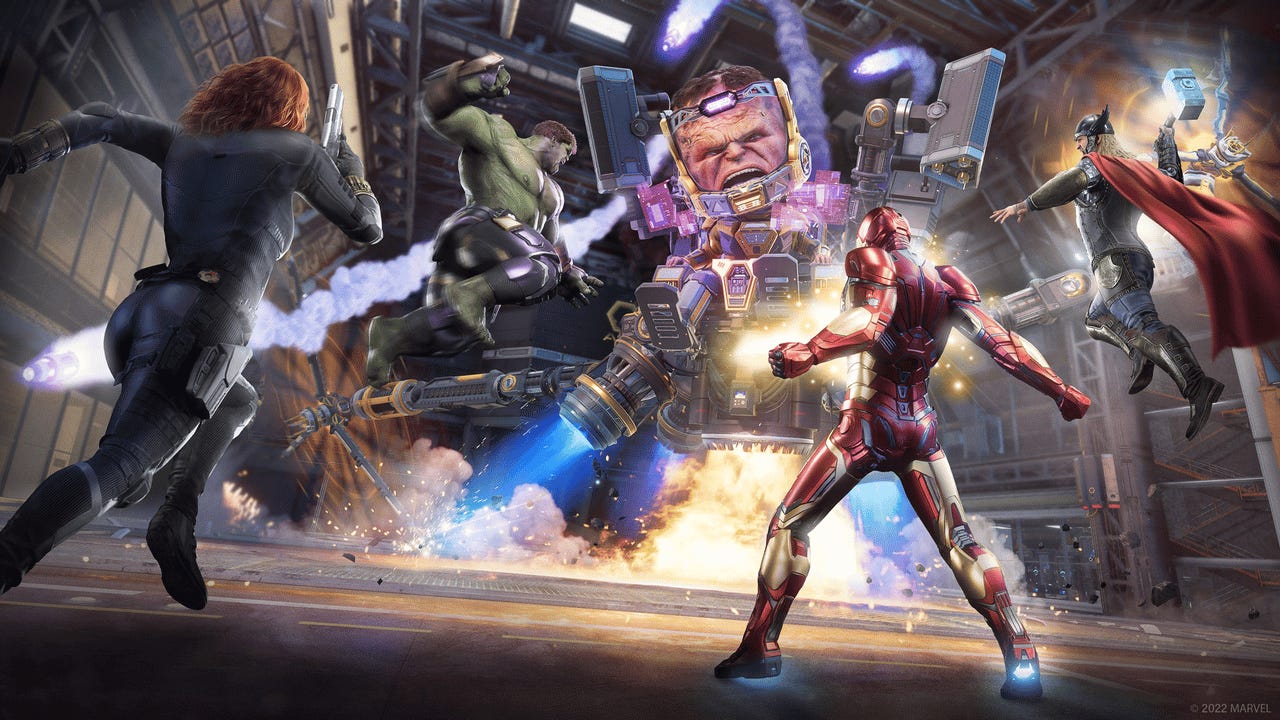
Sure, Square Enix’s Marvel’s Avengers was a huge miss... we still haven’t seen Blade (is this franchise just cursed at this point?)... and Disney Mirrorverse was short-lived. But that’s the risk you run when you run a licensing operation, and the hits outweigh the losses.
And the one time Disney reached back into the pool, it didn’t build... it bought, putting $1.5 billion into Epic Games in 2024 for a piece of the platform where its characters already lived. I’m still very TBD on this move... but if it was just a means of ensuring Disney and its characters have a steady pipeline into Fortnite, then maybe it’s worth it from a marketing perspective alone.
Add it up and you get the numbers from that victory-lap blog post: $3.5 billion in annual consumer spend for four straight years, crossing $4 billion this past fiscal year, nine franchises over a billion dollars... and Disney’s development headcount for all of it rounds to zero. Was the pivot visionary or lucky? Honestly, a bit of both... but the results speak for themselves. Disney’s actual genius was never shipping games... it’s picking partners and managing IP, while someone else pays to keep the old flywheel spinning. Disney just learned that the expensive way.
Which brings me to the two best proofs the model works... starting with the one nobody talks about.
Disney Dreamlight Valley... The Daily Ritual For Disney Adults
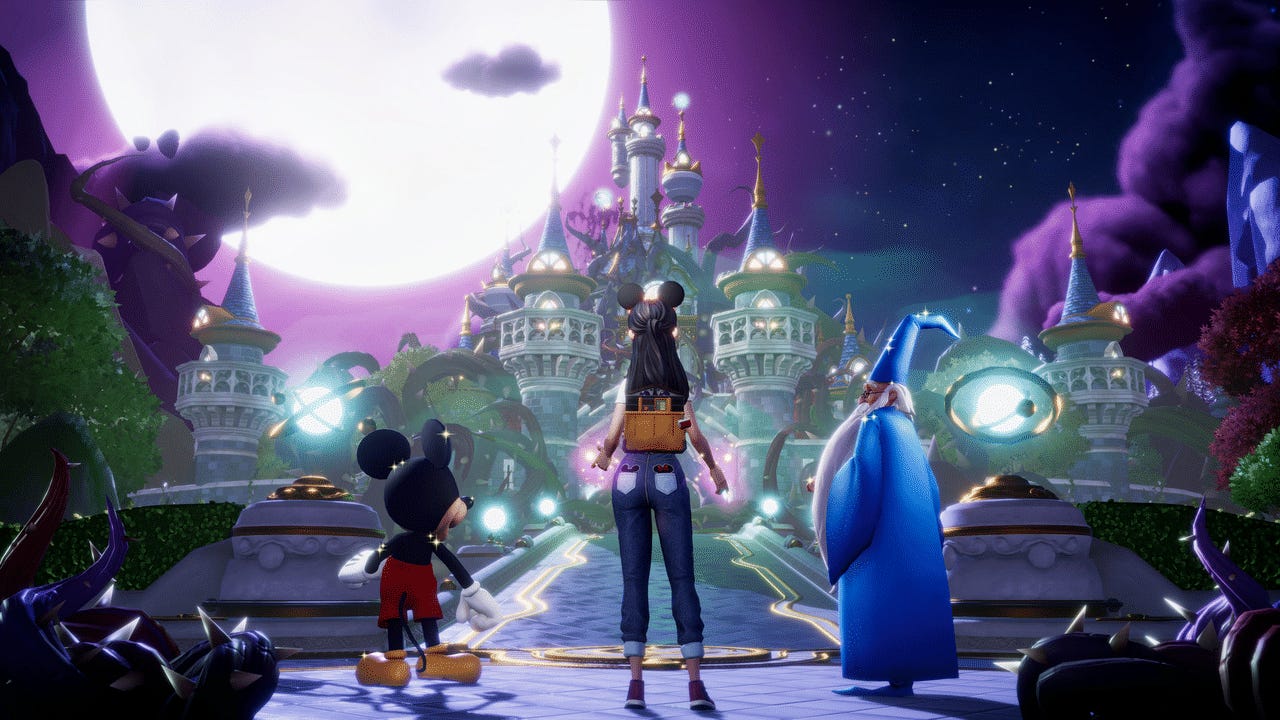
Of Disney’s nine billion-dollar gaming franchises, Dreamlight Valley is the one nobody brings up... no glossy console showcases, no discourse across gaming media or the LinkedIn gaming illuminati, barely any coverage outside the cozy-game corners of the internet. Meanwhile it has shipped four years of continuous updates, three paid expansions, and a dedicated Switch 2 edition this March... and just got its own D23 panel with a content roadmap running deep into next year.
And yes... I’m caving on the whole Disney Adult schtick because... frankly... there is no other honest way to describe who this game is for. DDV (as those in the know call it) is a cozy life sim built to give the Disney faithful a digital place to visit every single day. Now, I don’t play it myself... I only have room for one cozy game and that’s Pokopia... but it doesn’t matter, because this game was never chasing me.
And the fact that a game this big can hide in plain sight tells you something about who built it... because Gameloft might be the most underestimated name in Disney’s entire partner stable.
A Life Sim Only Gameloft Could Have Built
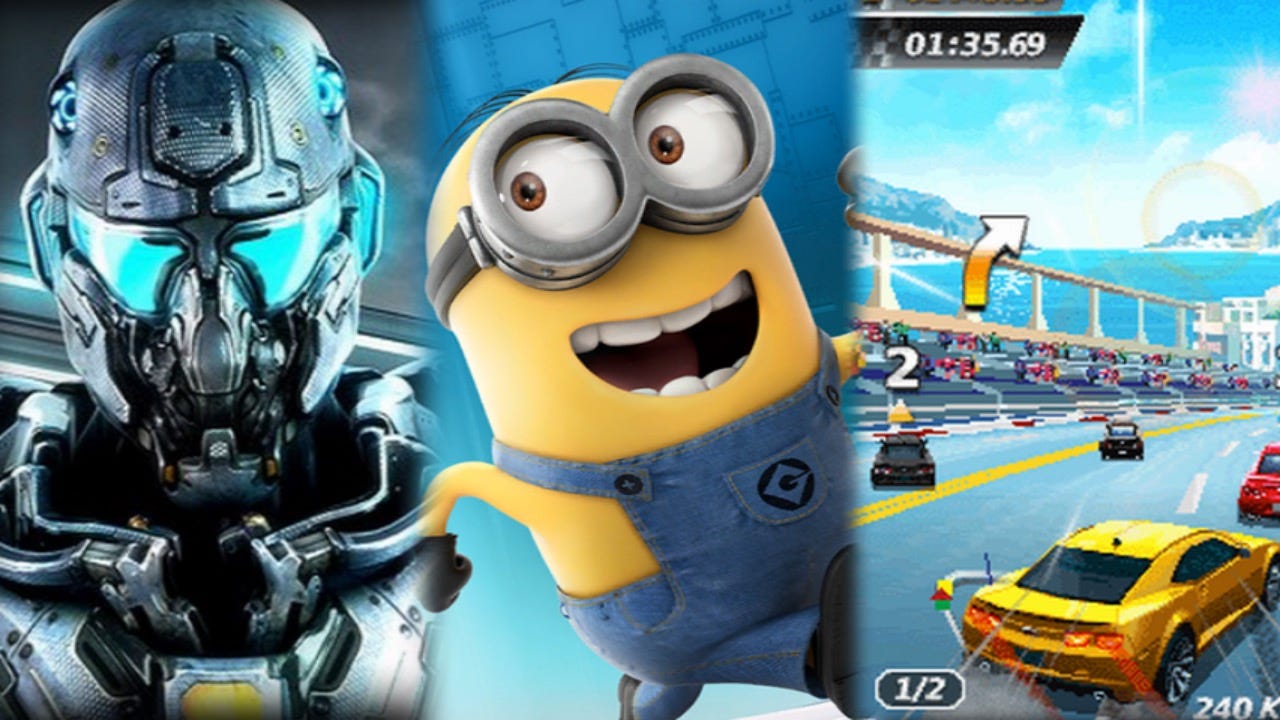
Gameloft is a misunderstood company. Founded in 1999 by Michel Guillemot (one of the five Guillemot brothers behind Ubisoft), it became one of the biggest mobile developers on the planet during the feature-phone and early smartphone era... then got swallowed by Vivendi in a hostile takeover in 2016 and written off by the core gaming crowd as a shovelware factory. The reputation skips over the Disney résumé... Gameloft has run Disney’s mobile catalog for the better part of a decade (Disney Magic Kingdoms, Disney Getaway Blast, and later Disney Speedstorm all live under its roof), and years of shipping licensed Disney product without embarrassing the brand is how a partner is able to seize the opportunity when it arises... well, that and timing.
To that end, the moment came when Animal Crossing: New Horizons sold 40+ million copies during the pandemic and proved the cozy-game audience was enormous, underserved, and starving for exactly the comfort Disney characters were invented to deliver. Disney, meanwhile, had no internal studio left to chase that audience even if it wanted to... so if a Disney life sim was going to exist, a partner had to build it. Dreamlight Valley was announced in April 2022 and hit early access that September.
The game itself is Animal Crossing’s daily-chore compulsion wrapped in Disney friendship meters. Your valley has fallen apart after an event called the Forgetting... the characters have retreated to their own realms, night thorns cover everything, and you’re the one restoring it all. The loop underneath: clear thorns, harvest crops, fish, mine, cook, and hand villagers their favorite gifts (which rotate daily... the game is not subtle about wanting you back tomorrow), all of it feeding friendship levels that unlock quests, rewards, and story.
Dreamlight... the currency you earn from daily duties... opens new biomes, character realms bring more villagers home, and Scrooge McDuck runs the shop with rotating stock, because every villager wants to help the valley and Scrooge (being very on brand) just wants to make money doing it. Weekly DreamSnaps photo competitions and battle-pass-style Star Paths sit on top. None of it is mechanically new... the design is a machine for showing up every day, and it’s honest about it.
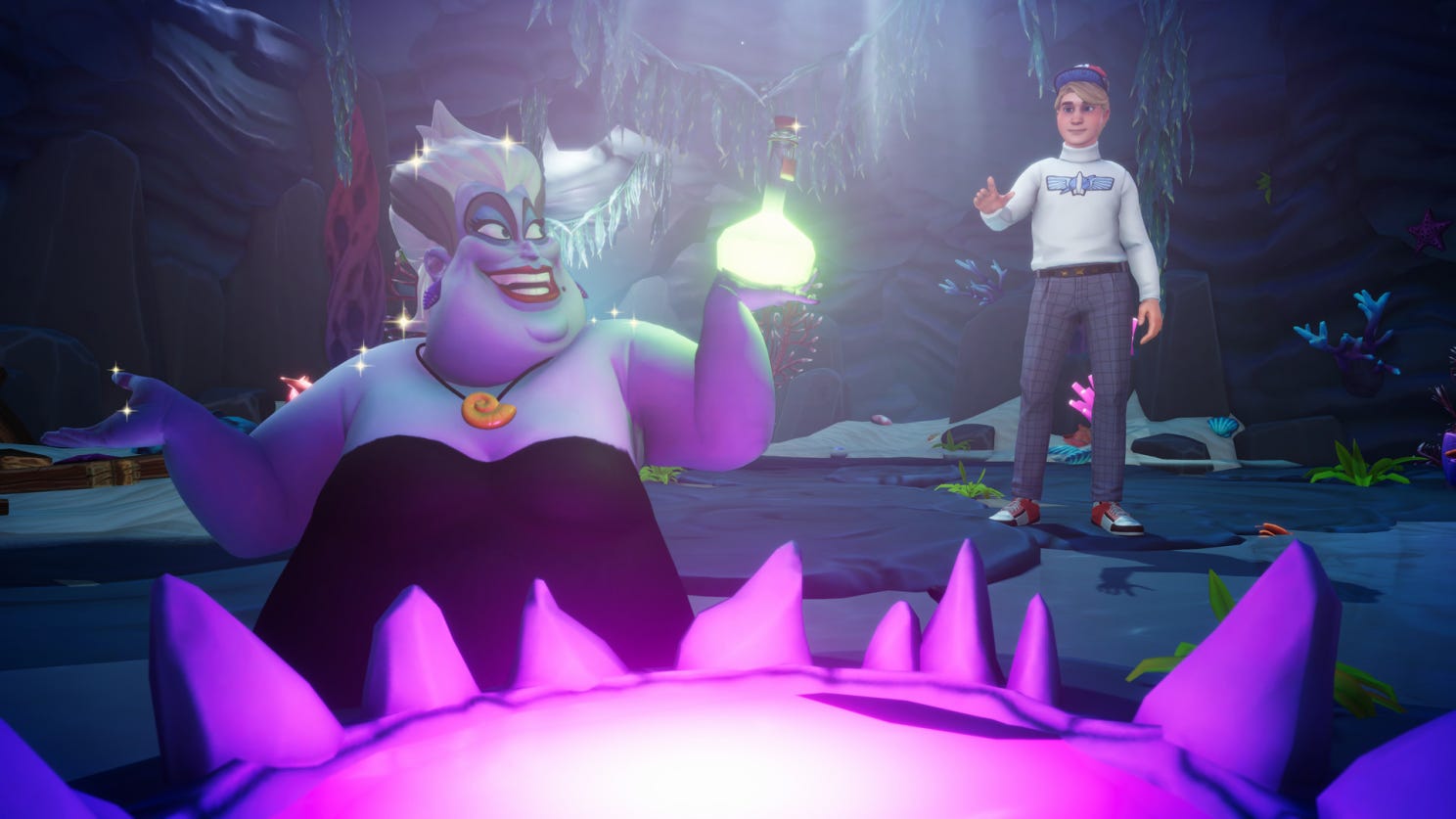
The premise is the part Disney had never signed off on at this scale. Disney characters have always lived in separate canonical boxes... Dreamlight Valley built its entire appeal on opening them:
“So this is one of the key topics that we envisioned from the beginning on the game is being the first game where you can see Buzz and WALL-E talk together, Moana and Goofy, for example, or Kristoff and Mother Gothel. It felt for us, like any Disney fan would want to see that. In our opinion at least, it was one of the key things we wanted to see, all these characters interact together and not just waving or saying hello, having actual lines of dialogue and also be part of the quest” — Manea Castet, Gameloft, via ComicBook, January 2023
Character mashups are not anything new. A certain Square Enix franchise spent 20 years proving how powerful that mashup instinct is (we’re getting there)... Dreamlight Valley runs the same play at cozy-game pace. Even the lore does licensing-era work... the valley is a dream world where every character keeps their own realm, which is the narrative version of a rights structure.
The launch outran everything Gameloft had ever shipped... a million players in under ten days, and the team said so in plain terms:
“Amazing. Honestly, it’s above expectations in all topics: performance, revenue, reviews. We got overwhelmingly positive on Steam; we got really nice reviews in general. This is literally the biggest launch ever at Gameloft in all of Gameloft’s history, so we could not be happier.” — Manea Castet, Gameloft, via ComicBook, January 2023
It wasn’t all smooth. The game was announced as free-to-play, then Gameloft reversed course in October 2023 and shipped 1.0 as a paid title... a promise-reversal that genuinely angered part of the community. The first expansion drew pacing complaints the team openly copped to, and the Moonstone economy still gets grumbled about. The reversal aged well, though... premium positioning kept aggressive-F2P optics away from a game at a time when F2P was falling out of style... and well... the audience paid up anyway (as Disney Adults tend to do).
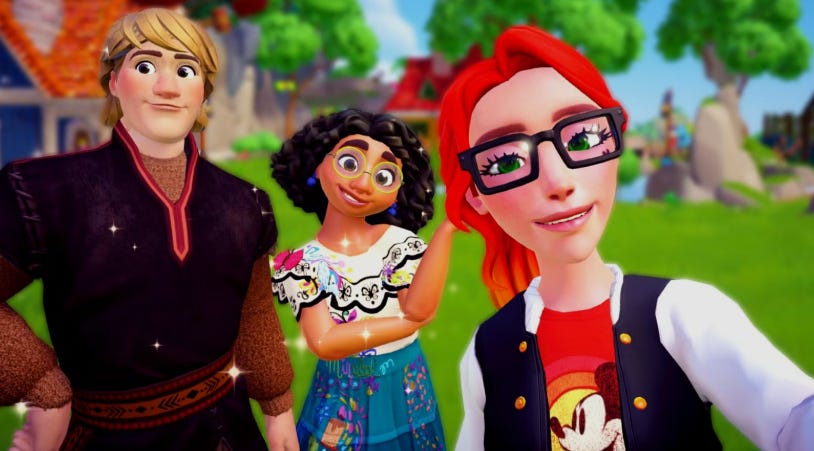
Four years in, the operation runs on cadence... updates every couple of months, each delivering a new character, timed to whatever the flywheel needs. Tiana arrived alongside Tiana’s Bayou Adventure opening at the parks... a Star Path celebrated the parks themselves... and the D23 panel laid out the next year: The Keepsake Sea (the fourth expansion, late 2026), Oogie Boogie for Halloween (my daughter approves), Lilo reuniting with Stitch for the holidays, and... in the most Disney Channel move imaginable... a Hannah Montana and Lizzie McGuire collection that dropped this week (millennial nostalgia).
The Data Behind The Daily Ritual
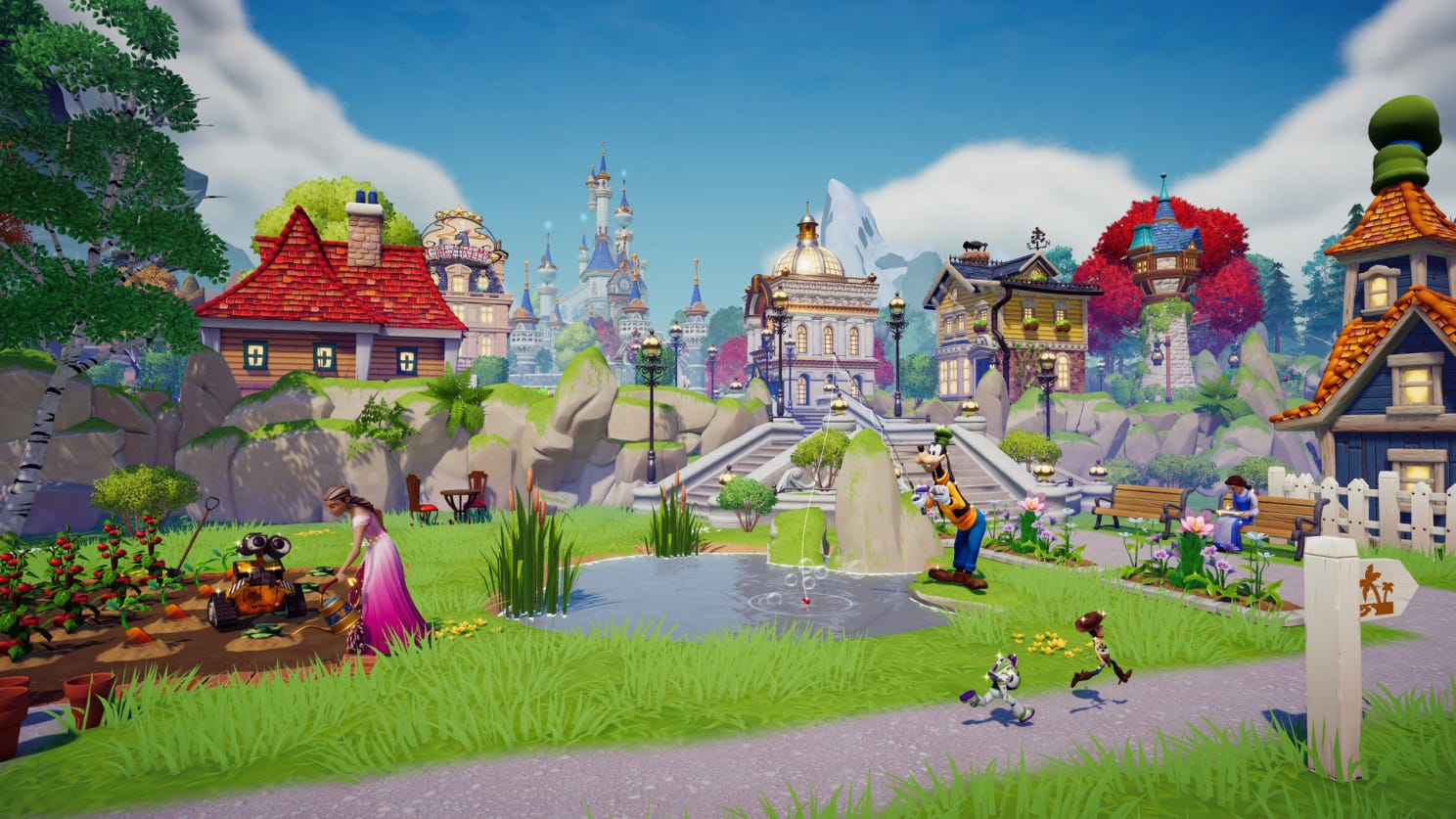
So how big is DDV? Nobody outside Gameloft knows... and honestly, DDV is a hard game to track. It lives on Switch, PlayStation, Xbox, PC, and Apple Arcade all at once, which means staring at Steam charts tells you almost nothing about what’s actually happening. When Polygon asked the creative director for active player counts last year, the answer was a polite dodge (”healthy and stable”).
This is where tracking attention gets interesting... because DDV’s presence inside the Disney fandom is remarkably consistent, and remarkably large. I ran the numbers on the entire Disney gaming ecosystem the week of D23: DDV accounts for roughly 6% of all Disney gaming attention... the second-biggest game in the whole portfolio behind only Marvel Rivals, and bigger than any single Star Wars title.
Dreamlight Valley peaked at launch, as everything does... roughly 0.33% of all gaming attention in a single week of September 2022, a genuinely big number for a life sim. The years since have settled into a pattern I’d describe as a heartbeat. Average weekly mindSHARE ran about 0.107% across 2023... 0.106% across 2024... 0.107% across 2025. Three consecutive years, flat to the third decimal... and inside that flatness, the pulses land exactly where you’d expect.
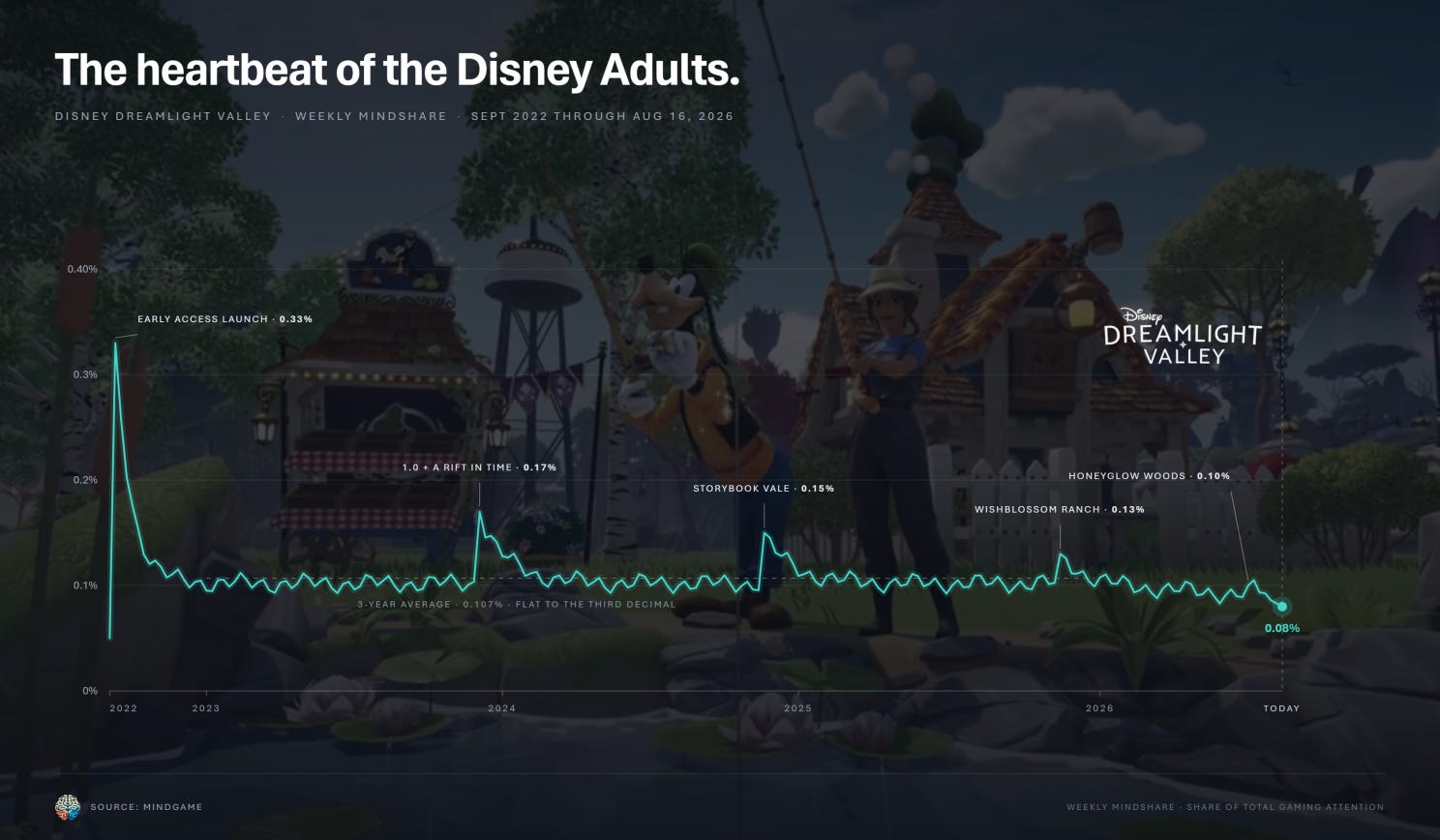
The 1.0 launch alongside A Rift in Time more than doubled the game’s attention (roughly 0.07% to 0.17%) and held it there through the holidays. Storybook Vale pulsed the line about 60% the week it dropped. Wishblossom Ranch, close to 50%. Honeyglow Woods this summer, about the same. Each pulse decays back to baseline within two to four weeks... and the baseline itself hasn’t dipped below roughly 0.06% in three years. Content moves this audience, and apparently only content... the Switch 2 edition in March, a genuinely significant platform release, barely registered a blip.
Live-service games do not behave this way. Most collapse within a year... the popular ones settle into a long, steady decline. A flat floor with clockwork content pulses is the attention signature of something rarer: a core audience that shows up habitually, absorbs each drop, and stays. The Disney Adults come back the way they book the fall park trip... on schedule, without being asked twice.
Which is exactly why Disney keeps loading the game with touchpoints. Tiana timed to a ride opening... a Star Path celebrating the parks... Hannah Montana for the millennials... Oogie Boogie for Halloween. People buy the game and play the game, but what Disney gets is a daily, habitual line into its most devoted fandom... a place to keep the relationship warm between park trips and movie premieres, and to plant the next reason to spend. Dreamlight Valley isn’t just a licensed hit... it’s the flywheel’s maintenance schedule.
DDV is the quiet kid in the room... a flat line that never spikes and never dies. On the other side is Kingdom Hearts... the loud teen you cannot take your eyes off of when it enters the room... and I don’t just mean the hairstyles. To some, this franchise is insane and impossible to wrap your hands around... but for others, it’s that special mix of JRPG tropes and Disney IP that makes this franchise truly one of one.
Kingdom Hearts... The Fandom Disney Forgot It Had
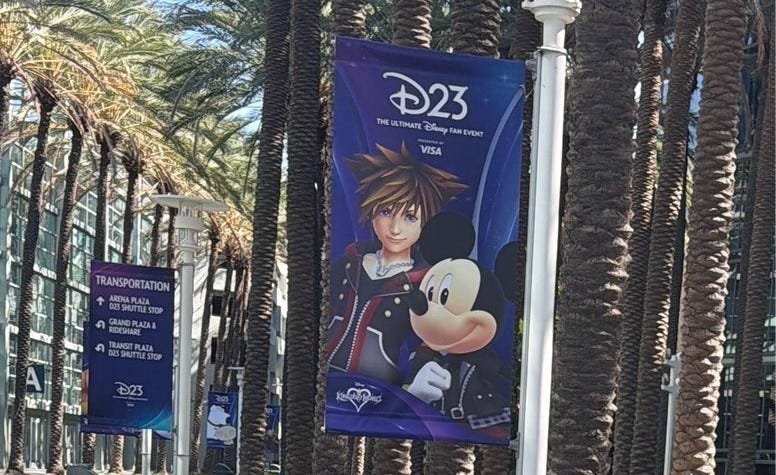
In the run-up to D23, Disney hung banners of Sora across Anaheim... and I genuinely did a double take. Banners... of Sora... hoisted by The Walt Disney Company, in public, next to Star Wars and Monsters Inc. If you’ve followed this franchise for any length of time, you understand why I had to check what world I woke up in... because for most of its 25-year existence, Kingdom Hearts has been the beloved child Disney barely acknowledges at family gatherings.
And now it’s a named billion-dollar franchise that Disney is ready to fully embrace, with a D23 panel... extended-look trailer... and the first Kingdom Hearts television series ever greenlit. What a time to be alive... honestly, I never thought I’d see this day. To that end, I might go long here because I have a lot to say about Kingdom Hearts... but look... I have a Keyblade in my garage... so consider me red pilled on this franchise.
My Own Journey Through The Darkness
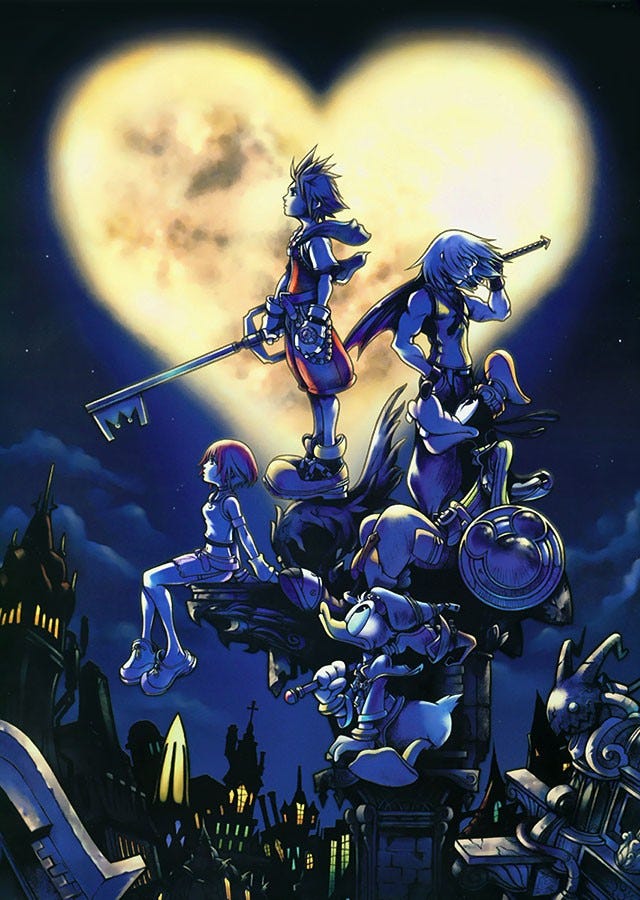
Kingdom Hearts caught me in 2002, my senior year of high school, at the absolute peak of my Squaresoft devotion. And I mean devotion... the original Final Fantasy, FFVI through FFIX, Chrono Trigger, Super Mario RPG (the best Mario RPG ever made, still), and yes, I even sat through the very terrible Final Fantasy movie out of loyalty. Anything Square Enix touched, I was in day one. A Disney game, though? Absolutely not... that was the reflex. What got me through the door was the promise of my Final Fantasy heroes living inside it... Cloud, Sephiroth, Squall (going by Leon, a whole thing)... intermingled with new characters who were unmistakably Square-coded in Sora, Riku, and Kairi, all of it dropped into worlds built from Disney’s back catalog.
Of all the worlds, Halloween Town is the one that locked me in... easily my favorite 90s Disney IP... a complete Nightmare Before Christmas world with Jack Skellington fighting alongside you. But why is it my favorite 90s Disney IP? I have to admit... it’s in part because of Kingdom Hearts and the impeccable costume design of our heroes as they entered Halloween Town (best-looking Sora by a mile). It wasn’t just Nightmare Before Christmas, though... Olympus Coliseum was another standout, delivering another Disney favorite of mine: James Woods as Hades, my Disney villain voice-acting GOAT (politics aside).
The story was simple good-versus-evil, but the action-RPG combat was a real departure from the turn-based Square I grew up on... and honestly, I didn’t even hate the gummi ship (KH2’s rebuilt version was a 1000% improvement, but the original never bothered me the way it bothered everyone else).
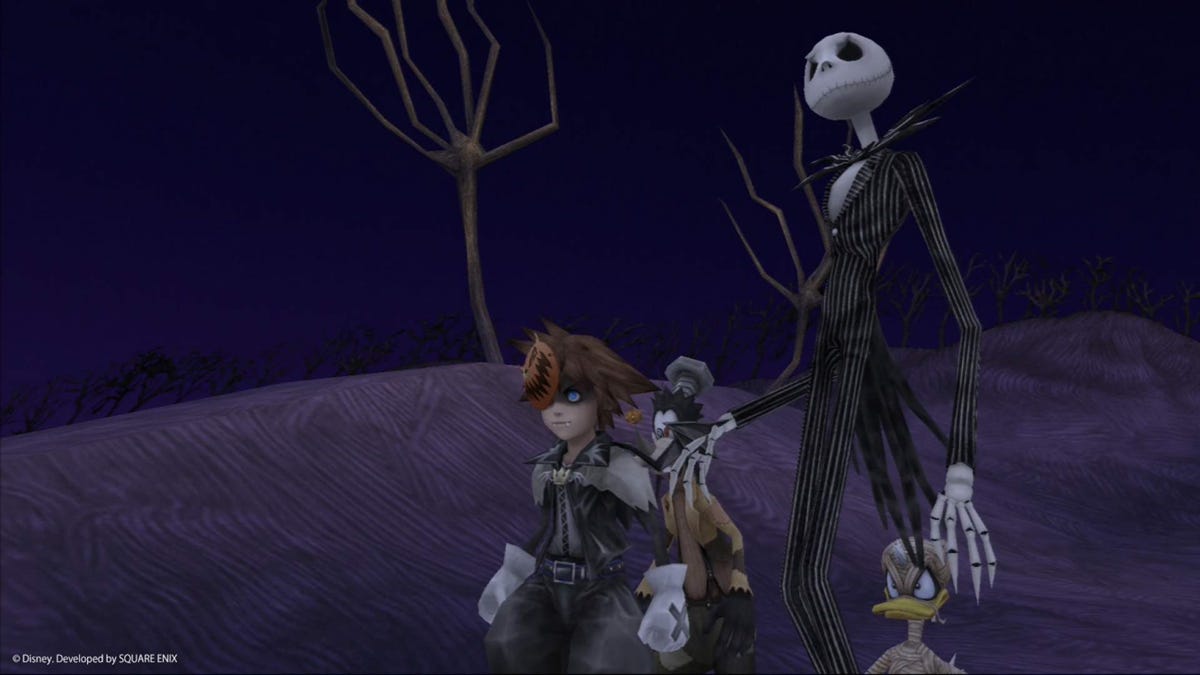
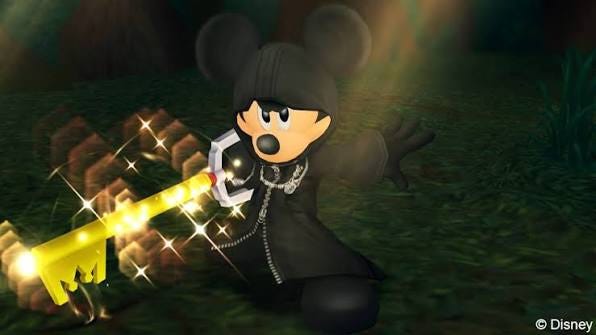
Notice also what you’re swinging in all those fights... a key. In the most Disney move imaginable, the franchise sands the edges off swords and violence entirely and hands every hero a giant house key, then builds the whole saga around friendship, hope, and light winning over darkness (literally... this is the plot). On paper that reads unbearably saccharine. In practice it’s the reason parents hand this game to their kids and the reason the fandom runs generations deep... a strange thing that never should have worked, and worked so completely it became a culture of its own.
Kingdom Hearts II is where the franchise fully had me... my favorite entry to this day. Organization XIII, the Heartless-versus-Nobodies reveal, the combat improvement, everything the first game attempted landing better the second time. More importantly, the series gave me a version of Disney’s characters I would never have cared about otherwise... with Mickey being the standout... and then it just followed me. Through college... my career... and fatherhood. I’ve grown up with this franchise the way its fans all have... which is exactly why watching Disney finally treat it like it matters hits the way it does.
My white whale of recognition has always been the queue for Mickey & Minnie’s Runaway Railway at Disneyland, where a Keyblade sits on a shelf among a pile of Mickey memorabilia... for years, that shelf was the entire parks presence of a billion-dollar franchise. The Disney Adults in my life tell me that whenever any Kingdom Hearts merch drops at the parks, the lines are instantly insane. The demand has been sitting there the whole time... Disney just spent two decades pretending not to see it.
JRPGs... The YA Novels Of Gaming
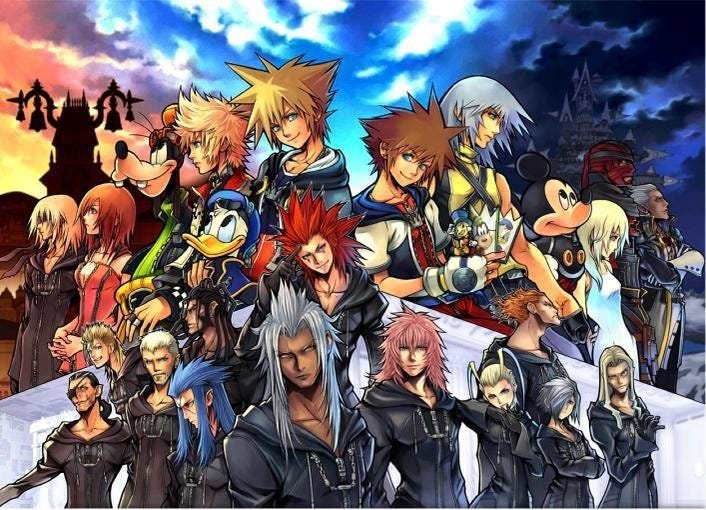
JRPGs are the young adult novels of gaming... pulpy, sappy, absolutely stuffed with tropes about school kids, friendship, and feelings, and all of it by design. You’re supposed to devour them the way teenagers devour YA fiction. Are they the best-written stories in gaming? No. Are they for someone, in a way most games never manage? Completely.
Square Enix’s problem is that Final Fantasy forgot this. The mainline series aged up and up with its original audience until, in my read, it aged right past the demographic that made it... I genuinely don’t hear anyone under 35 clamoring for the next Final Fantasy. That energy lives with Persona now, which owns the demo these gaming YA novels are targeted at.
Kingdom Hearts, meanwhile, never left. Sora is still, very deliberately, a kid... the goofy grin, the clown shoes, the enormous pants... and around him orbits the most YA ensemble JRPGs have ever produced. Riku, the brooding best friend who touches the darkness and spends the rest of the saga atoning. Kairi, the childhood friend the whole first game orbits around. Roxas and Axel and Xion, whose ice-cream-on-the-clocktower friendship is the most fanfic-ready material Square ever shipped (seriously...). Aqua, Terra, and Ventus, the doomed upperclassmen from the prequel.
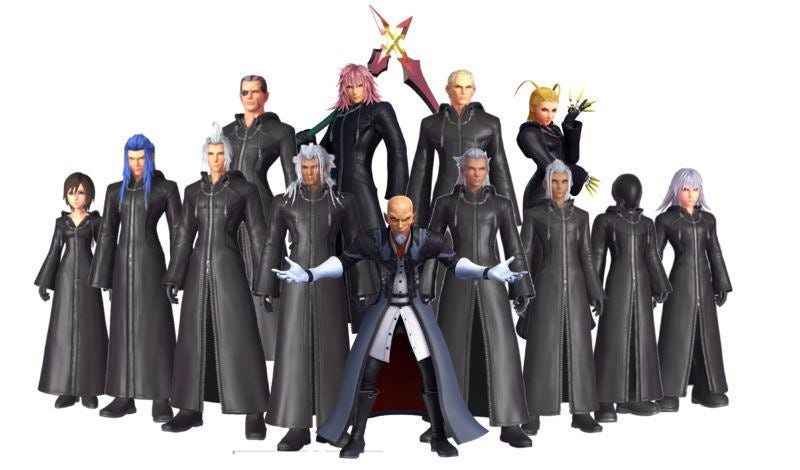
And looming over everyone, Xehanort... an old man whose scheme requires thirteen vessels, which the series solves by making Organization XIII more or less thirteen Xehanorts pulled from different points in the timeline. His younger self. His Heartless. His Nobody. If that doesn’t sound complicated, I don’t know what does... and the interpersonal drama between all of them follows YA tropes so faithfully you could shelve the series between Percy Jackson and The Hunger Games.
Kingdom Hearts, not Final Fantasy, is Square Enix’s most important franchise... the only one in their catalog still reaching the audience these gaming YA novels are built on, and the only one attached to the most valuable IP catalog on earth. This isn’t new either... even back in 2005 it was already Square Enix’s third most bankable series behind Dragon Quest and Final Fantasy. The difference is which direction each franchise has gone since Square Enix’s golden era of the 1990s and 2000s.
So... how did these two strange bedfellows... well... get together?
An Elevator Pitch... Literally
The franchise exists because of an office building. In the late 90s, Square and Disney’s Japan operation shared the Arco Tower in Tokyo, and the founding legend is that the pitch happened in an elevator... Shinji Hashimoto and a Disney executive, riding between floors. Nomura, asked about the story as recently as 2024, gave the version I love most:
“I wasn’t in the elevator so I don’t know what actually happened, but I happened to be there when Hironobu Sakaguchi, the creator of Final Fantasy, and Shinji Hashimoto were talking about making a Disney game, and I raised my hand and said I want to do that. I can’t even remember why I was there when Sakaguchi and Hashimoto were talking in the first place.” — Tetsuya Nomura, via KH13, 2024
Nomura had been chasing the idea for years before that hand-raise. Super Mario 64 was, in his own words, the trigger point... a 3D space with total freedom of movement, and a conviction that Square’s combat instincts would work inside one. His colleagues told him the only characters famous enough to rival Mario’s pull belonged to Disney. So when the Disney conversation materialized in front of him, he grabbed it... a character designer who had never directed anything, volunteering for the strangest project either company had ever considered.
Disney thought it was buying merchandise. The initial meetings had Disney pitching Square its own game ideas, including one starring Donald Duck... which Nomura cut off mid-pitch, telling Disney he wouldn’t make such games. His counter-pitch came with concept art of a lion-eared, chainsaw-blade-wielding Sora that reportedly drew astonished silence from the room. The chainsaw became the Keyblade (Disney... sanding off the edges), the lion ears got dropped, and the red shorts, white gloves, and yellow shoes stayed as a walking Mickey Mouse homage.
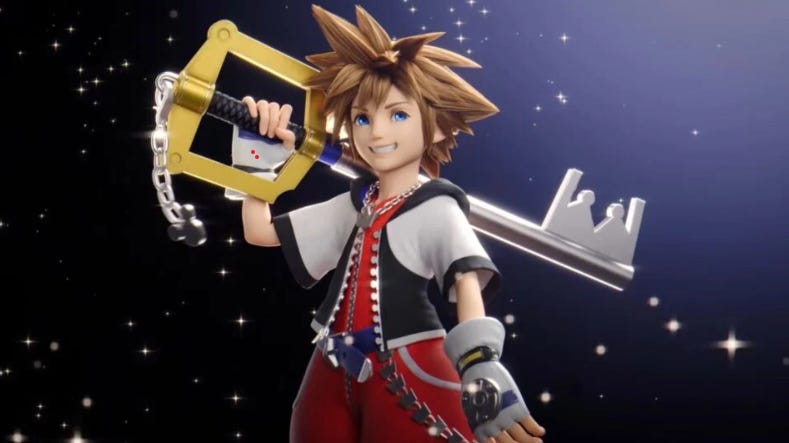
Even the name came from the parks... Nomura thought of Disneyland, wanted to call the game “Kingdom,” couldn’t clear the IP, and the story’s core theme supplied the second word. And Disney’s 2001 announcement, read today, is a fascinating time capsule... this was Disney experimenting, testing how far its characters could stretch into a medium it didn’t understand yet:
“Kingdom Hearts is a unique undertaking and opportunity for Disney Interactive on so many levels: we’re working in alliance with one of the world’s leading interactive entertainment companies; we’re launching new characters for The Walt Disney Company; and we’re creating breakthrough creative content on an advanced platform that allows us to push the boundaries of 3D animation and design, and tell a new story with unprecedented fusion of Disney characters and movie worlds” — Jan Smith, President, Disney Interactive, via KH Database, May 2001
“Launching new characters for The Walt Disney Company”... Sora, Riku, and Kairi were positioned as Disney characters from day one, and the whole release reads like a company genuinely curious what its catalog could become in someone else’s hands. Square, meanwhile, was right to push for its own DNA in the marriage... because Disney characters in a vacuum would never have carried a game like this. Without the Final Fantasy cameos, the anime melodrama, and the JRPG bones, this is a licensed platformer nobody remembers. An odd marriage... and exactly the right one for both sides.
The person who pushed the project past experiment was Sakaguchi. The father of Final Fantasy pulled Nomura aside and told him that if the game didn’t strive for Final Fantasy’s level of storytelling, it would be a failure... advice Nomura took so thoroughly that the franchise’s storytelling would eventually become its own kind of legend (we’re getting there). Kingdom Hearts shipped in March 2002, sold roughly five million copies, and became one of the best-selling PS2 games of all time. A Disney game that Square fans claimed as their own... and a Square game that put Disney characters in front of an audience that would never have touched them otherwise.
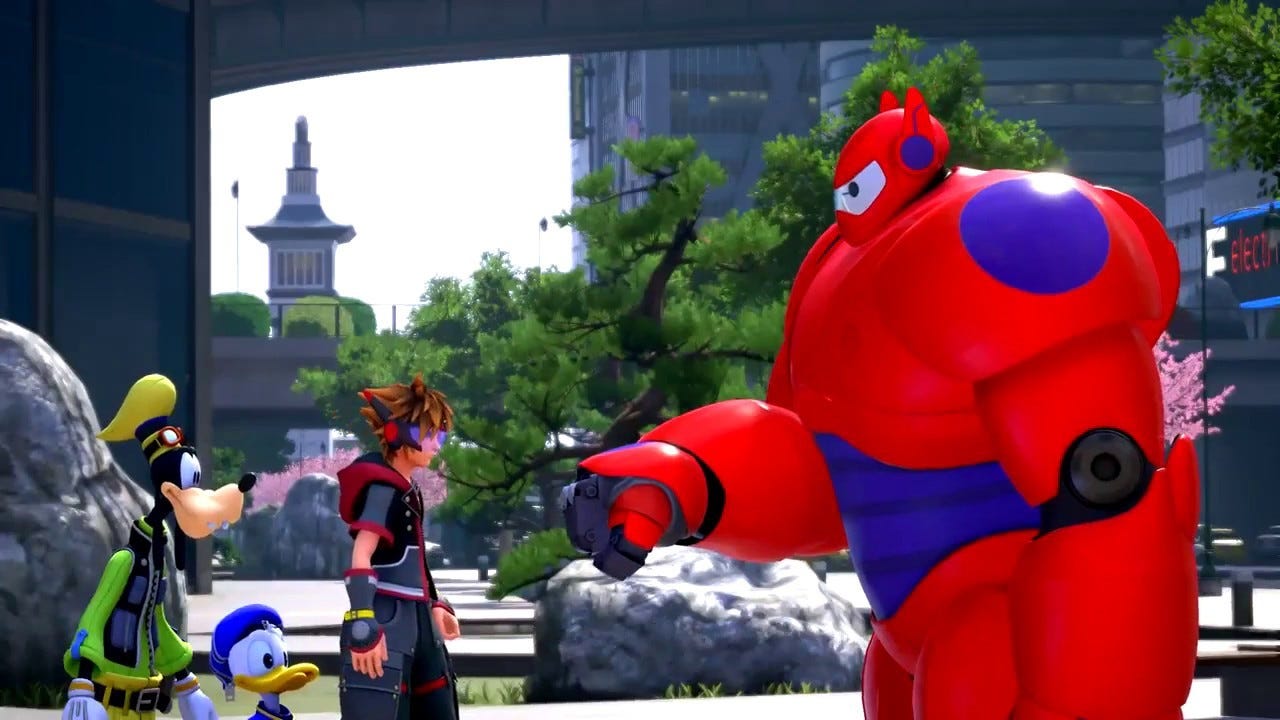
The approvals process tells you how much the power balance moved over twenty years. In the early days, sign-offs ran through single gatekeepers who barely knew what they were approving... Nomura’s own telling of Disney’s internal reaction:
“They’d go, ‘What’s Kingdom Hearts? I have no idea.’” — Tetsuya Nomura, via USgamer / KH13, June 2018
By Kingdom Hearts III, the franchise was big enough that every living Disney creative team wanted input (Frozen, per Nomura, came with the most guidelines of any world ever made)... and the power had shifted far enough that Nomura could walk into Disney with an ultimatum:
“After we were done with Kingdom Hearts II and were starting to consider III, we started talks with Disney, I remember saying, ‘If we can’t use Pixar, then we can’t have a third game.’ It’s that important to the game series. The whole world loves Toy Story... everybody feels the appeal of that story and those characters. So yeah, at the very beginning I directly said to them, ‘If we can’t get this, I don’t want to do it.’” — Tetsuya Nomura, via EDGE / GamingBolt, January 2019
Pixar took years to approve the story and character designs... Nomura describes the relationship shifting from “secondary rights permissions” to “creator to creator”... and Kingdom Hearts III shipped in January 2019 with Toy Story and Monsters Inc worlds, became the fastest-selling game in Square Enix history at the time, and moved over five million copies in its first week.
The experiment had grown into something neither company fully controls anymore... a shared custody arrangement over a billion-dollar franchise. Square owns the characters’ souls, Disney owns their world, and neither side’s version of Kingdom Hearts can exist without the other. That interdependence is rare in licensing... and it might be the single biggest reason this partnership has survived 25 years while every other deal on Disney’s books came and went.
Now... you can’t talk Kingdom Hearts without getting into the story of it. So I’ll try... because once you lay it all out loud, you understand a lot more about this particular franchise and its peculiar charm.
The Story... A Good Faith Attempt
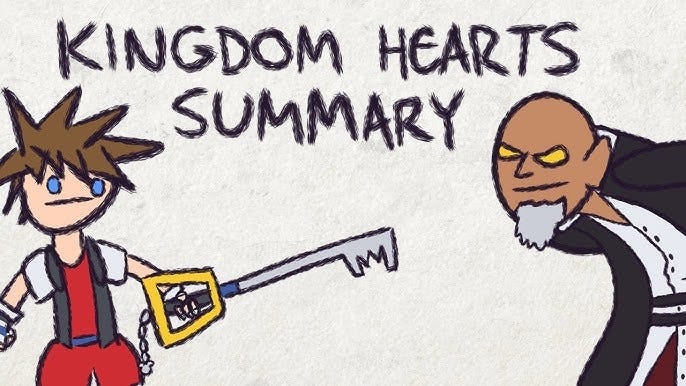
At its core, Kingdom Hearts is the simplest story ever told... light versus darkness, and light wins because a kid refuses to give up on his friends. That’s it. Hearts are the seat of everything good, darkness devours them, and a boy with a key travels between worlds locking the doors darkness comes through. If the franchise had stopped there, it would be remembered as a charming Disney crossover and nothing more.
It did not stop there. When a person loses their heart, the heart becomes a Heartless (a villain) and the leftover body becomes a Nobody (also a villain)... meaning one person can generate two separate bad guys, both with their own factions. The main antagonist, Xehanort, exists simultaneously as an old man, his younger time-traveling self, an amnesiac apprentice, his own Heartless, and his own Nobody... several of which have different names, two of which possess other characters, and thirteen of which eventually staff an evil organization made almost entirely of himself.
Sora spends one entire game asleep while a witch rebuilds his memories, which requires a different game where he fights through those memories using cards. Kairi’s Nobody is formed from Sora’s body (don’t ask). Mickey Mouse loses his shirt closing a door to darkness, and this is somehow a canonical plot point preserved across multiple games. None of this is a bit... every sentence above is real... its just that this game’s story is batsh*t crazy which is part of its charm.
Nomura, to his credit, knows exactly what he’s built:
“Fans say every time they think they figure something out, there’s now a new mystery that they need to figure out.” — Tetsuya Nomura, via Game Informer, June 2022
The structural sin made it worse... the thing I flagged earlier as the franchise’s Achilles heel: the story isn’t just convoluted, it’s scattered. Between the numbered entries, Square shipped side games across every platform in existence... Game Boy Advance, DS, 3DS, PSP, browser, mobile... and these were never optional spin-offs. Each one planted characters and plot hooks that the mainline games then treat as required reading.
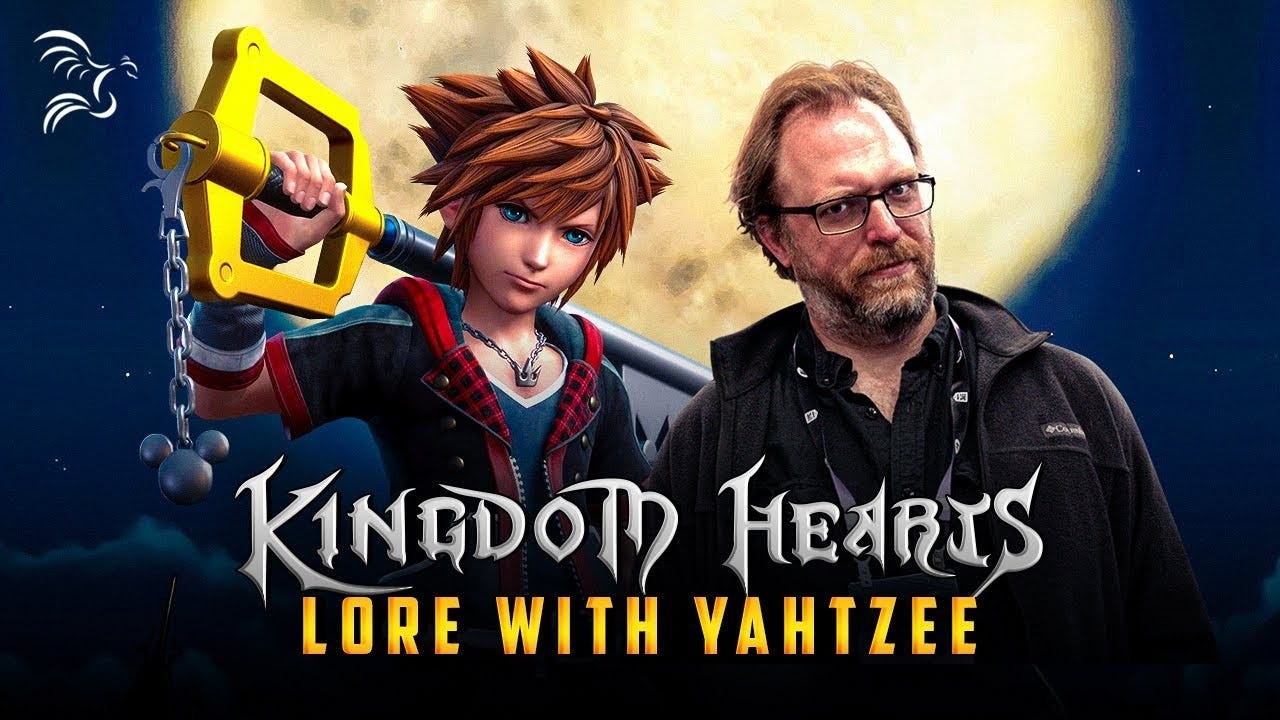
Play only Kingdom Hearts I, II, and III in order and you will hit entire cutscenes built around characters you have never met, mourning events you never witnessed, from games with titles like 358/2 Days (a real name... for a real game). It’s the war-hook model of franchise building... every offshoot buries a hook you have to go dig up later... and it’s simultaneously part of the charm and the single biggest thing keeping new players out. In fact... part of the charm of this series is the YouTube cottage industry of Kingdom Hearts narrative recaps. Barry Kramer’s recap is my personal GOAT... but the trope of retelling this story never gets old (Yahtzee took a crack at it roughly a year ago).
And the worlds... the Disney worlds, the thing most people assume the games are about... matter almost nothing to any of this. Aladdin, Elsa, Jack Sparrow... they’re plot filler. Wonderful, lovingly built filler with functionally zero bearing on the actual plot, which lives entirely in the Square-original layer of keys, hearts, and Xehanorts. Which produces my favorite absurdity of the whole franchise: world reveals are treated as major spoilers... what worlds, which characters, who fights alongside Sora... despite the worlds being narratively disposable. The Coco reveal was the biggest cheer of the D23 panel. It will also, if history holds, have no consequence whatsoever for the war between light and darkness. The fandom knows this... and does not care... myself included.
Because underneath the labyrinth, the YA engine never stops running... friendship, loss, sacrifice, and light stubbornly winning. You don’t follow the plot of Kingdom Hearts... you feel it, the way the games intend, one Hikaru Utada needle-drop at a time. The lore exists to give the fandom something to argue about between releases. The heart of it has never once been confusing.
Kingdom Hearts... What The Attention Data Says
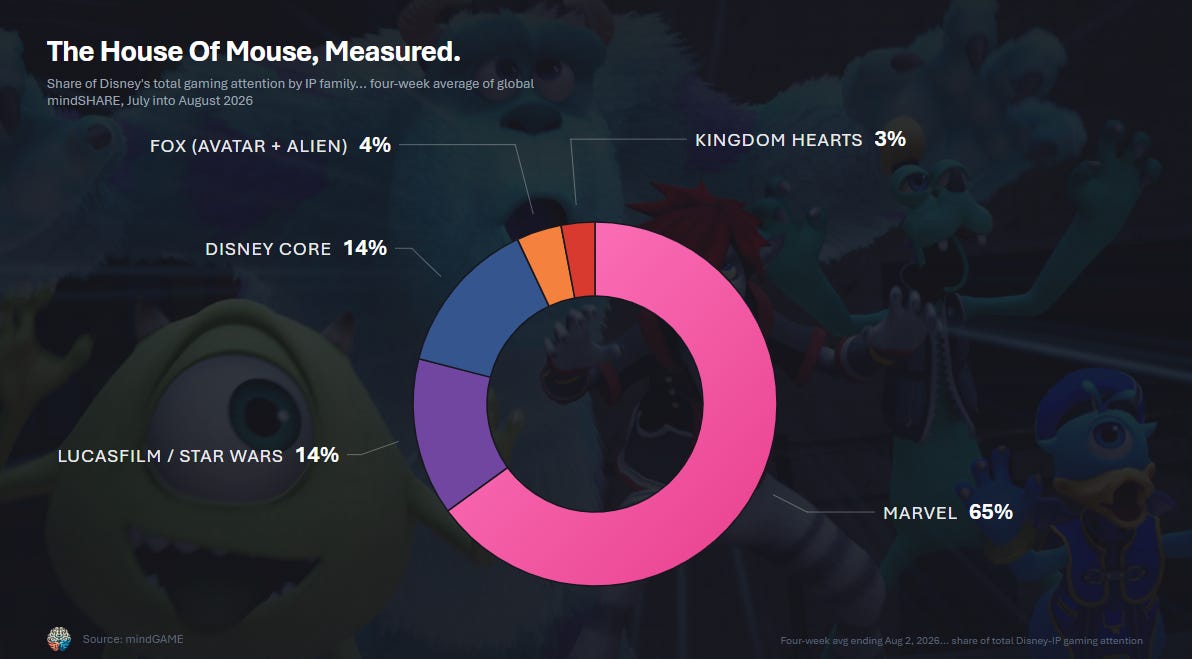
The attention data on this franchise reads exactly like the fandom behaves. Zoom all the way out and Kingdom Hearts is a six-year decay curve... franchise-wide attention averaged roughly 0.21% weekly across 2019 (the KH III year), then declined every year after: 0.065% in 2020, sliding to about 0.020% by 2025. Unsurprisingly, Kingdom Hearts III has been the biggest single title in the franchise nearly every week of that stretch..
Then 2026 happened. Franchise attention has more than doubled year-over-year... the first growth since KH III shipped... on the back of two events. The June Nintendo Direct dropped the first real KH IV gameplay since the 2022 reveal, and one week later the game sat at roughly 0.250%... rank #64 among every game we track, released or not. Attention faded back toward the floor over the summer, as it always does with announcements and reveals like this.
Then D23 delivered the second event: the extended-look trailer... with the announced 2027 release window, the Coco world, the anime... and KH IV jumped from roughly 0.007% to 0.170% week-over-week, a 25x move in seven days, rank #90 globally. Remember the DDV comparison... Dreamlight Valley needs a full expansion to pulse 50%. Kingdom Hearts moved 25x on a trailer.
D23 also lifted the whole catalog. Kingdom Hearts III jumped 60% the same week... a seven-year-old game, rising on a trailer for a different game. The HD 1.5+2.5 ReMIX collection climbed. The upcoming Collection doubled. Franchise-wide, D23 gave Kingdom Hearts its biggest attention week since early 2020... every title rising on one panel, the way a movie weekend lifts a decade of Spider-Man games.
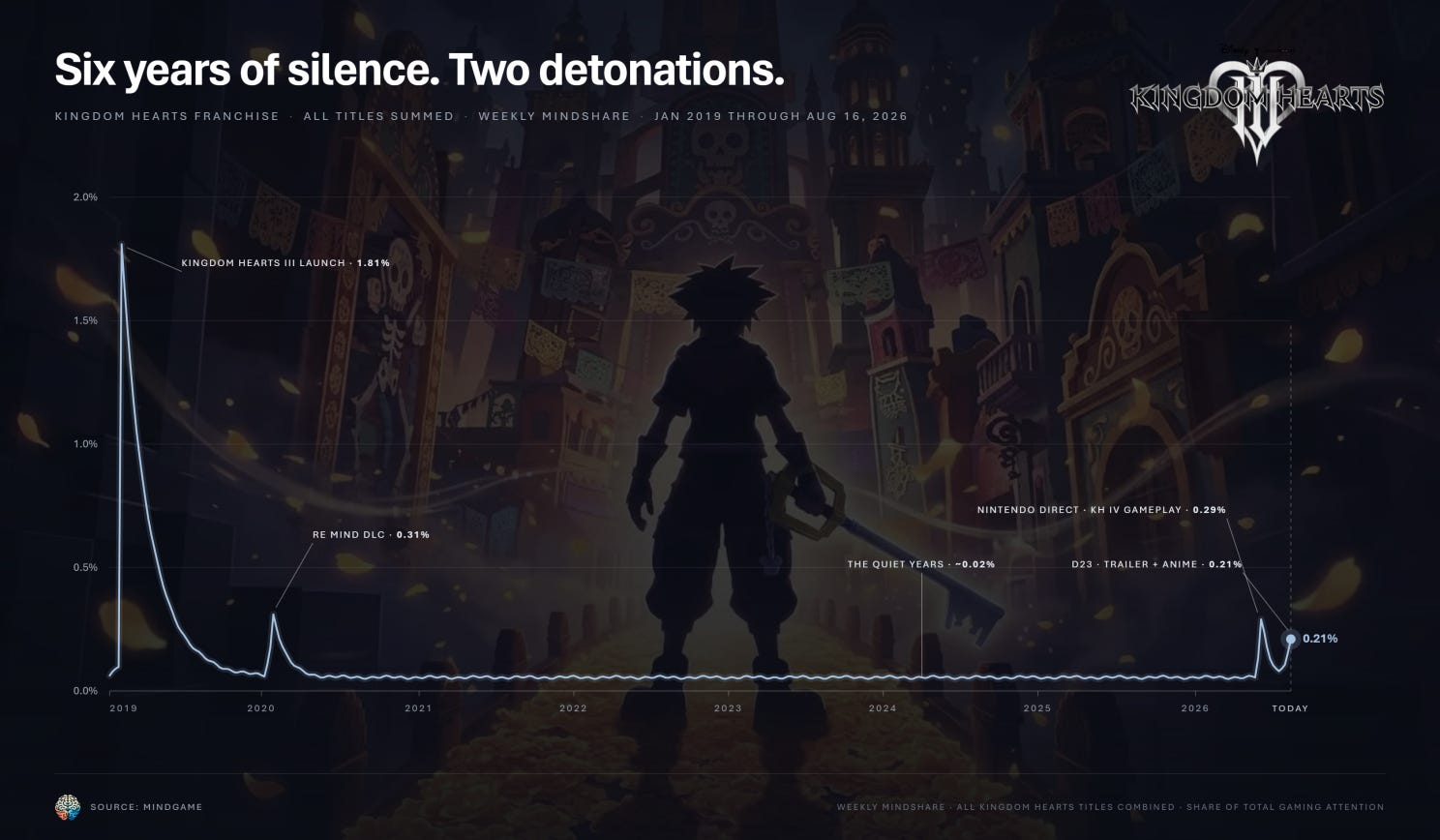
That attention converted into money almost immediately. Within 72 hours of the panel, Kingdom Hearts HD 1.5+2.5 ReMIX hit #3 on Steam’s US top sellers... a nine-year-old collection, outselling everything on the platform except Mortal Shell 2 and Counter-Strike 2, pulling roughly 9,600 concurrent players, within spitting distance of its all-time Steam peak. A 70% catalog sale was part of the reason... sure... but discounts don’t chart without demand behind them... especially for a franchise where catching up on the story before the next iteration is practically a requirement.
Zooming out... Kingdom Hearts currently holds about 3% of all Disney gaming attention. Small next to Marvel’s 65%, sure... but that’s 3% while dormant, between mainline games, carried by an aging catalog and two trailers. For the ceiling, look at what happens when this franchise actually ships: the week Kingdom Hearts III launched, it commanded 1.81% of all gaming attention... bigger than any week Dreamlight Valley has ever recorded, launch included.
I fully expect Kingdom Hearts IV to set a new high-water mark for the franchise... it’s a perfect storm of building fandom across both the Disney faithful and the YA JRPG crowd, and it will be one of the major titles to watch going into what I suspect is a late 2027 launch.
Out Of The Game... Into The Flywheel
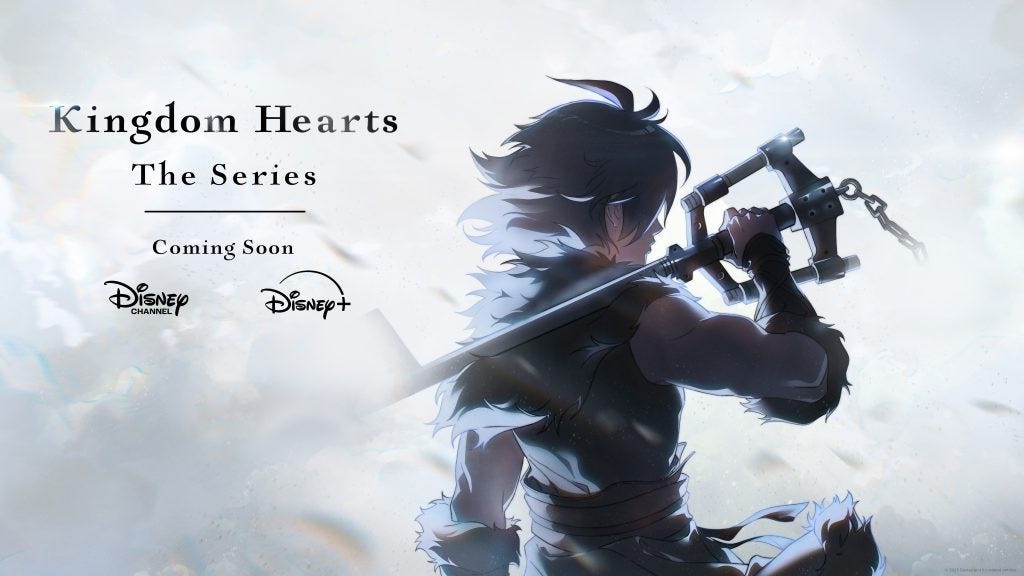
The hype for Kingdom Hearts IV is real, and the D23 panel confirmed it... Nomura, fully aware of this franchise’s reputation for delays, locked in the late 2027 window with a 100% commitment on stage. But the bigger story of the panel wasn’t Kingdom Hearts IV, which will be a massive success on its own... it’s that Disney is finally embracing this franchise beyond the games, as a true IP extension.
Start with the anime... the announcement I genuinely did not see coming. Disney greenlit a Kingdom Hearts original series for Disney Channel and Disney+, developed with Square Enix, with Nomura closely involved:
“There’s something really exciting about taking a world fans have spent years exploring through the games and bringing it to life in a completely new way. And with a creative team that is working closely with the legendary Tetsuya Nomura, our new series will be unmistakably Kingdom Hearts, while giving fans a whole new way to experience the world they love.” — Ayo Davis, President, Disney Kids & Family, via The Walt Disney Company, August 2026
For nearly 25 years, Kingdom Hearts was one of the most beloved Disney properties never represented anywhere else in the flywheel... no ride, no show, no film, no in park merch (that shelf in the Runaway Railway queue was carrying a lot). The anime ends that... and notice which way the IP is flowing. A property born in a game is feeding Disney’s machine, the first time in company history that’s happened. Sora, Riku, and Kairi were “new characters for The Walt Disney Company” in that 2001 press release... it took Disney 25 years to make good on the claim.
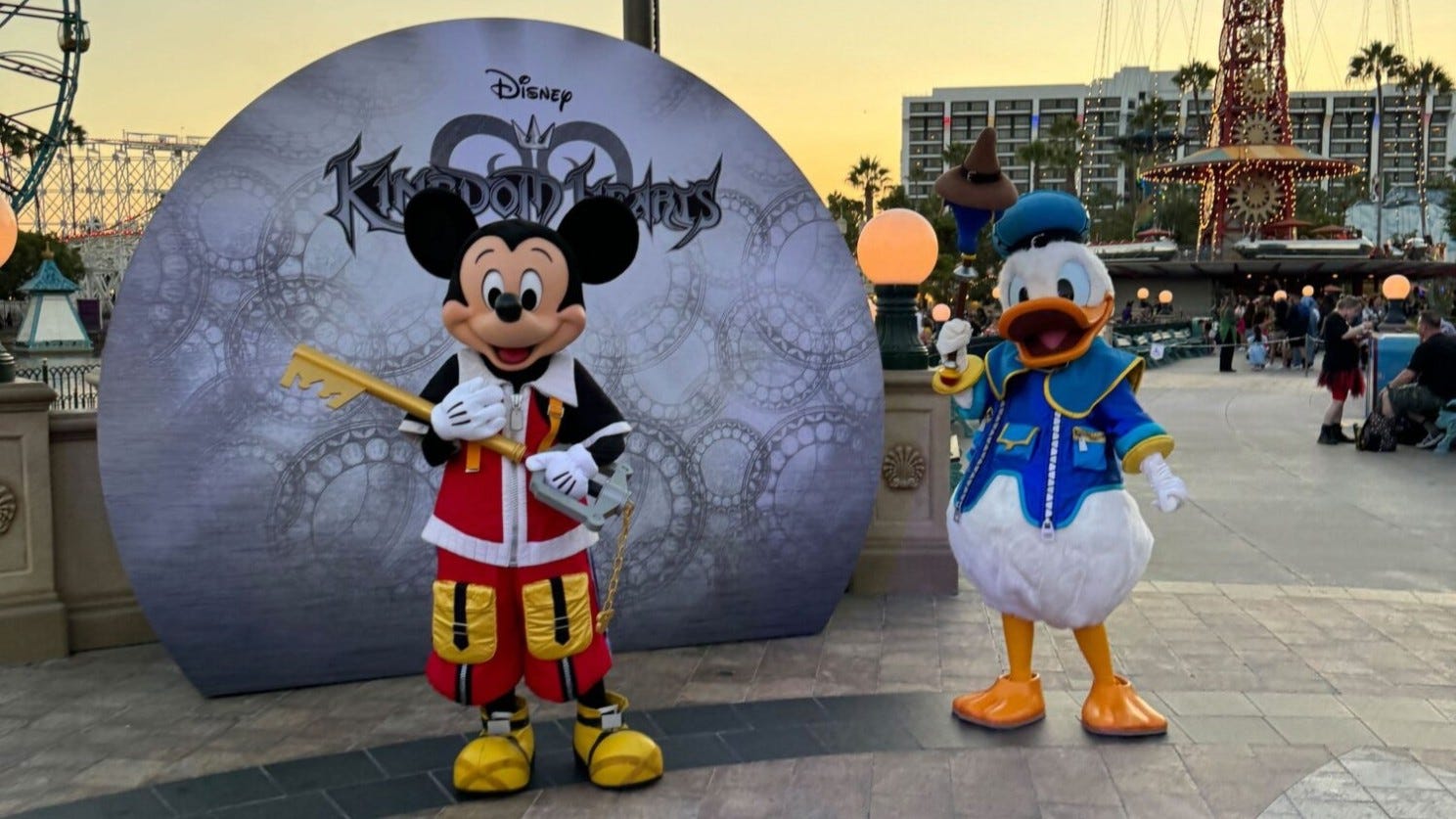
The shared custody arrangement is finally working for both sides at once. Square Enix gets its most important franchise amplified by the biggest marketing machine on earth... an anime putting Sora in front of every kid with a Disney+ login, and a wave of attention that will carry straight into game sales. Disney gets what it could never manufacture internally: its own unique gaming IP. For 25 years, Kingdom Hearts was the place Disney put its characters to win over an audience it couldn’t otherwise reach. Now the flow reverses... Sora, Riku, and Kairi are IP being taken from that place and carried elsewhere, starting with an animated series... and I don’t think it ends there. Disney put Sora on banners across Anaheim for a reason... the company finally sees what the fandom saw in 2002.
Coco is the cleanest example of where this is all headed: Kingdom Hearts IV showcases a Coco world... Coco 2 hits theaters in 2029... the Coco ride rises behind Pixar Pier right now. Three announcements in a single weekend, three different spokes, each one selling the other two... and for the first time, a game sits inside the rotation as a full partner rather than a licensed afterthought. As a certified Kingdom Hearts fan, the trailer alone would have made my week. As an industry analyst... watching Disney treat this franchise as a load-bearing piece of the machine is the thing I’ll remember from this D23. After 25 years of waiting, I’ll take both.
Three Flywheels Later...
Walt sketched his flywheel in 1957... films at the center, feeding the parks, the merchandise, the music, everything feeding back into everything else. It took his company nearly 70 years to add gaming as a real spoke rather than a licensing outpost, and this D23 made the addition official.
A cozy life sim holds Disney’s most devoted fans in a daily ritual. A 25-year-old JRPG partnership got public recognition on Disney’s biggest fan stage, a confirmed window for its next installment, and its first television series. Nine billion-dollar franchises and a $4 billion year got disclosed with pride instead of buried in a segment line. The company that lost $1.4 billion trying to make games figured out the better business was making fans... and letting partners like Square Enix and Gameloft handle the rest.
My daughter will be at Disneyland this fall for her birthday, standing in the Haunted Mansion Holiday queue with the rest of the faithful. Her generation won’t grow up with a Disney that dismisses gaming... for them, a Disney game might be the first place they ever meet these characters, the same way an entire generation met Sora before they ever met Mickey.
The wheel keeps spinning... just with one more spoke than Walt drew.