

A Script For Asha Sharma... The Speech Xbox Owes The Gaming Industry

Follow me here… or on LinkedIn
This one is short by my standards, and for a good reason. I’m off for some early summer family time this weekend... the kind of vacation (if you consider LEGOLAND a vacation) you plan in advance and then feel guilty about the moment the news cycle refuses to cooperate... which is very standard for Microsoft / Xbox these days. So consider this the travel-sized edition. The fall calendar, Assassin’s Creed Black Flag Resynced, the post-GTA VI preorder landscape, why August looks so strangely light on games this year... all of it waits until I’m back.
Speaking of Grand Theft Auto, last week’s piece was one of the most fun things I’ve written in a long time, and apparently I wasn’t alone in feeling that way. It’s now my most read issue to date, by a healthy margin... sitting alone on the Mount Rushmore of Patch Notes. Thank you to everyone who read it, shared it, and sent notes. This newsletter keeps growing, and that never stops being exciting to me.
I wish this week’s issue could carry the same energy. It can’t.
Seven days ago we were celebrating fireworks and Rockstar history. This week we’re sorting through the wreckage of the largest restructuring in Xbox history. 3,200 roles, 20% of the division, five studios headed out the door, and a memo from Asha Sharma that reads like a corporate autopsy performed on a still-living patient. Lots of people lost their jobs Monday. Lots of very experienced people. Entire studios are left wondering why half their teams are gone, id Software among them. And we’re at the beginning of this, not the end. Only half the cuts have landed. The rest phase in over the next year, Arkane Studios‘ fate is still winding through French labor consultation, and I’d wager more divestitures are coming behind them. A melancholy week in an industry that has had too many of them.
I’m not going to re-litigate how we got here. By my own count I’ve written north of 25,000 words on Microsoft‘s gaming business over the last thirteen months, across ten pieces... from The Game Pass Sugar High to the Berkshire Hathaway problem to Xbox Is Xbox Again to the ads-and-discovery flywheel I finally planted a flag on last month. Nothing that happened this week changed a single conclusion in any of them. It confirmed all of them. The subscription bet was unsustainable, the acquisition spree bought content instead of players, and the math was always going to be their undoing. Joost called the divestiture sequence back in February, and this week he walked through how it arrived almost exactly on schedule.
Microsoft is a terrible consumer product company. The corpses speak for themselves: Zune. Skype. Nokia... an entire mobile phone company, bought and buried. Mixer, their consumer streaming answer to Twitch, dead. Kinect, the fastest-selling consumer electronics device in history on the 360, then forced into every Xbox One at a $100 premium chasing a Wii wave that had already broken... it branded Xbox unserious to core gamers and died the moment it was unbundled. At least five separate ad tech businesses, all dead, which I’ve written about before.
The one time Microsoft genuinely won as a consumer tech company was Xbox in the 2000s... and they have mishandled that brand almost continuously ever since, from the Xbox One reveal to the mobile whiff of the post-iPhone era, where they had a phone business in hand and simply failed to execute despite their deep pockets. A decade later, the verdict is in. Microsoft is a B2B company glomming onto a consumer brand it no longer knows how to run. While Apple, Valve, and Google were building 30% toll booths, Microsoft convinced itself a Netflix-of-games catalog would be the thing that finally leapfrogged Sony and Nintendo. Then they spent a decade throwing good money after bad decisions to keep the dream alive... see the $69 billion ABK deal as exhibit A.
None of that belongs to Asha Sharma. She’s been in the chair five months. The strategy that led here was authored by Phil Spencer and Sarah Bond, and enabled at every step by Satya Nadella, who signed the checks and blessed the logic. The parent company isn’t exactly operating from strength right now either. Microsoft just closed out its worst month since December 2000... $613 billion in market value gone, the stock at its cheapest valuation in a decade, squeezed between AI capex fears and AI disruption fears. The Xbox cuts are downstream of that pressure. Everything at Microsoft is downstream of that pressure now.
So this week I’m borrowing a format. Ben Thompson wrote a script for Mark Zuckerberg this week... the honest conversation he thinks Zuck should have with the market on an earnings call. Listening to it as a podcast on my morning walk, I kept coming back to the same thought... this is exactly the conversation Xbox should be having with the gaming industry. To her credit, Sharma has already done more owning-up than most executives manage in a career, and her memos keep leaking and getting published in full anyway. So why not skip the leak and just say all of it?
What follows is the memo I think she should send. She didn’t cause any of this. Microsoft did. And the fastest way out is to own every last piece of it.
A Script For Asha Sharma... The Memo The Reset Should Have Been
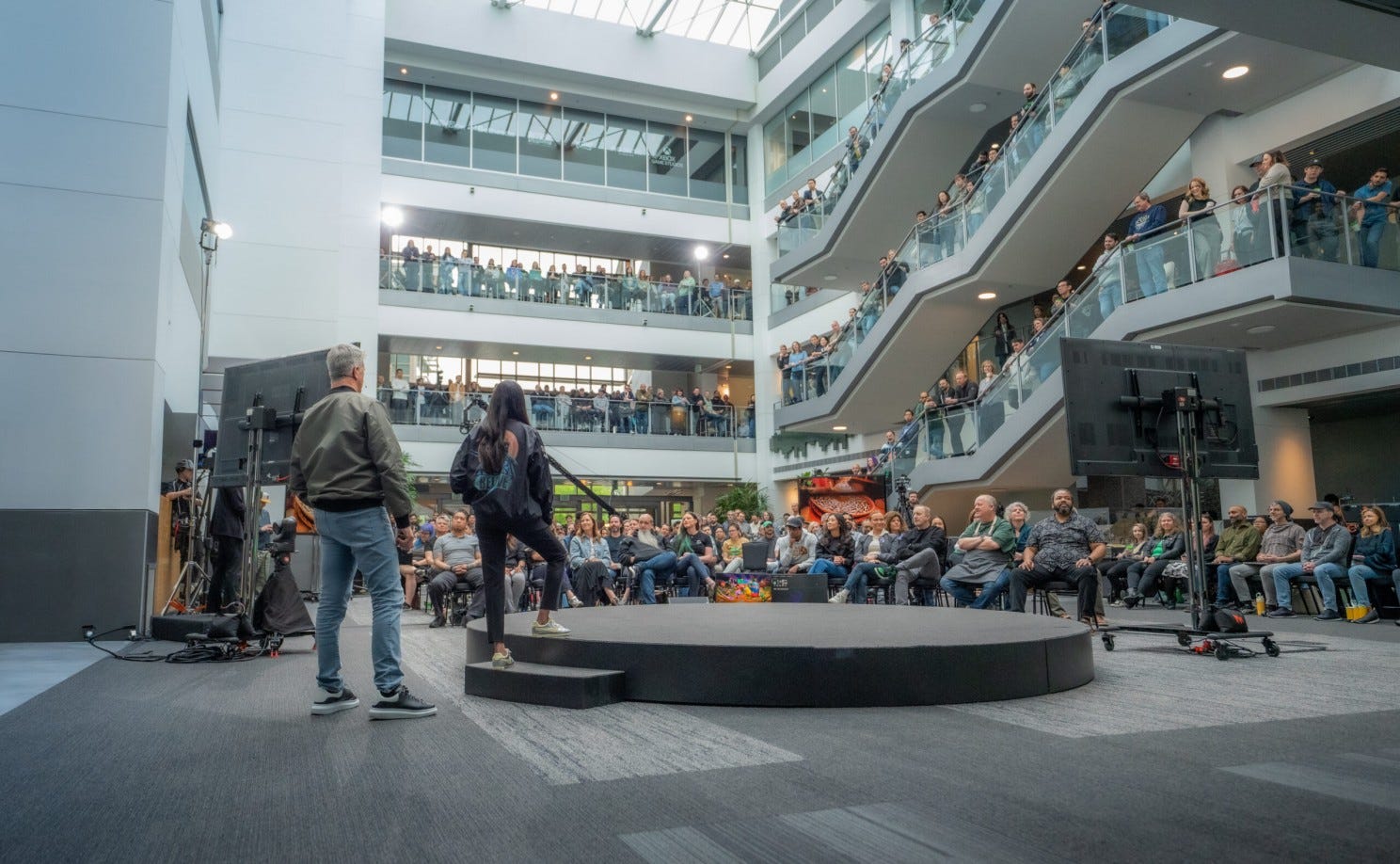
The setting: an Xbox all-hands, the week after the reset. The speaker: Xbox CEO Asha Sharma. What follows isn’t actually her... it’s what I think she should say. With apologies and credit to Ben Thompson for the format.
Team,
I want to start where Monday’s memo started, because it was the truest thing in it. These changes directly affect people who poured their creativity into building Xbox. Many joined us through acquisitions. Others were recruited here, or sought us out because they loved this industry and loved Xbox. Nothing about this week reflects their talent or their dedication, and no strategy deck makes that hurt less. To everyone leaving us: thank you. You deserved better than the business we built around you.
Now let me tell you what Monday’s memo didn’t.
I have been in this chair for five months. I did not make the decisions that brought us here. But Microsoft did, and I run this business now, which means the honest accounting is my job. You have all read the leaked versions of what we think went wrong. You have read the analysts who called this years ago. What you have not heard is your own leadership say it plainly, without the corporate padding, without “created meaningful value,” without hiding the failure inside a restructuring announcement. So that is what I am going to do today. I am going to walk through the three resets from Monday’s memo and tell you what each one actually means... what we broke, why we broke it, and what we are building instead.
Some of this will be uncomfortable. All of it is true. And I would rather you hear it from me in this room than read it in a Bloomberg push notification, which, let’s be honest, is how this company has communicated with you for two years.
First, we will reset our content portfolio.
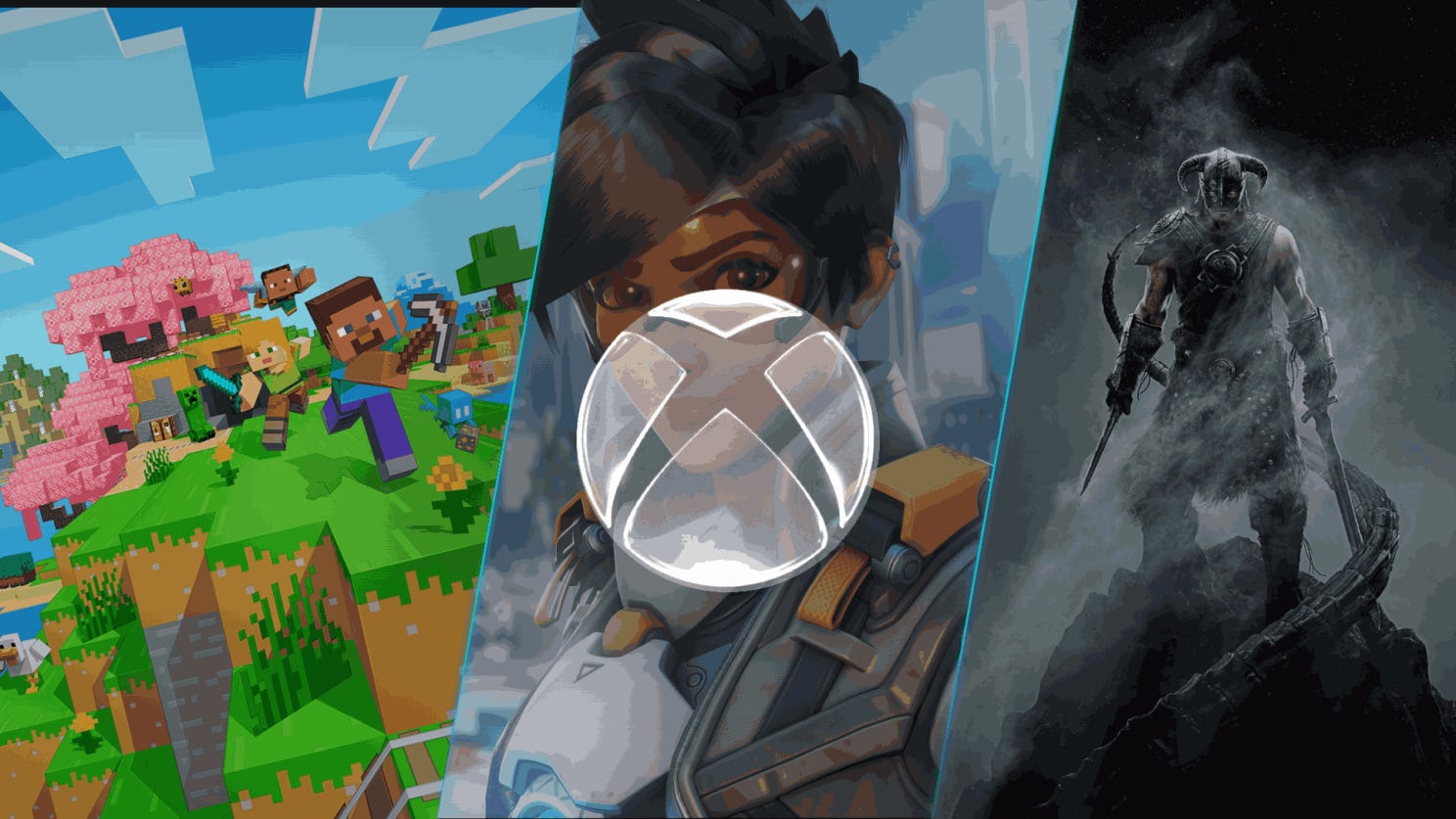
Since 2014, Microsoft has spent close to $80 billion acquiring game studios and publishers. Mojang. ZeniMax. Activision Blizzard King. Sixteen acquisitions across a decade, each one bigger than the last, each one justified with the same word: growth. Grow the audience. Grow the library. Grow Game Pass.
We bought content, and we told ourselves we were buying players. Those are not the same thing, and the difference is the whole story. Before the Activision deal, first-party titles were 28 percent of our publishing revenue. After it, 61 percent. Sony runs the opposite model... 29 percent first-party, the rest third-party content they distribute, promote, and take a margin on while external publishers carry the development risk. We spent a decade concentrating the exact risk our largest competitor spent a decade offloading. When the industry turned, they had a portfolio of partners. We had a portfolio of payrolls.
And we did not run what we bought well. You have seen the number by now: in a typical year, we lost 64 cents for every dollar we invested. A business that loses 64 cents on the dollar does not survive on its own. It survives because something else pays for it.
Minecraft was paying for it.
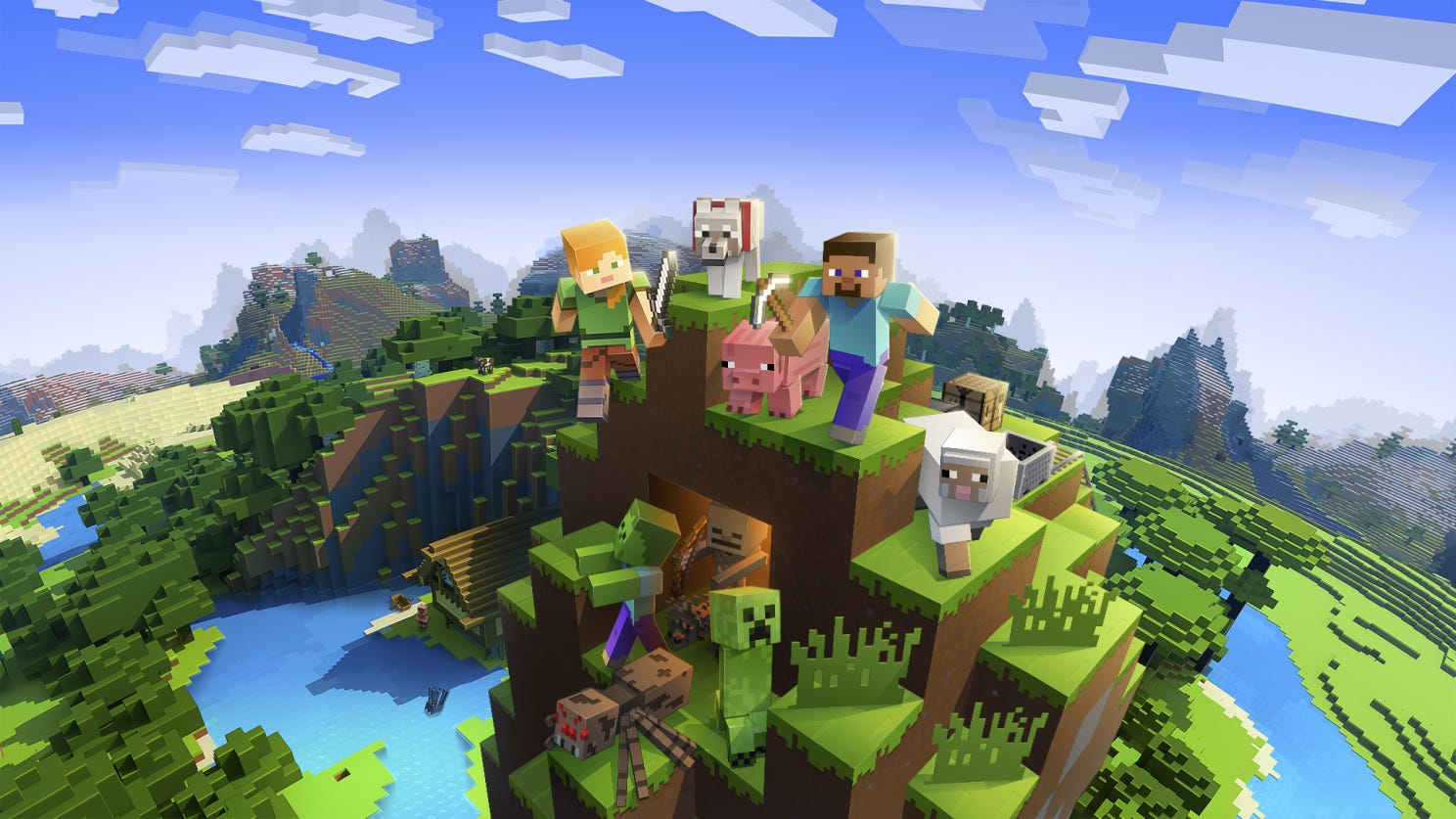
We own the biggest game in the world. Not one of the biggest... the biggest-selling game ever made, over 300 million copies and counting, more than 700 million registered players in China alone. A billion-dollar movie. A LEGO line older than some of our studios. And for a decade we ran it like an ATM. Its profits funded the portfolio that lost the 64 cents. It got a fraction of its own money reinvested while we bought studios we now admit we were never the right home for. The most popular thing Microsoft makes, by a mile and then some, got one sentence per earnings call, buried in a paragraph about “gaming.” If Meta owned Roblox, you would hear about it every quarter. We owned Minecraft and we starved it.
Mojang Studios reporting directly to me is not an org-chart optimization. It is an apology.
Game Pass is the other half of this confession. When we launched the service, we set ourselves a target: 77 million subscribers by this fiscal year. Everything that followed was in service of that number. The original design was genuinely smart... activate back catalog, lower the discovery barrier, give games without marketing budgets a path to an audience. That version of Game Pass worked. It just did not grow fast enough to hit 77 million, so we reached for the only lever big enough: our biggest franchises, day one, in the subscription. A discovery engine became a giveaway machine for games with decades of brand equity and built-in retail audiences.
The cannibalization was immediate and measurable. Putting Call of Duty into the subscription at launch cost us more than $300 million in sales in a single year. 82 percent of Black Ops 6 full-price sales came from PlayStation, a platform where Game Pass does not exist. Players on the platform we do not own kept paying $70. Meanwhile, the players on the platform we do own were trained to stop.
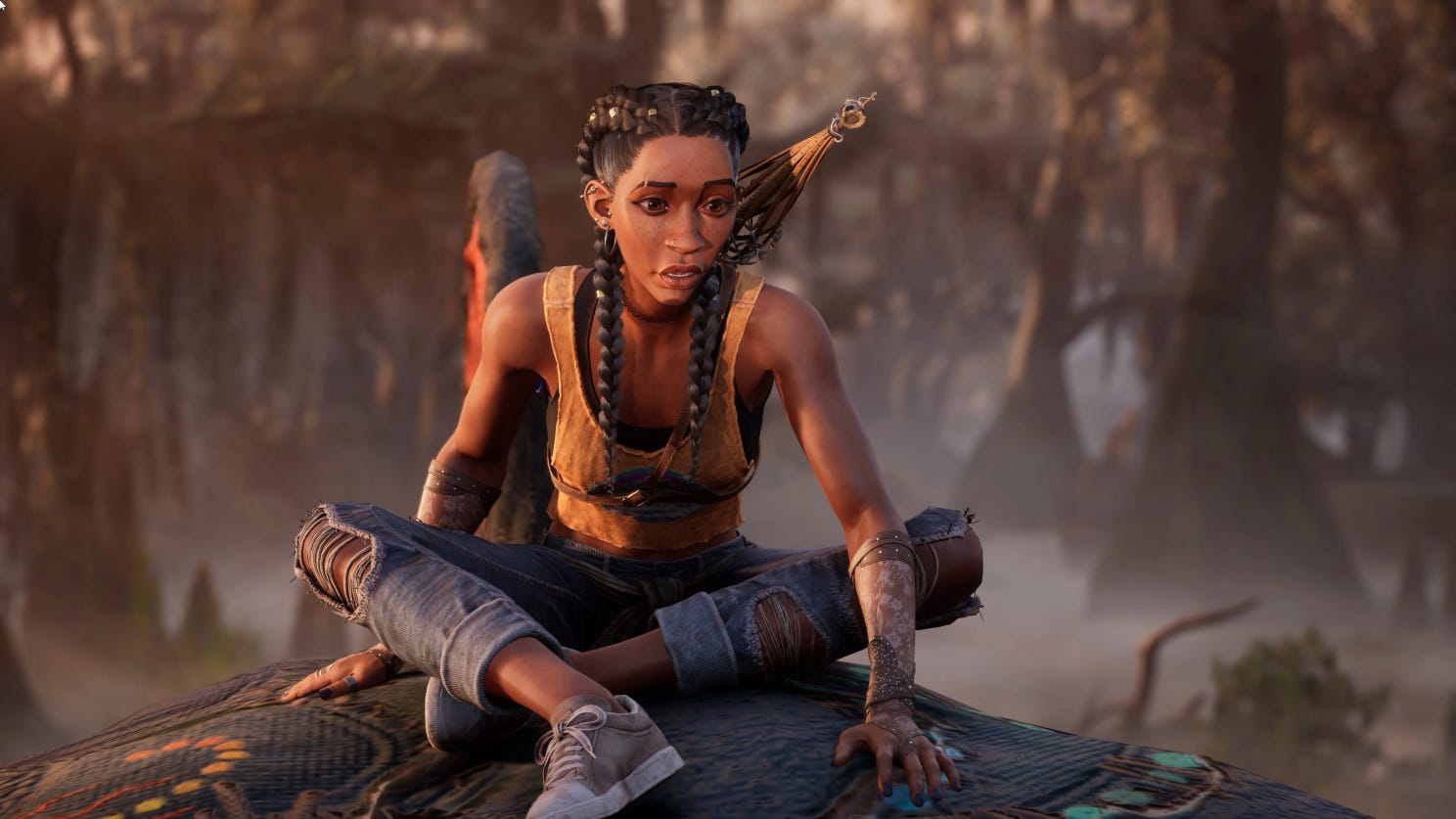
The same target warped how we ran our studios. We handed them one set of goals: feed the catalog, chase acclaim, build things critics would love, and do not worry about unit sales. They delivered exactly what we asked for. Hellblade II won awards and ranked 37th in US sales its launch month. South of Midnight won a Peabody and pulled a million Game Pass players who never spent a dollar on it. Double Fine shipped three games this generation, including one of the best-reviewed titles Xbox has published, and still could not sustain itself here. Undead Labs went eight years without shipping anything at all, and nobody upstairs treated that as an emergency, because the dashboard we gave everyone measured hours and acclaim instead of money.
These were passion projects, niche by design, and we blessed every one of them. At a company running our losses, at our scale, that was never a real business. Niche games underperform the market by definition... and a portfolio of them cannot carry an $80 billion acquisition bill. The honest version is that we should have either resourced these teams to compete for mass audiences or set them free years ago to be what they actually are: brilliant independent studios. Instead we kept them in a model built for neither, then changed the goals to margins and money and graded them retroactively against targets they were never given. I am sorry for that... to the developers who spent years inside a strategy that kept changing underneath them, and to the players who watched games get announced, go dark, and die. The confusion was ours. You all just lived in it.
After all of it... after $80 billion in acquisitions and a decade of day-one giveaways... we ended the fiscal year at 30 million subscribers. Not 77 million. 30, down four million from the last time we said the number out loud, which is why we stopped saying it out loud.
We knew the math was not working long before this week. Instead of fixing it, we invented new math. Member-weighted value... an internal credit that converted lost sales into engagement hours so every dashboard in this company could tell us what we wanted to hear. It told studio leaders their unshipped games were fine. It told executives the lost sales were fine. One accounting fiction, papering over both failures at once. That fiction is dead as of today. We count money in this company now. Real money, the kind that keeps studios open.
I know what some of you are thinking, because studio leaders have said it to me directly: our games performed, and we got punished for Call of Duty’s miss. You are not wrong. Xbox Game Studios shipped a genuinely good year. That is precisely the problem with the structure we built... when one franchise’s stumble can erase twenty teams’ work, the portfolio is not a portfolio. It is a bet. We made you all collateral on it, and Monday you paid the margin call.
Second, we will reset our platform.
Monday’s memo told you about the fourteen layers of management and the platform teams that grew 40 percent while players and playtime declined. All of it is true, and none of it is the disease. Bloat is what a business grows when it cannot answer a harder question, and our harder question has been sitting in plain sight for a decade: we hold one of the largest pools of consumer attention in entertainment, and we have never learned how to monetize it.
Satya said it in public last month, so I will repeat it in this room. There is more monetization of Xbox games happening on YouTube than at Microsoft. Somebody plays Halo, records it, uploads it, and Google sells the ad. Buy our game on Steam, and Valve takes the toll. Stream our games on Twitch, and Amazon monetizes the audience. Every company adjacent to our content has built a business on the attention our games generate. We built a subscription nobody wanted at the price we needed and a console business we spent a decade dismantling ourselves.
The hardware story deserves its own confession, because the numbers do not lie about what we did to it. When Grand Theft Auto V launched in 2013, there were roughly 68 million Xbox 360s in living rooms around the world... nearly half the console audience for the biggest entertainment launch in history. Grand Theft Auto VI arrives this November, and we will be lucky to have 40 million Series consoles in market. Less than half of what Sony has. A fraction of what Nintendo has across Switch and Switch 2, and GTA is not even shipping on those.
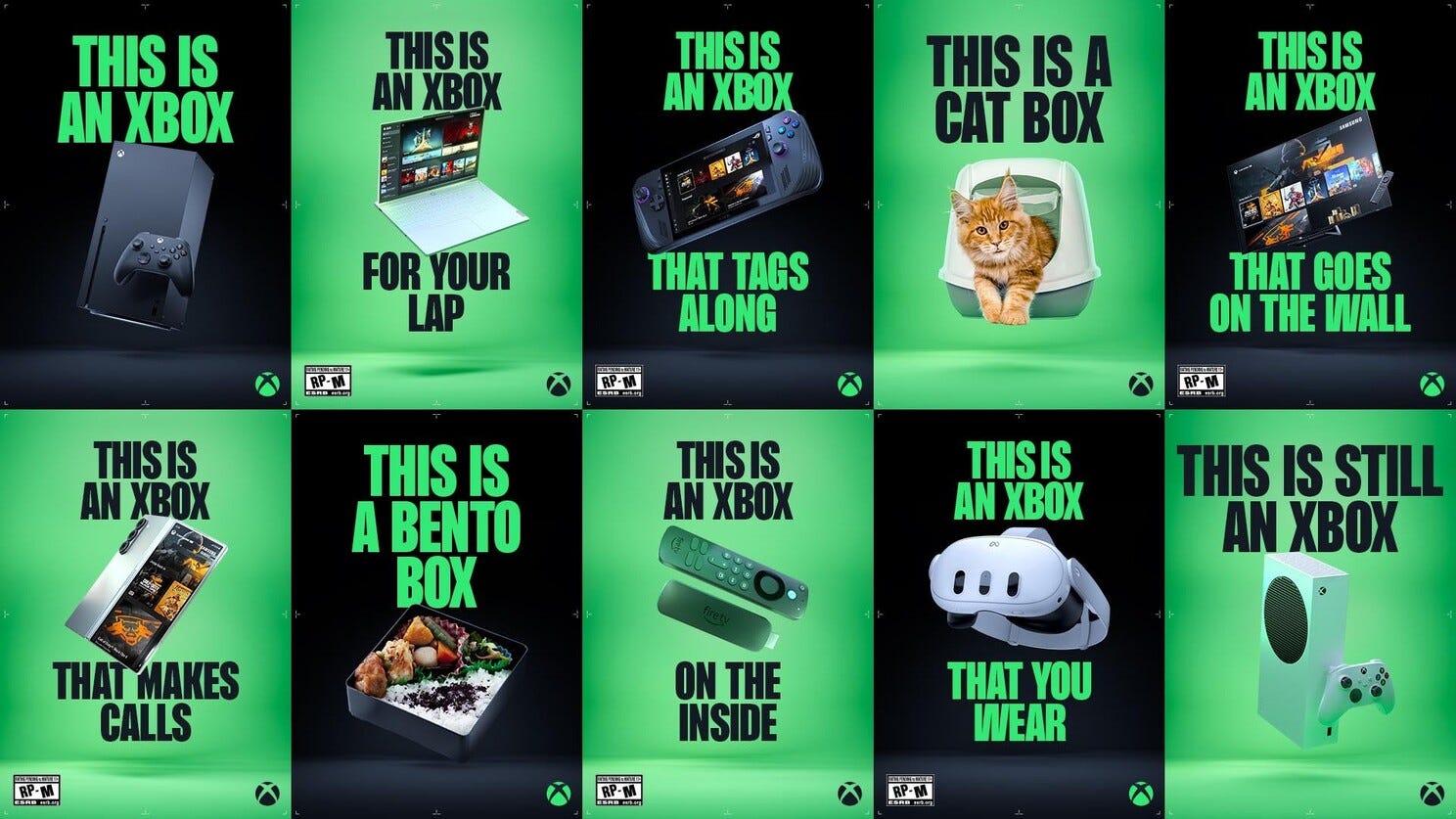
In thirteen years we cut our own footprint nearly in half while our competitors grew theirs. Nobody did that to us. We did it with a launch reveal about television, a mandatory camera nobody wanted, a $100 price premium over the competition, and then a decade of telling people the console did not really matter. We put “This is an Xbox” on phones, laptops, and refrigerators, and then acted surprised when people stopped buying the actual Xbox. You cannot spend years telling customers everything is an Xbox and expect them to pay $500 for the one that says Xbox on it.

That failure does not stay contained inside our walls. Every publisher and developer who ships on our platform is trying to sell games into an install base we shrank. Third parties plan their launches around hardware that does not exist because of choices we made. A healthy platform holder builds a business model that makes the hardware worth buying... for players, for partners, and for itself. Sony did that. Nintendo did that. We built a model that made our hardware optional and then wondered why nobody bought it.
And the road back through hardware is closed. Storage costs have roughly quadrupled since late 2025. We expect to pay five times as much for memory in 2027 as we did in 2024, because we are now bidding against AI data centers... including our own parent company’s... for the same components. Console prices used to fall a third within four years of launch. Ours have gone up three times in thirteen months, and the next generation cannot ship at a price most families would recognize as reasonable. The iron rule of this industry for forty years was that the box gets cheaper. That rule is dead. Even if we had the will to fight the hardware war again, the component market has taken the option off the table.
Our front door keeps getting more expensive: a console for several hundred dollars, games at $70, a subscription at $23 a month. Meanwhile the attention keeps leaking out the sides of the house to companies that figured out how to sell it. And on Monday I told you I want Xbox to entertain more than a billion people every day. I meant it. But there is no arithmetic that reaches a billion daily players through a front door priced like ours. The players are not going to come to the price. The platform has to go to the players.
June proved the demand is real. Our Showcase put Fable, Gears, Halo, and Spyro in front of the world, and the world responded... millions of people searching, watching, and talking about our games within days. Attention has never been our problem. What happens after the attention arrives is our problem. A curious person sees Fable, gets excited, goes looking for a way in, and finds a wall of prices. The excitement dies at the door. So they wishlist it on Steam, where Valve will take 30 percent of a sale we drove... or they watch someone else play it on YouTube, Twitch, and TikTok, handing the engagement to Google, Amazon, and ByteDance. A game we built, marketing we funded, value collected by everyone but us.
Fourteen layers of management did not cause any of this. It is what accumulated while nobody would say it out loud.
Third, we will reset how we operate.
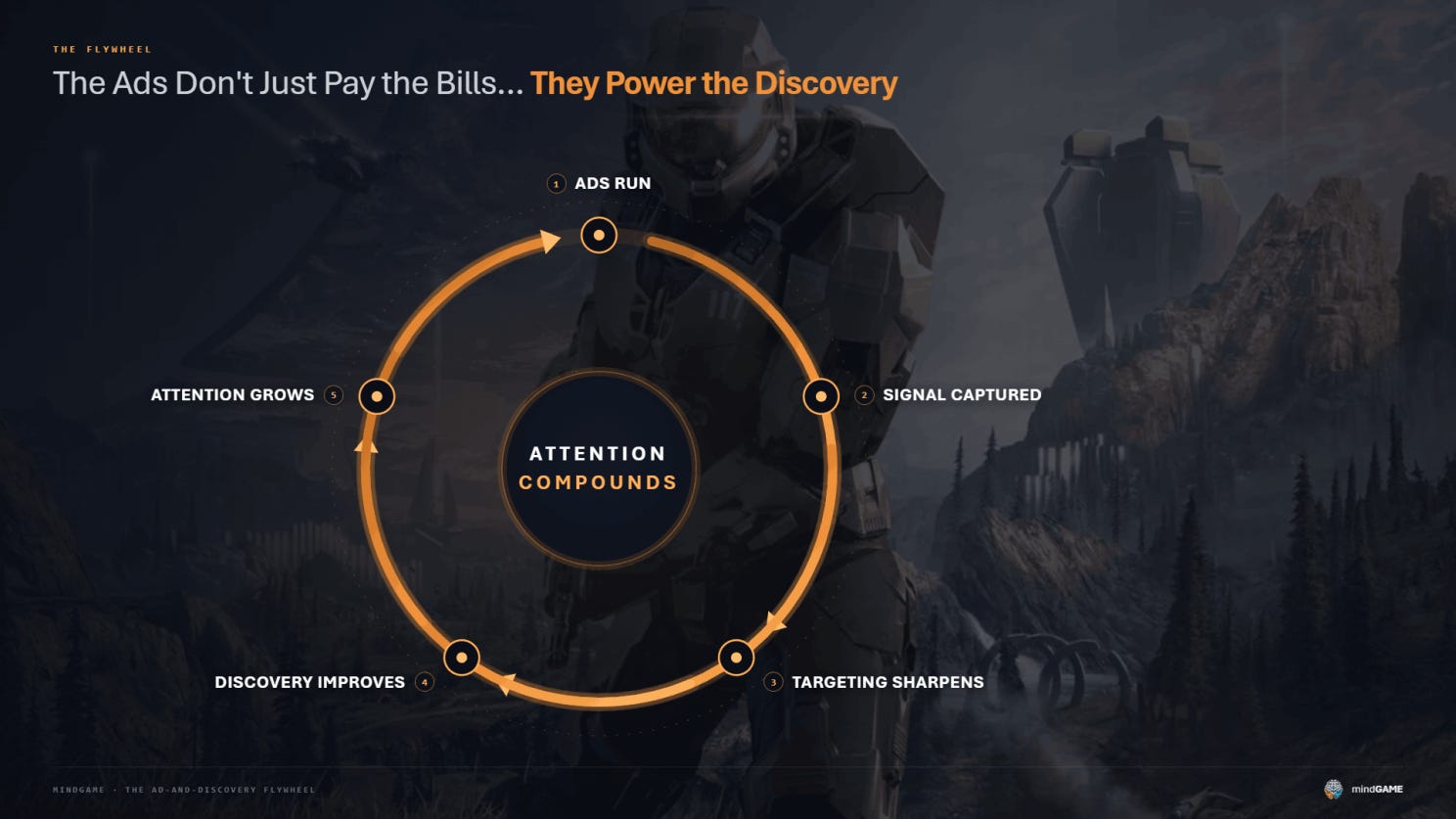
Everything I have confessed so far points at the same conclusion, and it is time to say the word Monday’s memo would not: advertising.
I know what that word does in a room full of game developers. You hear it and picture a pre-roll before a boss fight, a banner over your art, the thing this industry has treated as beneath it for twenty years. That is not what we are building, so here is exactly what we are, because the distinction matters more than anything else I say today. Ads live at the platform level. One when a game loads. One if you set the controller down and the machine goes idle. Nothing, ever, during play. Nobody interrupts the boss fight. The model is YouTube’s and Spotify’s, not late-night cable: attention as the price of admission for people who were never going to pay cash, and a paid tier that removes the ads entirely for people who value their time over their money.
That free door changes the arithmetic of everything. A player who cannot afford our console can stream a game with a Microsoft account and a few seconds of ads. Fifteen years of catalog comes out of cold storage and starts earning again. The person who fell in love with Fable at the Showcase gets a way in that does not cost $500. And the path from free to paid finally exists... play free with ads, get hooked, buy the game or the subscription or eventually the console. Every attention business that reached a billion people built this exact staircase. We are the last major entertainment platform without one, and I want Xbox to entertain a billion people a day. Those two facts cannot coexist any longer.
Mojang and King reporting to me is part of the same plan, and I want to be honest about why, because it is not just about protecting Minecraft. Those two studios are our largest by monthly players, and they carry the institutional knowledge the rest of this company lacks: how UGC platforms hold communities for decades, how freemium economics turn free players into revenue, how an ads business runs inside a game company... King operates one worth hundreds of millions a year right now. Elevating them is not a reward. It is a transplant. Their knowledge becomes the platform’s knowledge.
Now the part I need every partner and publisher watching this to hear, because a platform that monetizes attention and keeps all the money is just a new toll booth, and this industry has enough of those. When YouTube sells an ad against a creator’s video, the creator gets 55 percent. That split built the entire creator economy... a hundred billion dollars paid out to the people who made the content that earned the attention. Xbox will run the same way. When our platform earns ad revenue on a game’s attention, the publisher and studio that made the game get their share. Real money, paid on the attention your game generates, for as long as it generates it. Somebody plays a five-year-old NBA 2K on the free tier, 2K gets a check. A decade-old Final Fantasy, Square Enix gets a check. Skyrim, and Bethesda finally earns on the ten million people still wandering around a game from 2011. Your back catalog stops being a museum and becomes a royalty stream.
Member-weighted value promised something like this and paid in fiction. This pays in cash. We are done rewarding engagement with accounting credits. Attention becomes revenue, revenue gets shared, and the studios that hold players get paid for holding them.
The discovery half matters as much as the money half. The same signals that price an ad... what you play, what you finish, what you bounce off... are the signals that put the right unknown game in front of the right player. Nearly every breakout game this summer was a franchise people already knew by name. New games die in the dark, not because they are bad but because nothing points their audience at them. A free tier with real behavioral signal is the discovery engine this industry has needed for a decade, and every studio we just spun off... every brilliant niche team that could not survive inside our old model... is exactly who it serves. The next South of Midnight should not need a $69 billion parent to find its million players. It should need a platform that knows which million players to show it to, and pays the studio when they show up.
One more commitment, because everything I have described dies without discipline, and you have watched this company chase strategies before. Every decision now clears the same bar: revealed preference. A first-party game goes exclusive only if exclusivity earns more than shipping everywhere, measured in dollars, not strategy decks. Catalog investment follows where players actually spend their attention, not internal politics. Minecraft gets funded like the biggest game on Earth because it is the biggest game on Earth. No more hoping for a better outcome. The data decides, and when the data embarrasses us, we change course instead of changing the metric.
That is the honest version of the reset. Three failures, named. One strategy, finally said out loud. What I am asking of you now is the hardest part, because you have heard leadership announce new eras before, and you have watched those eras last until the next quarterly review. The difference this time is not my conviction. Conviction is cheap. The difference is that we have run out of other options, and businesses tell the truth when the alternatives are gone.
Monday’s memo ended with a line I meant more than anything else in it. History is full of companies that mistake longevity for inevitability. We will not be one of them. Twenty-five years of Xbox does not entitle us to a twenty-sixth. We earn it by building the platform this industry actually needs... a free door for the players locked out, real checks for the studios holding attention, and a discovery engine for the games dying in the dark. The companies that mistake longevity for inevitability are the ones that keep doing what stopped working because it once worked. As of this week, we have stopped.
Thank you. Now let’s get to work.
— End of script.
Fix The Business Model... Or Get Out Of The Business
The real memo never said the word ads. Never said Game Pass either... the product that defined a decade of Xbox strategy did not appear once in the document announcing its consequences. Those silences are the tell. Everything in the speech above is sitting in her building right now: Matthew Ball in the strategy chair, her own AppLovin board seat, the ad-supported cloud tier already spotted in the wild, King running a nine-figure ads business one org-chart line away from her desk. The strategy is not hidden. It is unspoken.
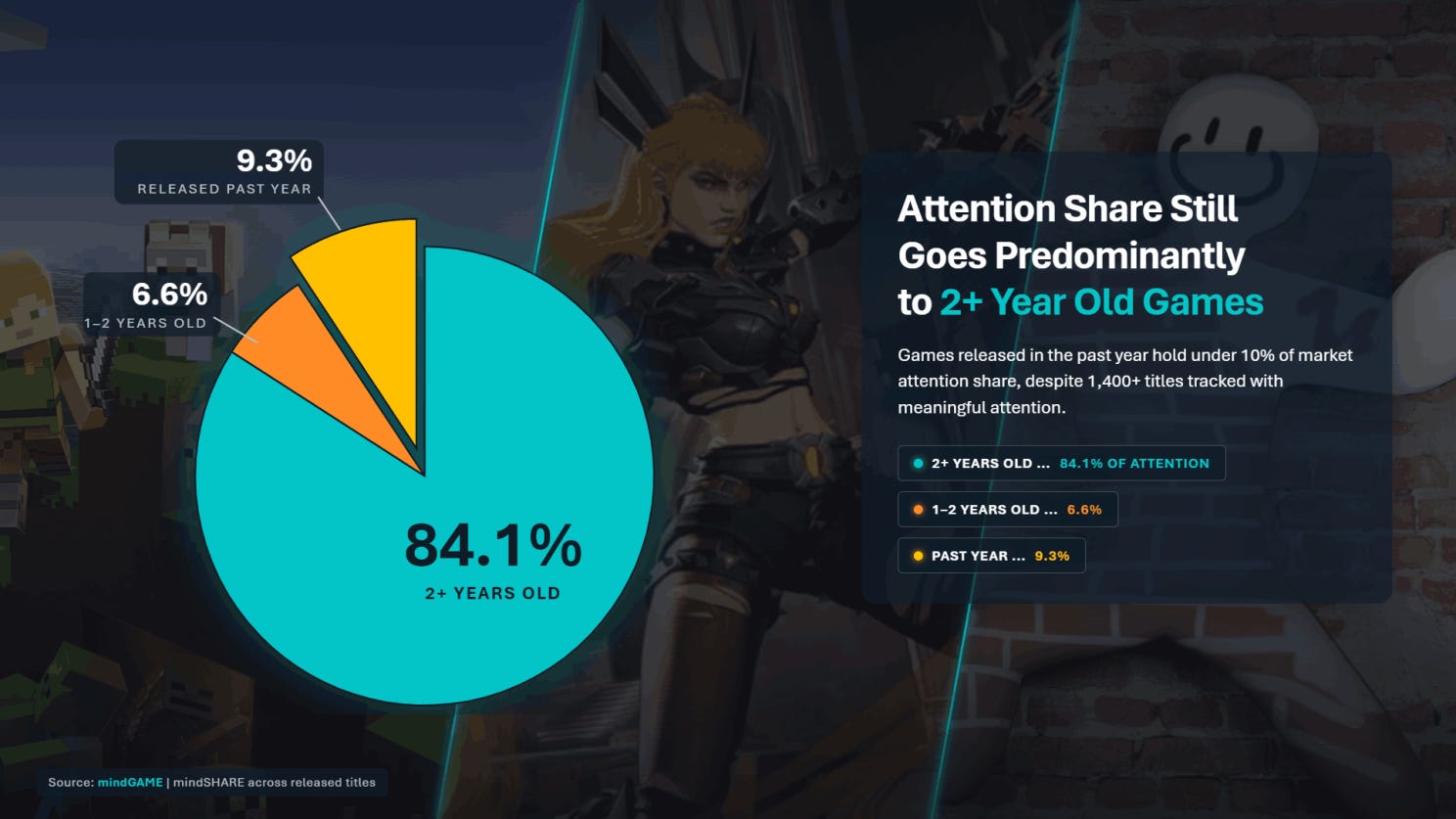
In any given week, roughly 85% of all gaming attention in our tracking at mindGAME goes to games that have already been released... not the new launches, the catalog. Games people bought years ago, or never bought at all, still pulling enormous attention that generates almost nothing for anyone today. The entire industry is sitting on a mountain of engagement it has no mechanism to monetize, because the only tools it ever built were the sale, the season pass, and the subscription... and for a five-year-old game, those wells ran dry long ago.
Meanwhile 22 of the 25 biggest games of Summer Game Fest were existing franchises. New IP cannot break through because discovery is a disaster... and the IP that does break through, new and existing alike, gets sampled and discarded inside the subscription model. Game Pass was supposed to grow fandom. Instead it created a disposable relationship with games themselves... the 93.5% post-peak collapse is what that looks like on a chart.
Which brings me to the Obsidian news, because I’m mad about it. Two days after the memo, Bloomberg reported that Obsidian canceled its Avowed sequel, laid off a quarter of its staff, and redirected Josh Sawyer onto a new Fallout. Sawyer directing Fallout is the correct outcome, and it should have happened years ago.
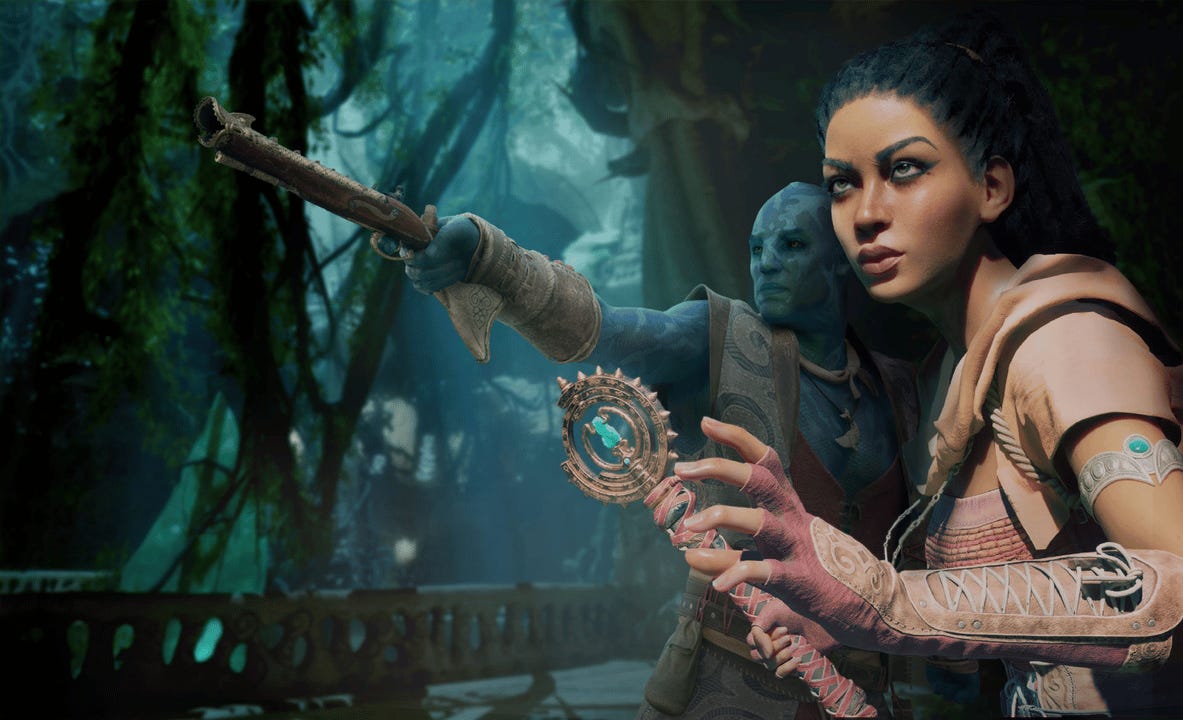
Fallout got a wildly successful Amazon show in 2024, currently filming season three. Obsidian is the studio that made New Vegas, the most beloved Fallout game of the modern era, with its director still on staff. No new Fallout has shipped since 2018. And somewhere inside Microsoft, the plan was... an Avowed sequel? A follow-up to a game that missed its own sales expectations, greenlit while the most valuable transmedia moment in the company’s portfolio sat there with no game attached to it? Nobody needed a proprietary dataset to see that one. It required somebody upstairs to be paying attention, and for seven years nobody was.
That’s the part that should scare this whole industry, not just Redmond. Gaming says it wants to compete in the attention economy. Competing means getting your hands around what is actually happening: attention is the asset, most of it goes unmonetized, discovery is broken, and the audience willing to pay $70 up front shrinks every year.
The hardware math makes it worse from here. DRAM and component costs have consoles and handhelds raising prices five years into a generation... Xbox three times in thirteen months, the Steam Deck and everything around it following... when the entire history of this industry says the box is supposed to get cheaper. Every price hike raises the wall around an audience that was already shrinking, and then we charge them again at the door for the game. The way through is being open to monetizing attention beyond asking users for money at the door... because if a paywall stacked on a price hike is the only business model this industry can imagine, this industry is cooked.
And if Xbox reads all this and still cannot stomach an ad model... if the answer stays no because ads feel beneath them... then the endgame writes itself, and I mapped it back in February. Sell the thing. Meta buys the Xbox platform and turns it into a $20-40 billion annualized ad machine inside five years, because monetizing attention is the one thing Meta has never needed to be taught. The studios go piecemeal to whoever fits: Activision to Tencent, Blizzard to NetEase, Bethesda to a Netflix that finally gets serious about gaming. Fix the business model or get out of the business. Those are the options, and there is no third one where a 3% margin division keeps riding inside an AI-obsessed parent forever.
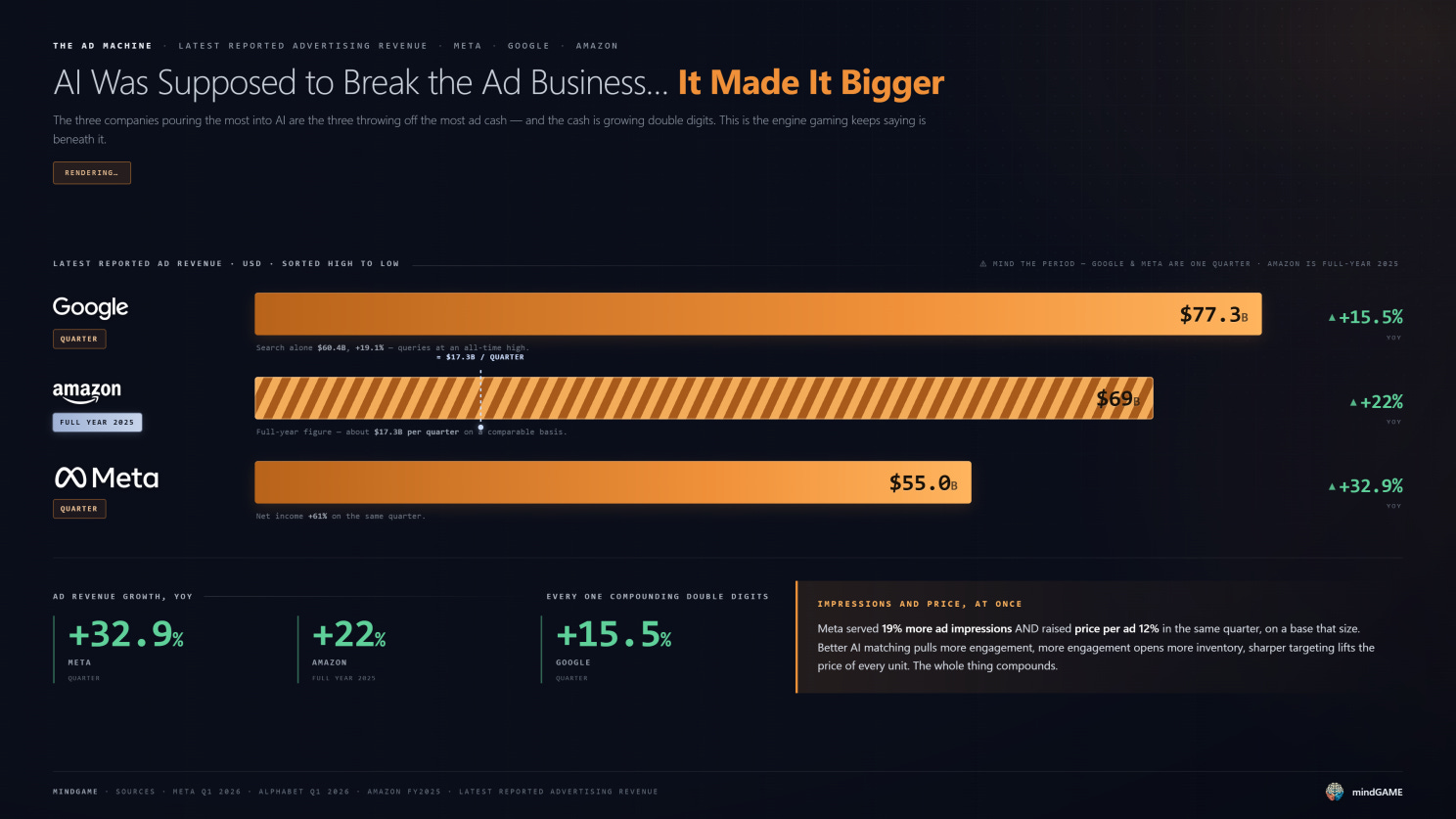
My money is actually on Microsoft fixing it, and not because of any newfound love for gaming in Redmond. Every hyperscaler they are racing on AI capex has a consumer ad cash machine funding the war... Google has Search and YouTube, Meta has the family of apps, Amazon has retail media. Microsoft has LinkedIn and Bing, and a $190 billion capex bill the market just punished them $613 billion for. Xbox is the only consumer attention surface they own that could close that gap. The existential math points one direction, and it happens to be the direction that fixes gaming too. They just have to get over themselves as a corporation to walk it.
Because what I actually want is for this industry to get fixed, and fixing it means hard conversations about what is working and what is not. Letting studio heads run passion projects with no path to an audience is not working. Discovery is not working. A business model that only knows how to charge at the door is not working. Somebody with real scale has to be serious about all three at once, and Xbox... wounded, humbled, out of moves but one... is still the platform best positioned to do it.
Obviously Asha Sharma is never giving this speech, and the memo she should send will never leave whatever building it lives in. But it is exactly the direction Xbox needs to move... in strategy, and in honesty, whether that honesty happens on a stage or behind closed doors with the partners their decisions have cost. Take-Two is about to launch the biggest entertainment product in history into an Xbox install base half the size it was when Grand Theft Auto V shipped. Rockstar built the same game for a market Microsoft shrank out from under them, and every publisher with a fall 2026 slate is doing the same math. Those partners deserve the honest version of this conversation more than anyone. She has been more honest in five months than the previous regime was in ten years. One more step gets her all the way there.
Off to LEGOLAND. See you all in a week.
Can you imagine a world where Xbox is a trailblazer instead of a challenger brand? I think you just did.