How Adult Money Is Reshaping Play & Pokémon At 30

Quick life updates before we jump in.
I’ll be at the D.I.C.E. Summit in Las Vegas!!! If you’re there and want to connect IRL, hit me up.
Also, as promised, I spun up a Substack as another way to subscribe to Patch Notes. A few people told me it’s their preferred platform, so if that’s you, you can sub here, https://substack.com/@patchnotesgaming.
Alright, housekeeping done, now back to the regularly scheduled programming.
This is another edition of Patch Notes, and the thing that’s been stuck in my head all week is the launch of the first wave of LEGO x Pokémon sets.
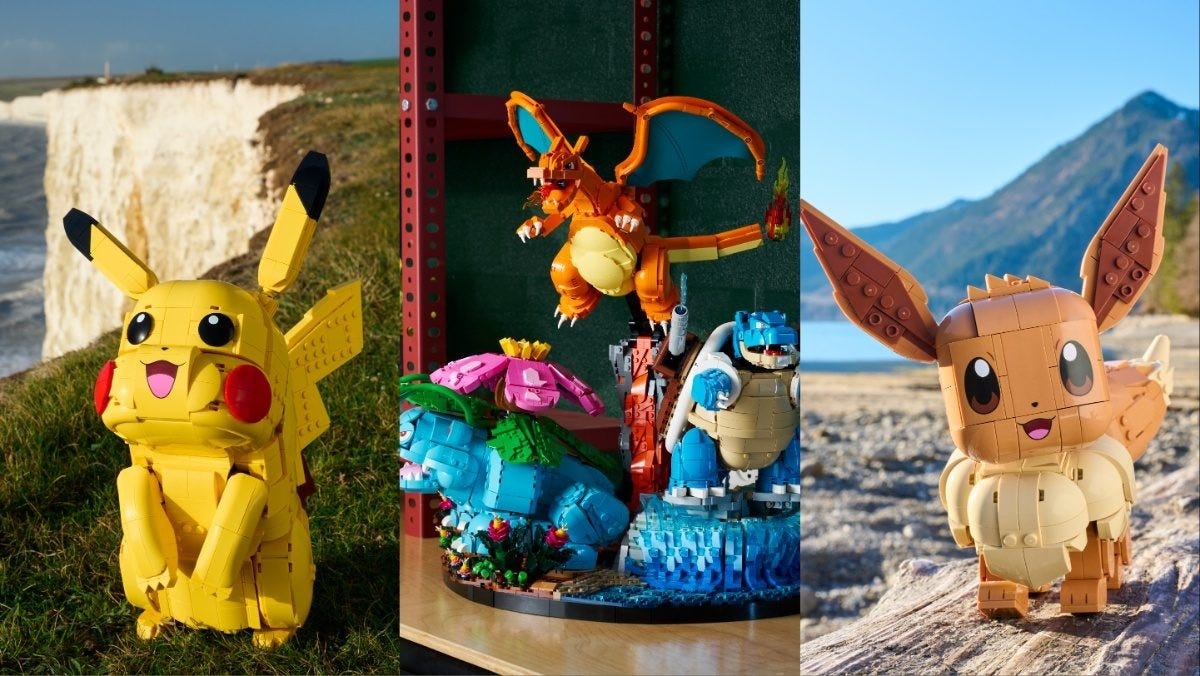
It’s a pretty perfect moment in time. the LEGO Group is still firing on all cylinders, and The Pokémon Company International is walking into its 30th anniversary year like it owns the place. The collab itself was announced over a year ago on Pokémon Day, and you could feel the anticipation building inside the LEGO community the whole way in.
Full stop, I’m part of the problem. I’m an adult fan of LEGO (AFOL) in the most literal sense, I own an absurd number of sets, I’ve got boxes with hundreds of thousands of pieces that are still waiting their turn, some built, some not, and I’m squarely in the target demo for anything that turns nostalgia into a weekend project.
But the thing that really made this week click for me wasn’t just the sellout, it was a comment thread I kept seeing in different forms, basically asking a simple question… are we entering an era where entertainment companies, especially gaming companies, start shifting more of their marketing and product focus toward the 30–50 crowd, because that’s where the disposable income is?
I’ve been thinking about versions of this for a long time. Back when I was doing research day-to-day at Twitch, I used to talk about this idea that gamers will age up into middle-ageddom, and beyond, because every kid plays games. What changes is what they play. Right now kids are spending time in Roblox, Minecraft, Fortnite, and Hytale.
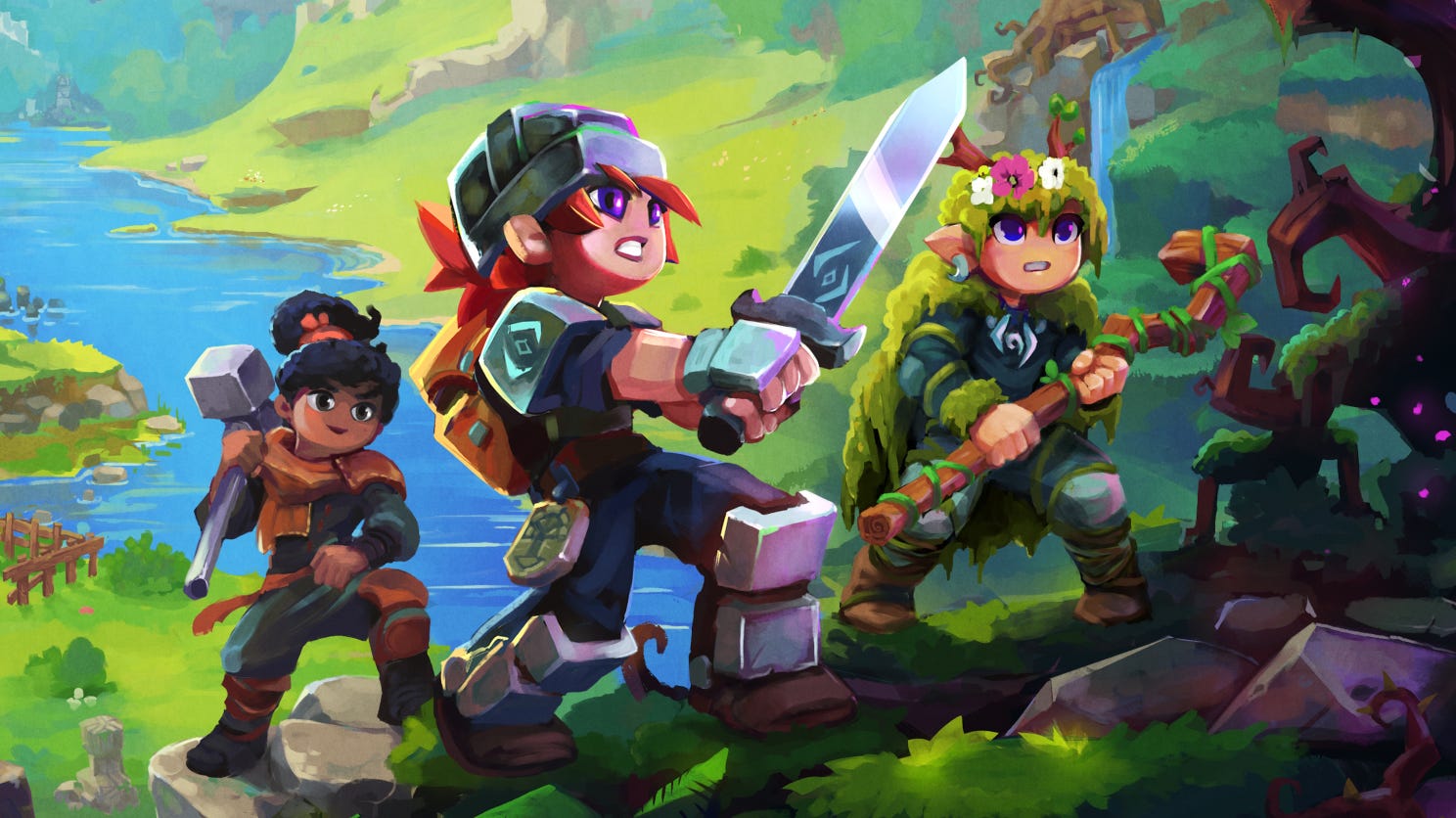
Quick detour… Hytale is having an incredible moment right now. The numbers are already insane, we’ve seen peak concurrency north of 420,000 on Twitch, and we’ve got a whole bunch of data at mindGAME Data we can’t wait to share with you all next week. This game’s a beast, but I’m going to put a pin in it for now.
Back to the point. The question isn’t whether kids play games, they will. The real question is whether people age out of gaming… or whether gaming becomes like movies and music, something you just carry with you, only now you can actually afford it.
The comment that stuck with me boiled down to this, Gen Z and Gen Alpha campaigns can be great for branding, but if you want sales, you aim at the people with money, and a $70 game feels very different at 35 than it does at 20. At 35 it’s cheaper than a night out. At 20 it can be a week of discretionary spending.
I don’t fully buy every edge of that argument, but I also don’t think it’s wrong. I’m an elder millennial (shout out to Gen X too, you absolutely exist!!!) and we’re now deep into the part of life where we still play “games games.” We still care about the franchises we grew up on. I still care about X-Men and Spider-Man in the most aggressively 90s way possible. I still have the soft spot for Power Rangers, which my kids are now helping re-ignite. I’m still into Transformers. I’m still stuck on the original Star Wars trilogy that imprinted on my brain.
And I think that’s the quiet twist. A lot of us didn’t age out of fandom, we just aged into being able to pay for it… and now we’re sharing it with our kids.
So that’s the thread I want to pull this week, using LEGO x Pokémon as the cleanest possible case study.
Adult money is reshaping play, and the companies winning are the ones whose DNA already matches the moment.
LEGO, The Company That Turned Play Into A Premium Adult Product
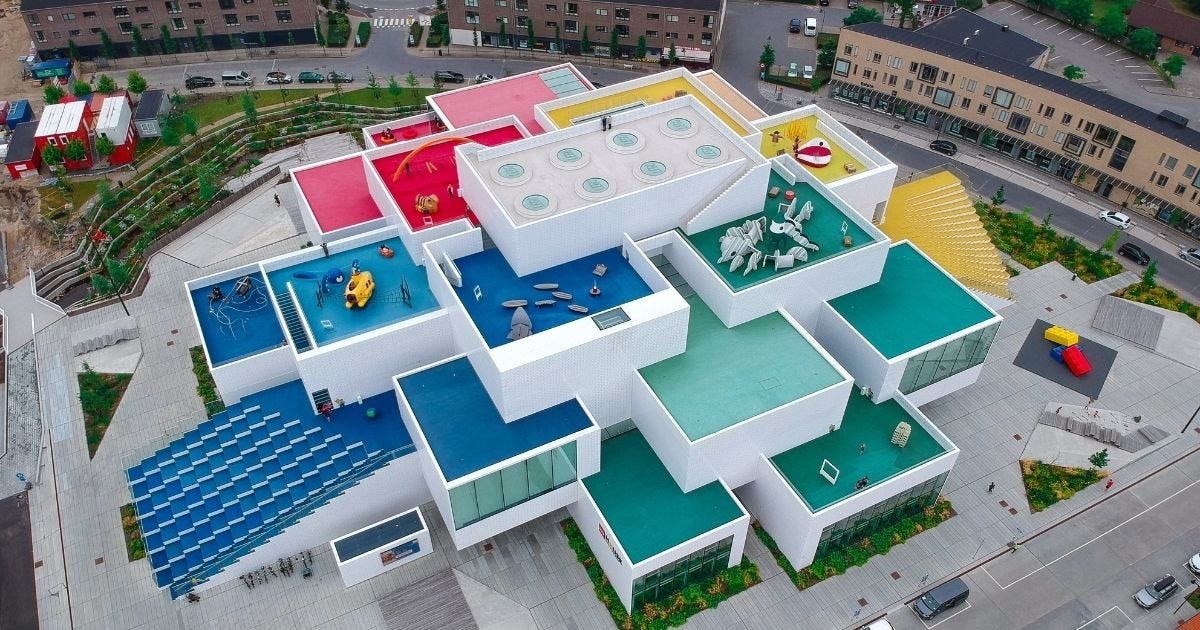
The History Of LEGO, From “Play Well” To A Modern Powerhouse
LEGO is one of those companies where the mission statement is hiding in plain sight.
The name comes from the Danish phrase “leg godt,” which basically translates to “play well.” The brick is the product, but play is the business.
LEGO was founded in 1932 in Denmark, and the long arc of the story is pretty simple… make a system for imagination, then keep finding new ways to let people use it.
There was a moment where that story almost broke.
In the late 1990s and early 2000s, LEGO expanded too far, too many products, too many experiments, too much complexity, and the company got dangerously close to the edge. The comeback is now one of the cleanest turnaround stories in consumer products, LEGO tightened the portfolio, got more disciplined about what the brick is good at, and recommitted to its core competence.
In practical terms, that meant a few things.
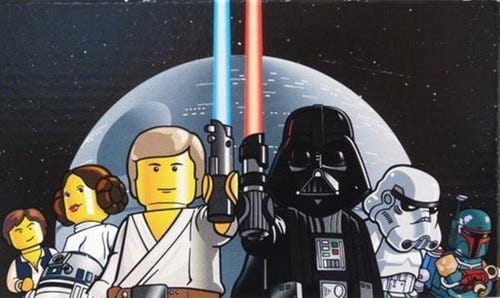
First, LEGO leaned harder into the licensed themes that actually reinforced the brick system instead of distracting from it. Star Wars was the early proof point, Harry Potter followed, Batman became another major pillar later, and the broader lesson was simple, when LEGO borrows a world that people already love, the brick becomes the way you live in it.
Second, LEGO simplified. Fewer weird side quests, more focus on what LEGO is uniquely good at, building systems that feel intuitive, playful, and endlessly remixable.
Third, LEGO gradually built a premium lane for older builders, and you can trace it in the product history. The Star Wars Ultimate Collector Series started in 2000. The Modular Buildings era kicks off in 2007. The Collectible Minifigures series arrives in 2010 and quietly helps turn “collecting LEGO” into a hobby with its own economy.
That combination, licensed worlds plus a cleaner system plus a premium adult lane, is basically the foundation of what I mean when I say “modern LEGO.”
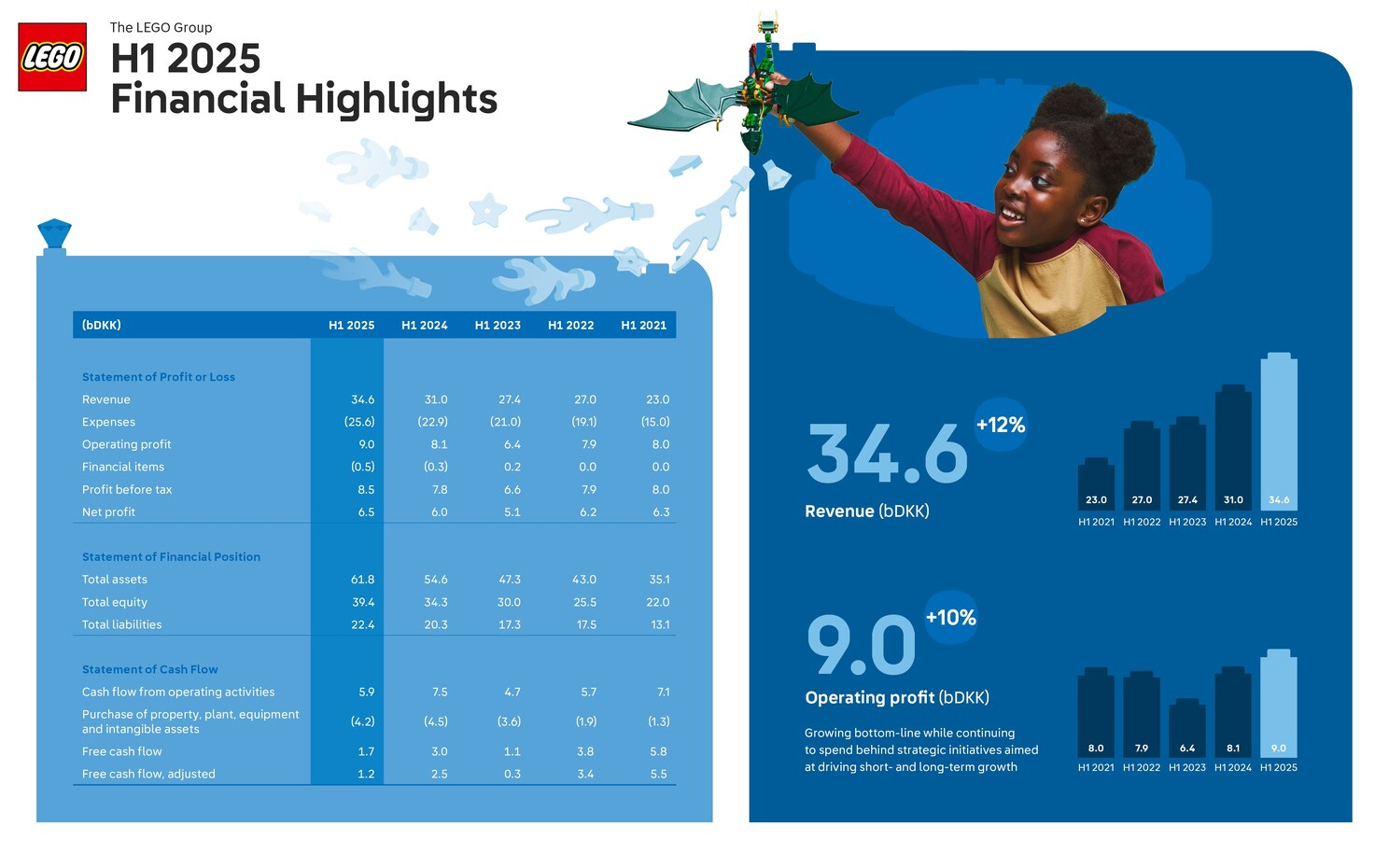
You can see the “modern LEGO era” in the numbers too. Over the last few years, LEGO revenue has climbed from roughly DKK 43.7B in 2020, to DKK 55.3B in 2021, to DKK 64.6B in 2022, to DKK 65.9B in 2023, to a record DKK 74.3B in 2024.
If you want the documentary version of the comeback arc, Brick by Brick: Inside LEGO is a good place to start, and A LEGO Brickumentary is another easy watch if you want to get back into LEGO’s orbit.
Play As Sets, LEGO Followed My Childhood Into My Adulthood
Here’s the part that matters for this week’s thesis.
LEGO did a phenomenal job of following play from my childhood into my adulthood.
I’m an elder millennial, and I’m the proof point. I’m an adult fan of LEGO in the most literal sense, I own an absurd number of sets, I’ve got boxes with hundreds of thousands of pieces still waiting their turn, and I’m exactly the kind of person LEGO learned to design for.
And somewhere along the way LEGO realized something that now feels obvious… adults never quite grow up, they just grow into being super fans with more money.
That’s the modern LEGO superfan.
You can see it in the way LEGO expanded the “18+” lane into a first-class business, and in how aggressively it’s built a fandom for basically everyone.
There’s Star Wars, Marvel, Batman, Jurassic Park, Harry Potter, Transformers, The Simpsons, SpongeBob SquarePants, Fast & Furious, Dungeons & Dragons, Disney, the list keeps going.
The pattern is the point, LEGO keeps tapping massive fan bases with enough care that the sets feel like love letters, not just merch.
And then there’s the lifestyle lane, the botanical sets, the art sets, the home decor builds.
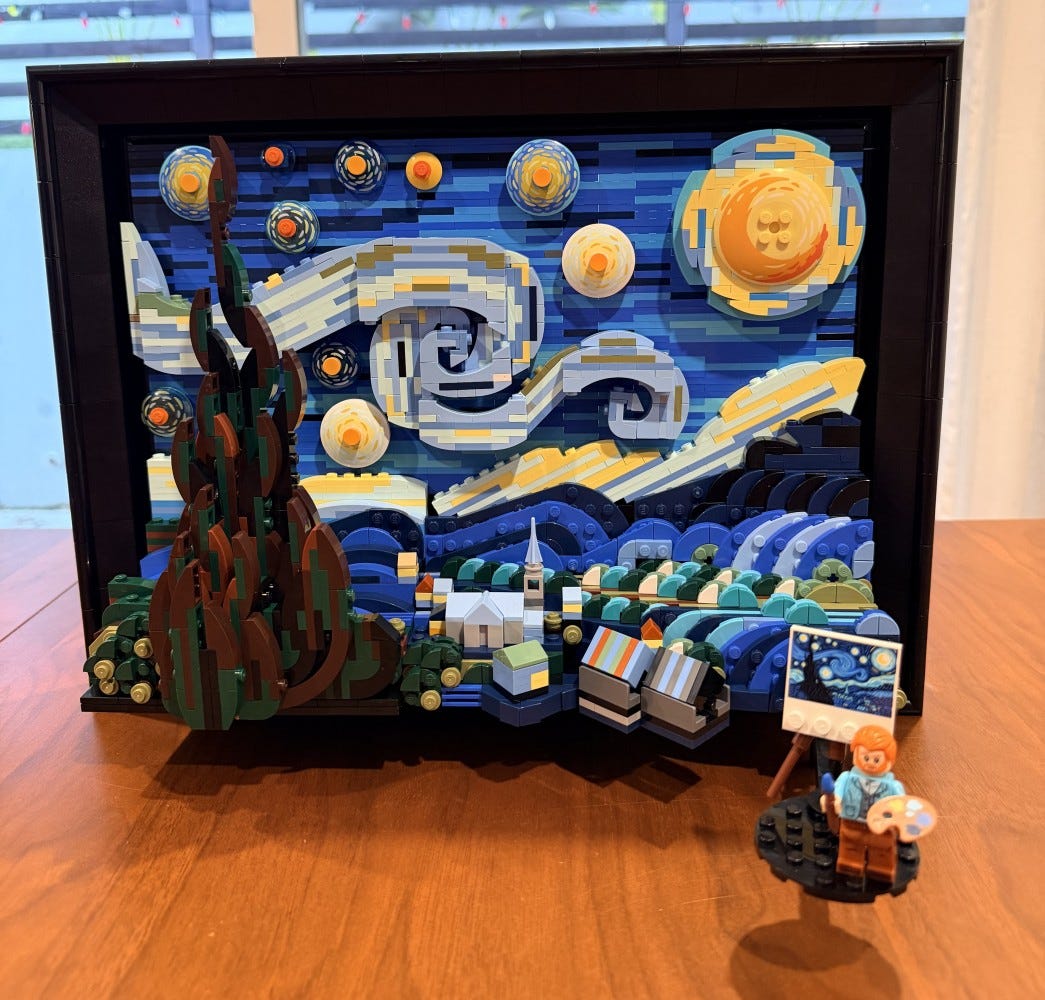
I have four different botanical sets around the house right now, quietly living in plain sight because they look good. I’ve built the Van Gogh Starry Night set, and it sits proudly in our living room. Those are LEGO sets that don’t need to scream “I’m a nerd,” they’re just… objects.
LEGO didn’t just sell me a toy, it sold me permission.
And the bigger point is, this isn’t some tiny niche. The adult buyer has become a meaningful part of the toy market, and LEGO has been one of the best companies on Earth at capturing that shift.
Play As A Platform, LEGO In Games
The other lane of play is digital.
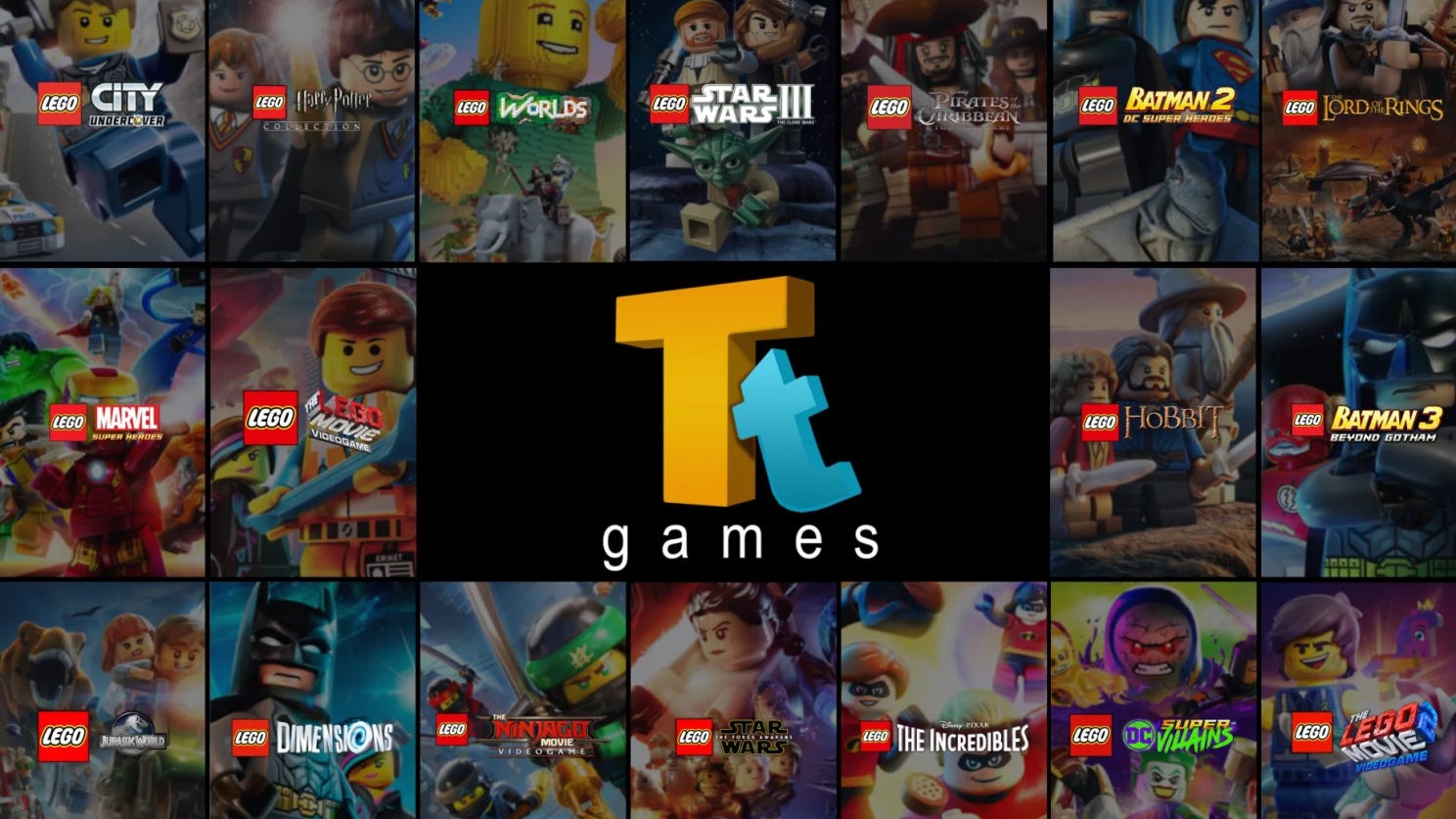
But I don’t think you can talk about LEGO in games without talking about TT Games Ltd first, because TT didn’t just help LEGO sell games, it helped define LEGO’s modern voice.
TT Games is a British studio group that formed in 2005 out of Traveller’s Tales and the publisher Giant Interactive, and Warner Bros. acquired it in 2007. LEGO Star Wars: The Video Game dropped in 2005, and if you played it back then, you remember the feeling, the slapstick pantomime, the silent comedy, the little visual gags that made it feel both kid-friendly and oddly sharp. That tone, very British, very “wink at the camera,” has been a through line ever since.
So TT wasn’t just a vendor, TT was foundational.
And the scale of the LEGO games portfolio still doesn’t get enough credit. Across the TT era, LEGO videogame franchises have been reported at over 200 million units sold worldwide. That’s not a niche franchise, that’s a top-tier global entertainment franchise. For context, that reported 200M+ figure puts LEGO ahead of franchises like Sonic the Hedgehog (reported 160M+) and Final Fantasy (reported 185M+), two series that get talked about a lot more often than LEGO does.
Our mindGAME Data dataset starts in 2019, so the “200 million units” story is the long arc, and what I can show cleanly is the modern arc.
Across our tracking at mindGAME Data, LEGO has had two major peaks in games.
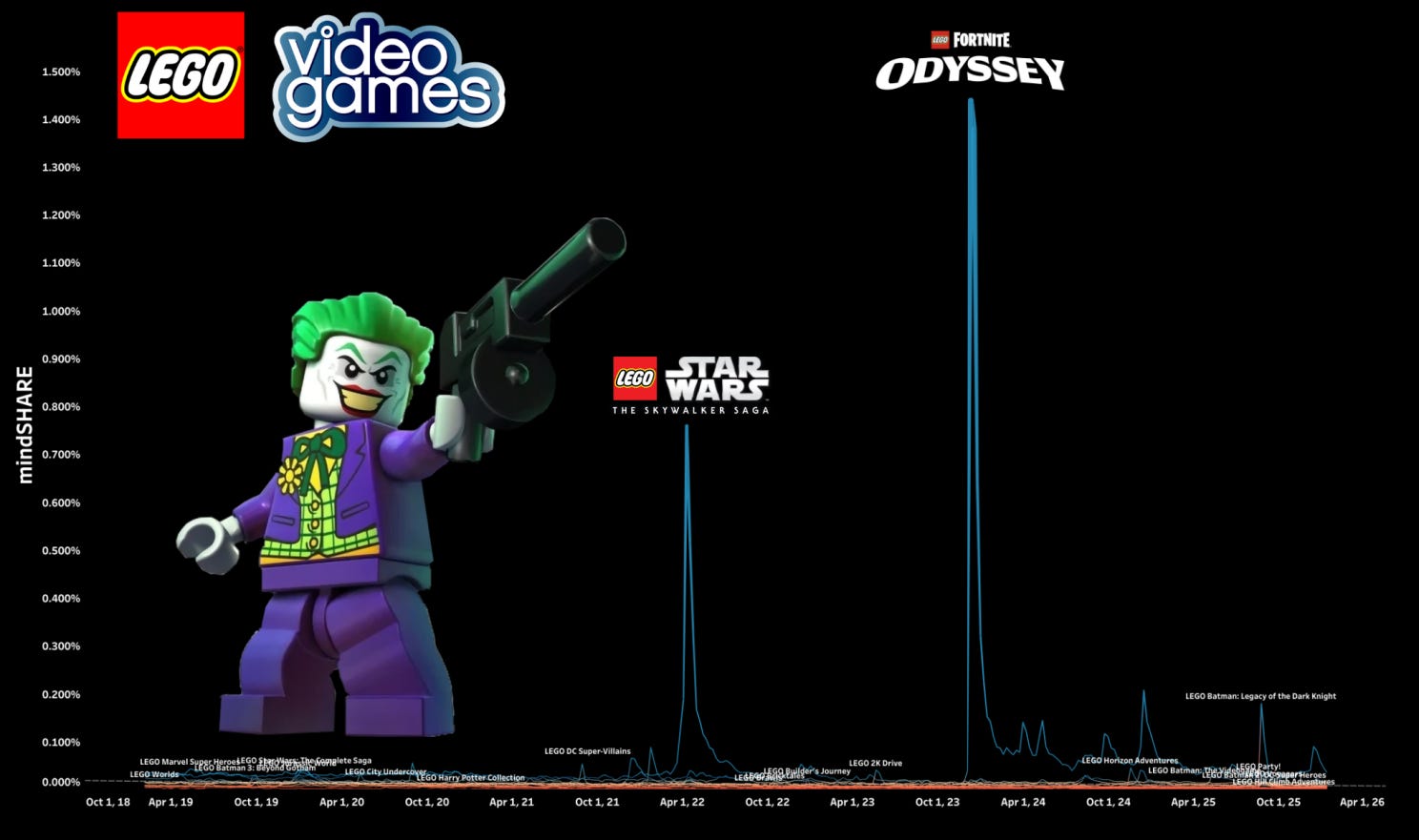
First, LEGO Star Wars: The Skywalker Saga in 2022. It delivered a 0.759% mindSHARE, ranked as the #20 largest game in the world that week, hit #11 in Search with 6.5M searches, ranked #29 on YouTube.
Second, LEGO Fortnite. That launch was a true monster moment. It hit the #9 largest game in the world during launch week, peaked at 1.438% mindSHARE, ranked #10 in Search with 9.3M searches, and hit #7 on YouTube.
And if you want the “why,” it maps perfectly to LEGO’s DNA. LEGO doesn’t just want to sell bricks, it wants to expand the definition of play, and a persistent LEGO mode inside Fortnite is basically the logical extreme of that idea.
In 2022, the LEGO Group and Epic announced a long-term partnership to build safe digital spaces for kids and families, and in parallel Epic raised $2B from Sony and KIRKBI, the investment company behind LEGO, to push that vision forward. That context matters, because it explains why LEGO Fortnite didn’t feel like a random brand deal, it felt like LEGO doing what LEGO does, just on a bigger canvas.
The contrast is what makes the TT story feel even more important.
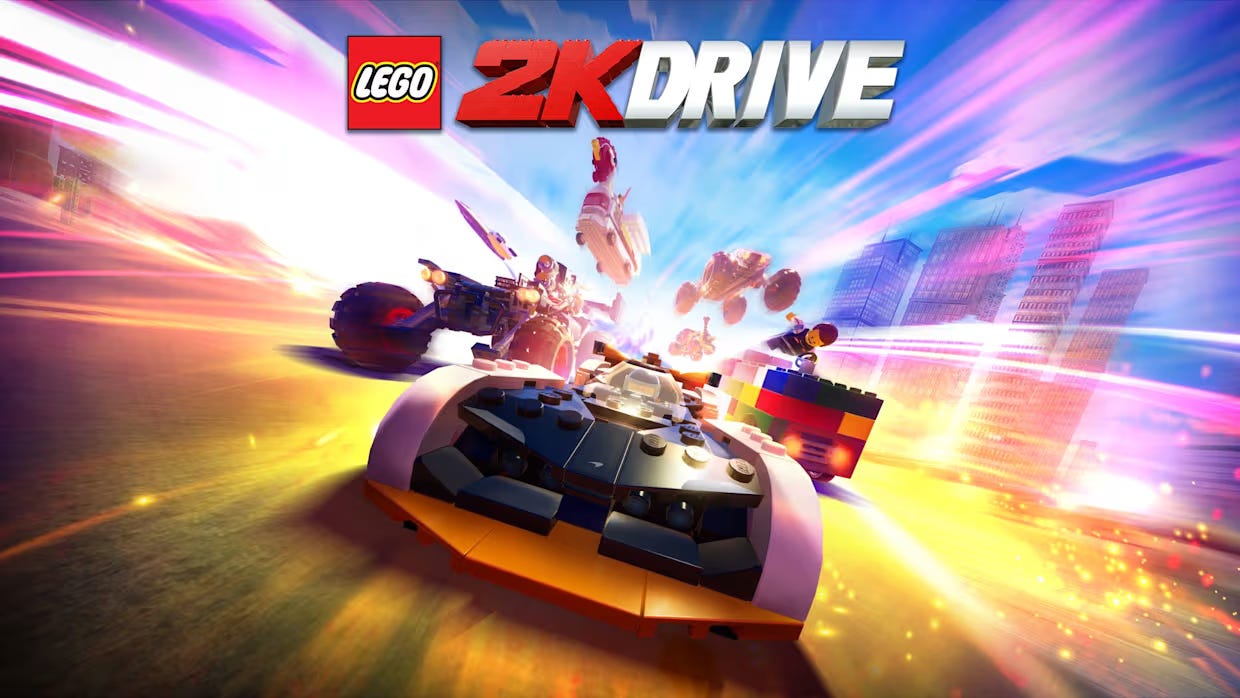
LEGO outside of the TT lane is a lot more hit-and-miss. LEGO 2K Drive peaked around 0.04% mindSHARE and never cracked the Top 100 across any of our meaningful metrics. LEGO Party! landed at 0.033% mindSHARE in its launch week and similarly failed to break into the Top 100. LEGO Horizon Adventures hit 0.045% mindSHARE at launch, again outside the Top 100 across our measurable ranks.
So as a LEGO superfan, that’s the thing I keep coming back to… LEGO in games is not automatically a hit just because LEGO is a hit. When LEGO stays LEGO, when the product feels like play, and when the partnership understands the tone and the loop, it works. When LEGO becomes a skin, or a vibe, or a trend-chase, it drifts.
And that’s why TT Games remains one of the best IP partnerships in gaming history.
My personal favorite is LEGO Marvel Super Heroes. Until the modern Spider-Man games came out, I genuinely thought it was the best Marvel game out there, by far.
LEGO Is The Modern Backyard Catch
The reason I keep coming back to LEGO is cultural.
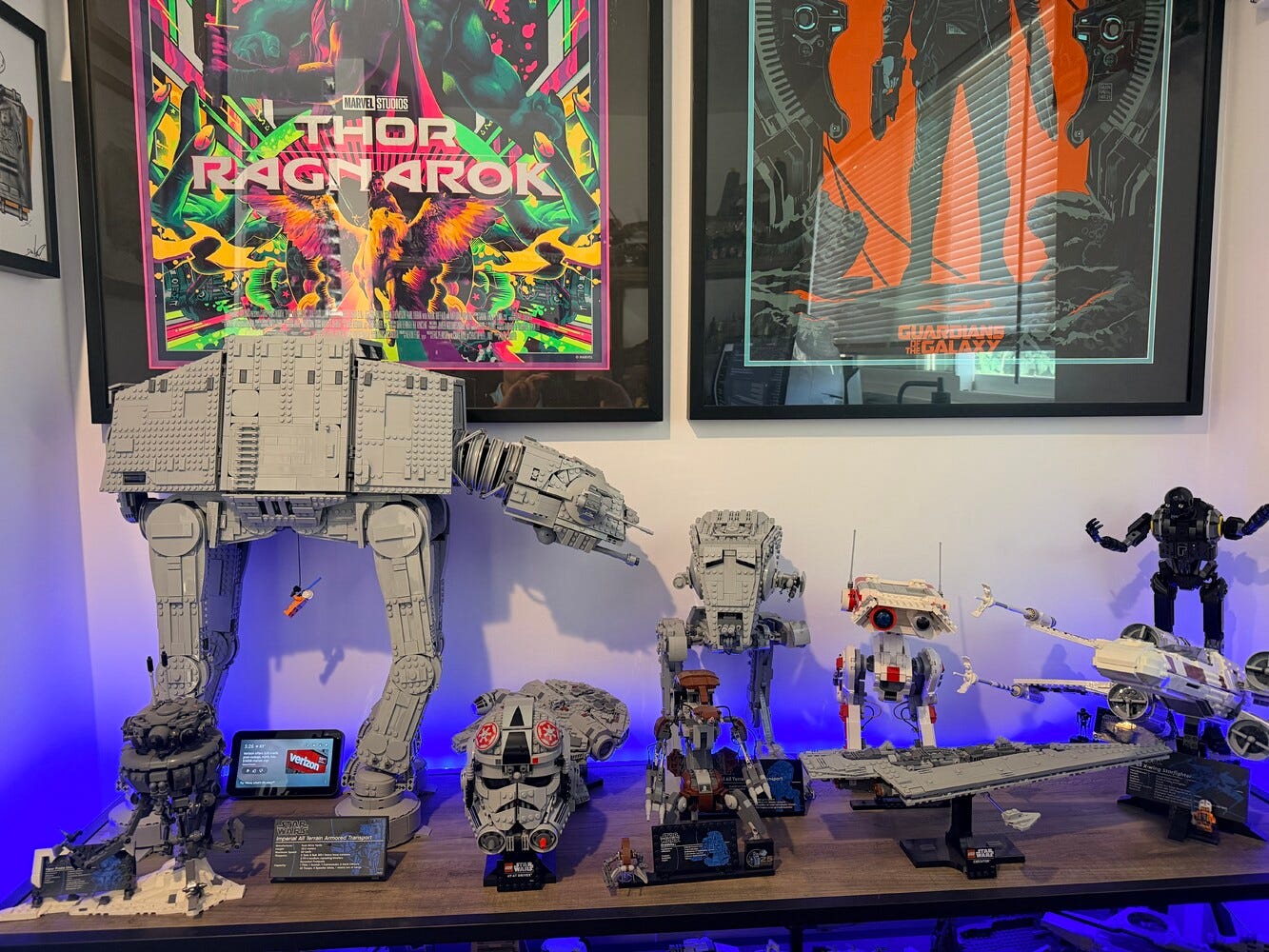
From a marketing perspective, I’m basically the perfect target. Not just because I have deeper pockets now, and can justify the wildly expensive display sets, but because LEGO has been with me across every version of play.
Physical play, sets on the floor as a kid, sets on the shelf as an adult.
Virtual play, LEGO games that I grew up on, and LEGO games I still come back to now. Over the holiday break I spent a lot of time with LEGO Star Wars: The Skywalker Saga, and it’s the same feeling, comfort food, humor, completion value, and that little “I can’t believe they made this joke with plastic bricks” charm.
And then there’s the part that matters most.
LEGO is one of the few brands that naturally turns into a generational flywheel.
I buy the premium sets for myself, then I buy sets for my kids, then we build them side-by-side. We talk, we laugh, we hunt for pieces, we occasionally argue about whether a piece is missing or whether someone dropped it on the floor.
If you want the modern version of the old stereotype of dad and son tossing a baseball in the yard, this is it.
A LEGO kit on the table, two instruction books open, building in parallel.
That’s not just a product, it’s a habit.
And habits are the kind of thing that survive generations.
So when people talk about an industry shift toward older buyers, I don’t automatically roll my eyes. I can feel it in my own behavior. LEGO has earned my attention over decades, across physical and digital, and because I’m still here, I’m also the bridge to the next generation.
That’s the larger point of this whole section.
Adult money matters, but adult fandom matters more, because adult fandom is how brands keep renewing themselves.
Next, I want to look at the other side of this moment, another brand that might be even more structurally built for it than LEGO… Pokémon.
Pokémon, The Ultimate Collecting Flywheel
The History Of Pokémon, A 30-Year Speedrun
Pokémon is one of the rare modern franchises that feels like it has always existed, but the entire thing is basically a 30-year speedrun.
It starts in 1996 with Pokémon Red and Pokémon Green on Game Boy, developed by Game Freak and published by Nintendo, built around one deceptively simple hook… catch, trade, battle, complete the set.
That “set” idea is the seed of everything.
What happened next is the part that still feels unreal in hindsight. Pokémon didn’t spend a decade “proving itself” inside one medium, it exploded outward almost immediately.
Within the first couple years, Pokémon was already living as a game, a trading card game, an anime series, manga, films, and a merch engine. Ash Ketchum and Pikachu became a cultural landmark for an entire generation, and Pikachu turned into one of the most recognizable mascots on Earth.
The corporate structure also evolved early, which is a huge reason the machine scaled the way it did.
In 1998, Nintendo, Creatures, and 株式会社ゲームフリーク(GAME FREAK inc.) established Pokémon Center Co., Ltd., originally to operate Pokémon Center retail. In 2000, it was renamed The Pokémon Company as its role expanded into overall brand management. That three-parent structure, and the decision to treat brand management as a first-class function, is a big part of why Pokémon travels so cleanly across formats.
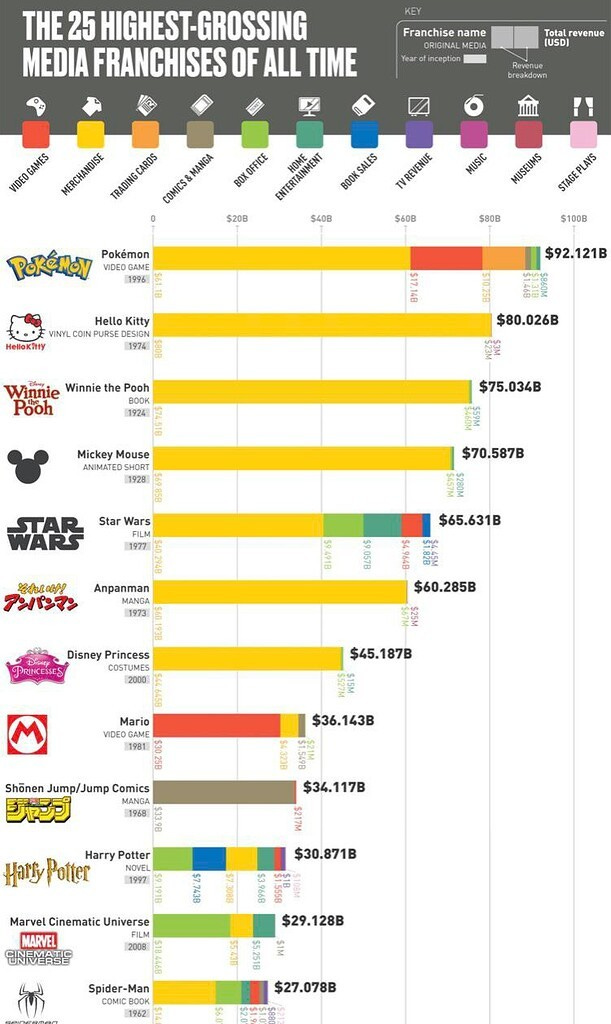
By retail sales, Pokémon is regularly cited as the highest-grossing media franchise in the world, in the $100B+ neighborhood. In 2024 alone, The Pokémon Company’s licensed consumer products were reported at roughly $12B in retail sales.
The scale shows up in the hard totals too. As of the end of March 2025, total shipments of Pokémon-related video game software are over 489 million units, and total production of the Pokémon Trading Card Game is over 75 billion cards.
That’s the backdrop.
A franchise built on collecting, built to renew itself, built to travel, and built to stay culturally present for decades.
Pokémon, The Tiamat Of Gaming And IP
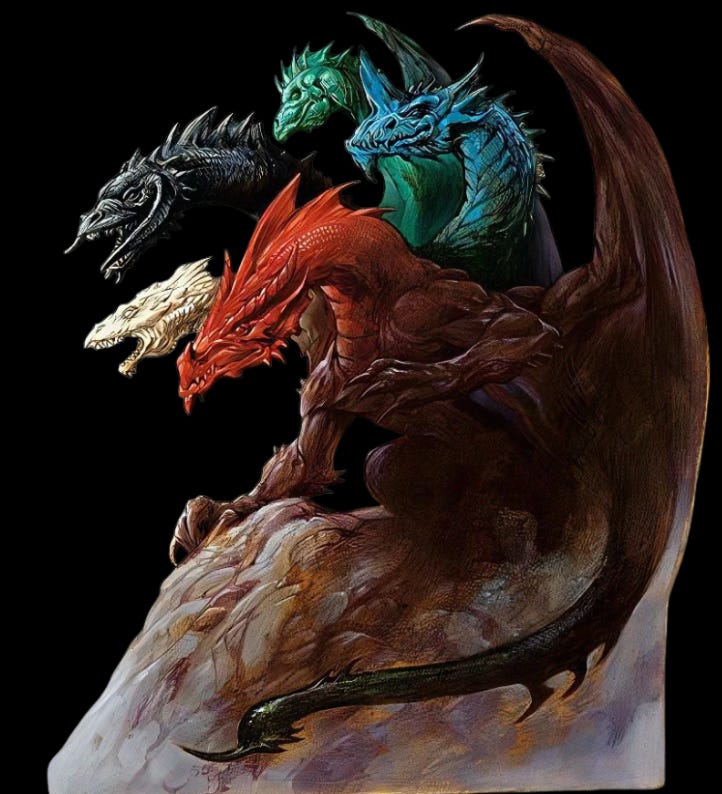
Here’s the framing I want to test.
In Dungeons & Dragons, Tiamat is the five-headed dragon god. One body, five heads, each head terrifying on its own, and together they’re basically a raid boss.
Pokémon feels like that.
It’s a five-headed flywheel where each head is a real business, and collectively it creates something you can’t really escape, in the best way.
And this is where Pokémon starts to mirror LEGO.
Both brands hook you early, then follow you for decades, not just as nostalgia, but as identity. They turn play into a habit, then turn the habit into an adult purchase, then turn the adult purchase into a bridge to the next generation.
Head One, Console And Handheld Games; This is the anchor. The “ampersand” mainline lane, the Legends lane, the remakes, and the offshoots.
People argue about whether the core loop feels stale, and I get it. But the sales and the attention spikes don’t lie, the loyalty is real, and the franchise still owns its calendar lane when it shows up.
Head Two, Mobile; This is where you see the real experimentation. Pokémon Go is the obvious forever phenomenon, it turned the real world into part of the collecting loop. And newer hits like Pokémon Trading Card Game Pocket prove Pokémon can still spin up a modern collecting habit on phones.
Head Three, Trading Cards; This is the pure collecting economy, and we’re very much in a trading card renaissance.
If you spend any time around elementary schools in the U.S., you can feel it. Kids are reengaging at scale. The cards get treated like contraband, locked up behind the teacher’s desk like Tylenol, because the playground economy gets too real.
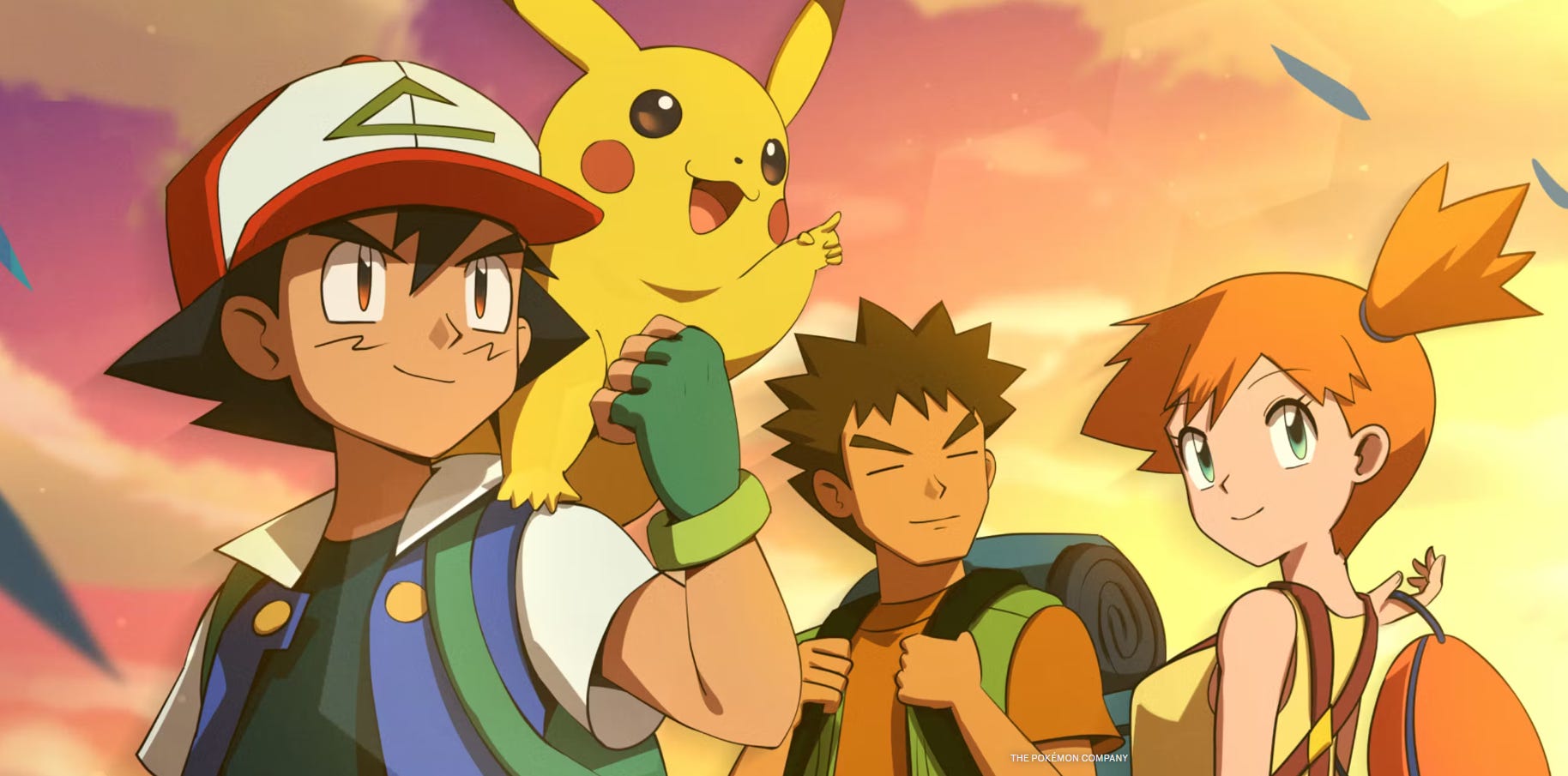
Head Four, Film And TV; This is the cultural delivery system.
The secret weapon is that the series never really stops. It just keeps going, it keeps refreshing itself, and it keeps Pokémon present even when you aren’t actively playing.
Head Five, Merchandise; This is the monetization engine, and it’s also the identity layer.
Merch is how you take something you love and make it part of your daily life. It’s how you become a Snorlax person, a Jigglypuff person, a Mewtwo person, an Eevee person with strong opinions about the evolutions.
Everyone has their Pokémon.
Collecting is the spell that binds all five heads together. Collecting, and identity.
That’s why Pokémon imprints on people so deeply.
On a personal level, Pokémon is one of those things that just followed me. I played the early games as a kid. I watched the show. I knew the cards. And even if you drift away from any single version of it for a few years, the brand never really disappears, it’s always somewhere in the background, waiting for the next starter, the next set, the next excuse to jump back in.
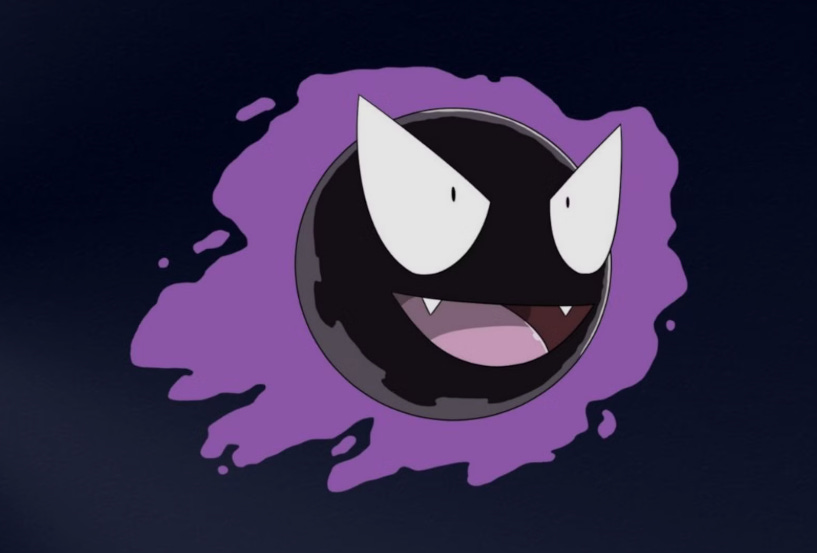
Mine has always been Gastly, a bit of a hipster choice, even though most people eventually jump to the final evolution, Gengar. And my second place, forever, is Squirtle with the sunglasses from the anime.
Now let’s go head by head, and put some numbers behind why this flywheel is as unfair as it feels.
The Games Head, The Anchor That Keeps Resetting The Clock
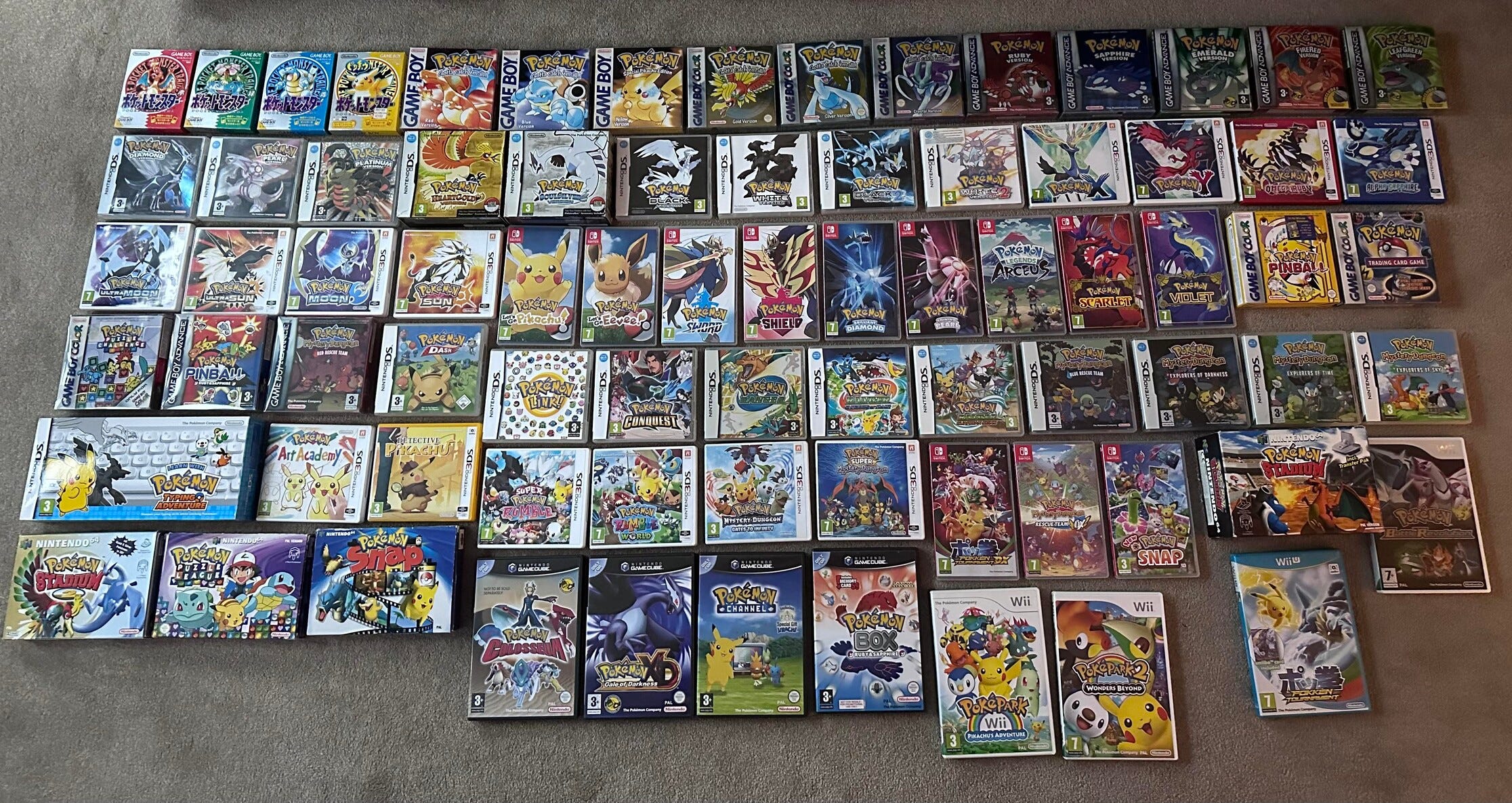
Before we zoom into individual titles, it’s worth stating the headline.
If you roll Pokémon up as a single franchise, and treat it as one combined entity across all its games, it accounts for roughly 1.322% of the total gaming market. If Pokémon were just “one game,” that would put it around #9 globally.
That’s the part people keep underestimating.
Pokémon games get dismissed as “the same game every time,” and honestly, there’s truth in the criticism. The loop is conservative. Innovation tends to happen by inches, not by miles. Even the bigger shifts, like moving toward more open-world structure, usually happen in side lanes rather than the mainline.
And yet… people show up anyway.
Sales don’t lie, and neither do the launch spikes.
On the sales side, the modern mainline releases are absurd. Pokémon Sword & Shield has sold over 26 million units. Pokémon Scarlet & Violet is over 24 million units, and it hit 10 million in three days. Pokémon Legends: Arceus is around 16 million units.
And in the attention data at mindGAME Data, you can see the same story play out.
The mainline “ampersand” lane is the sledgehammer.
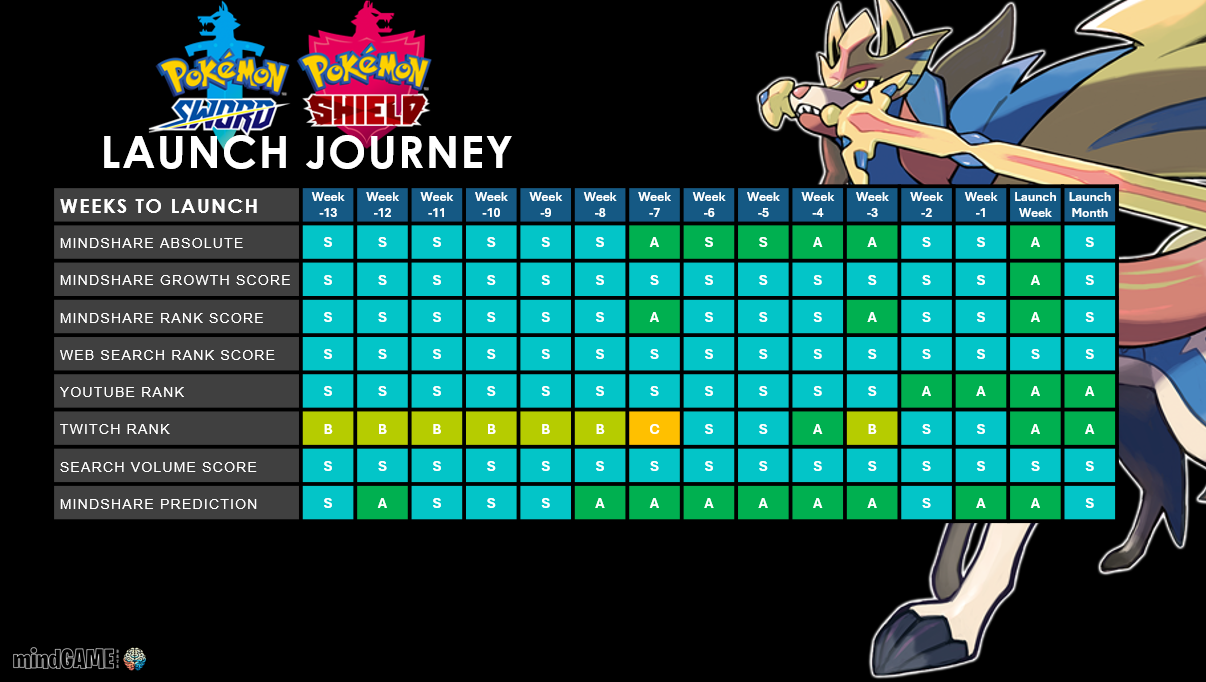
Pokémon Sword & Shield launched at 4.34% mindSHARE, ranked #2 globally, drove 57M+ searches in its first week (good for #1 in Search), and ranked #5 on YouTube.
Pokémon Scarlet & Violet was even bigger, 5.28% mindSHARE at launch, again ranking #2 globally.
The Legends lane is where Pokémon experiments, without breaking the core loop.
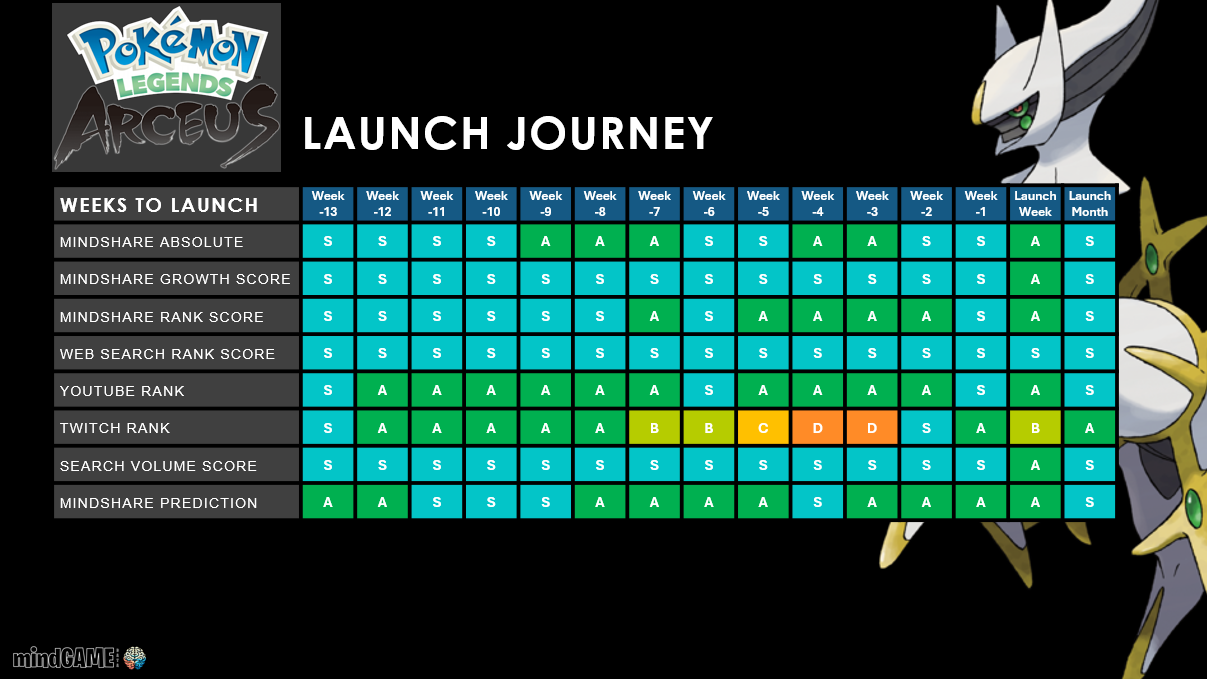
Pokémon Legends: Arceus launched at 2.18% mindSHARE, ranked #7 globally, hit #4 in Search, and #11 on YouTube.
And Pokémon Legends: Z-A landed at 1.85% mindSHARE, again ranking #7 globally, #4 in Search, and #10 on YouTube.
Then you’ve got the remakes and remasters, which function like nostalgia resets for a specific cohort.
Pokémon Brilliant Diamond and Shining Pearl launched around 1.8% mindSHARE, ranked #9 globally, hit #4 in Search, and #16 on YouTube.
Put it all together and the takeaway is simple.
Pokémon is the calendar anchor that people keep forgetting to treat like a calendar anchor.
Every year you’ll see “most anticipated” lists that so

mehow overlook Pokémon, and every year Pokémon quietly proves it doesn’t need the hype cycle to be the hype cycle.
It owns its lane when it shows up.
And this is also where the LEGO parallel matters. Pokémon is a franchise that parents trust, a clean on-ramp for the next generation. Some kids get introduced because their parents loved it. Some kids get introduced because Pokémon is already omnipresent in their world and the games are the natural next step.
Either way, the result is the same, the games aren’t just products, they’re the reset button that keeps the flywheel spinning.
One more note looking ahead. We’re in the 30th anniversary year now, and while nothing is confirmed as I’m writing this, it would be a very safe bet that we’re headed toward another mainline “ampersand” release to celebrate the moment. If it’s coming, we’ll probably learn a lot more around Pokémon Day and the usual late-February news cycle.
The Mobile Head, The Forever Layer
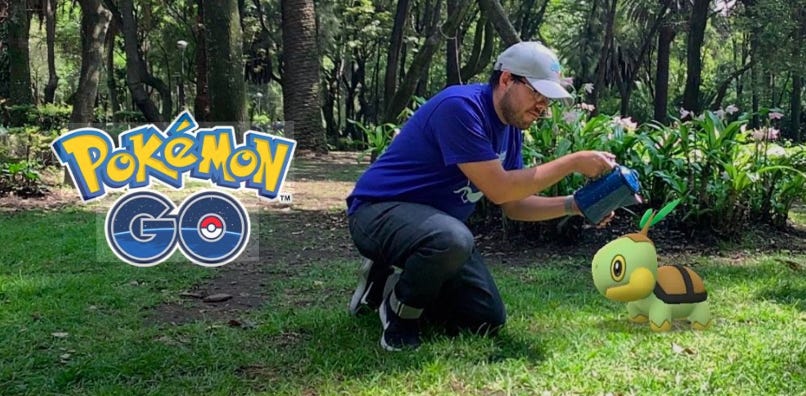
Mobile is the glue that keeps Pokémon culturally present between big releases.
The headline is still Pokémon Go.
Niantic launched it in 2016, and it was one of those rare “the medium just shifted” moments, it took AR out of the demo phase and turned it into a mainstream habit. The real world became part of the collecting loop.
On a personal level, this is one of my favorite “you had to be there” gaming moments. When I started at Twitch, Pokémon Go dropped and the entire office basically became a roving research lab. There were three PokéStops right outside the building, and we were constantly farming them between meetings, phones out, trying to fill the Pokédex, chasing the good stuff, not another Pidgey.
Years later, the game is still a stable horse for the brand.
In our Mobile mindGAME Data tracking, Pokémon Go is a consistent Top 20-ish title by Mobile mindSHARE, generally living in the Top 20 to 25 range overall, with revenue performance that regularly sits in the top percentile and occasionally creeps into the Top 10 depending on the moment.
Then there’s the newer cannonball.
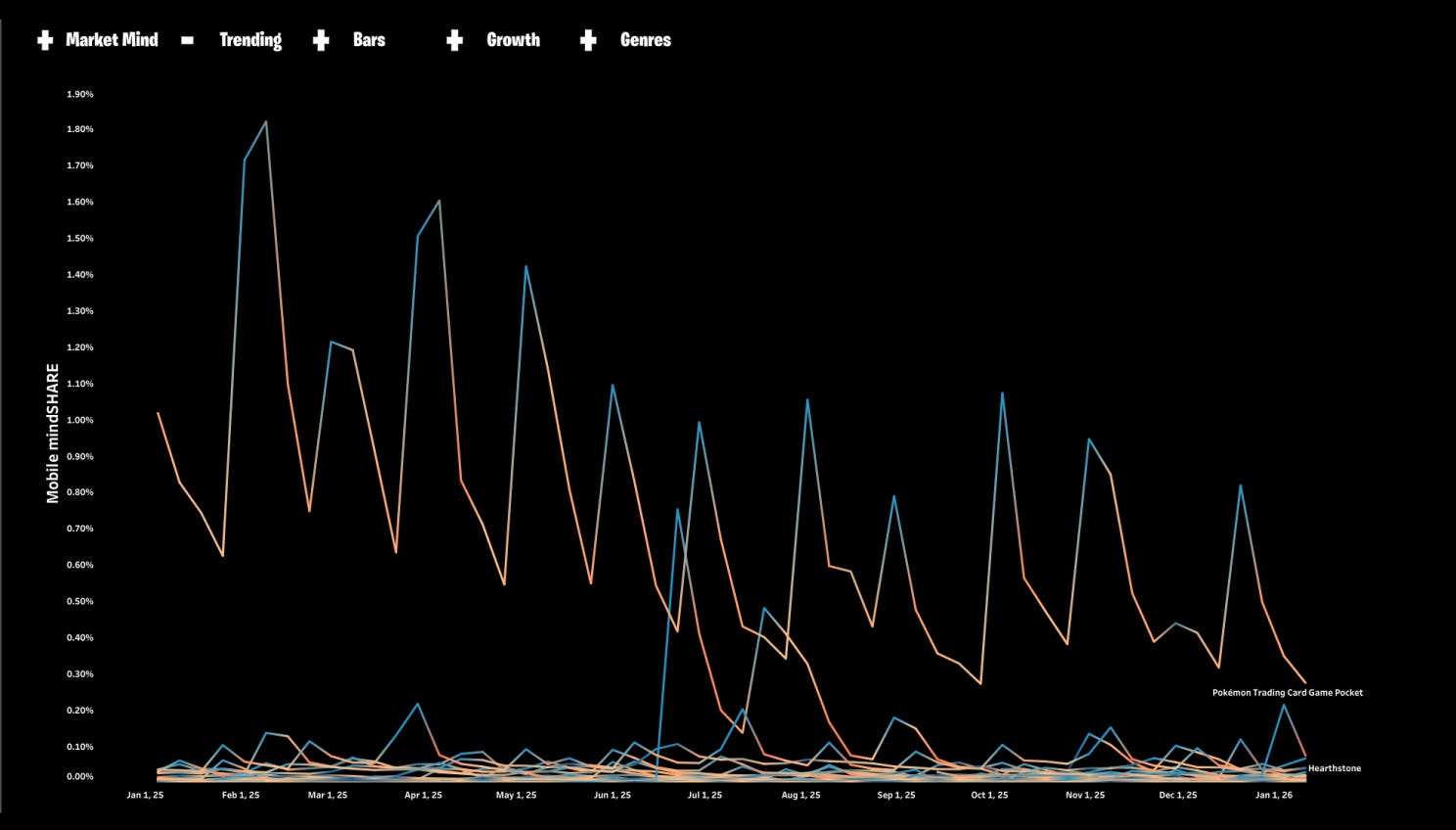
Pokémon Trading Card Game Pocket launched and immediately started behaving like Pokémon, big spikes, fast adoption, and a level of dominance inside the CCG lane that isn’t subtle. In our tracking it’s consistently Top 50 in revenue and downloads, and it ranks Top 50 on Mobile mindSHARE. When you zoom in on mobile CCGs specifically, it’s not even close, Hearthstone is the famous comp, but on mobile it doesn’t live in this tier most of the time.
You can see the demand show up on social too. On TikTok, Pokémon Go sits north of 22B lifetime views, and Pocket has already cleared roughly 1.4B.
That’s the mobile head in a nutshell, two different products, two different loops, but the same spell underneath. One game turns the physical world into the board, the other turns collecting into a daily phone habit, and both keep Pokémon alive between console resets. And if you want the generational angle, mobile is where you can literally watch it happen in real life, parents and kids playing Pokémon Go together as an excuse to get outside, walk the park, and catch a few more.
And that’s the clean handoff into the next head, because what Pocket is tapping isn’t new at all, it’s just the oldest Pokémon engine in the book.
The Trading Card Head, The Collecting Economy
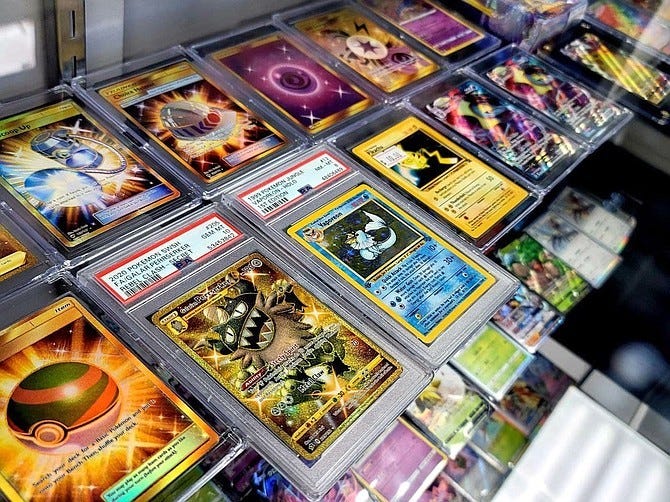
The Trading Card Game is the purest expression of Pokémon’s business model.
It’s collecting as a ritual... and it’s been doing this long enough that people forget how violent the original U.S. wave was.
When Pokémania hit the U.S. in 1999, the cards were everywhere, and the money followed fast. Analysts were estimating Pokémon cards alone could do roughly $225M in U.S. sales in 1999. The demand was so intense that the TCG wasn’t just “popular,” it was a meaningful revenue driver for the companies involved.
Then yes, it cooled.
Not because Pokémon disappeared, but because the first wave of mania faded and the market normalized. You can see the broader Hasbro commentary in the early 2000s where declines in Pokémon trading cards are cited as part of why results softened.
And then the hobby came back like a storm.
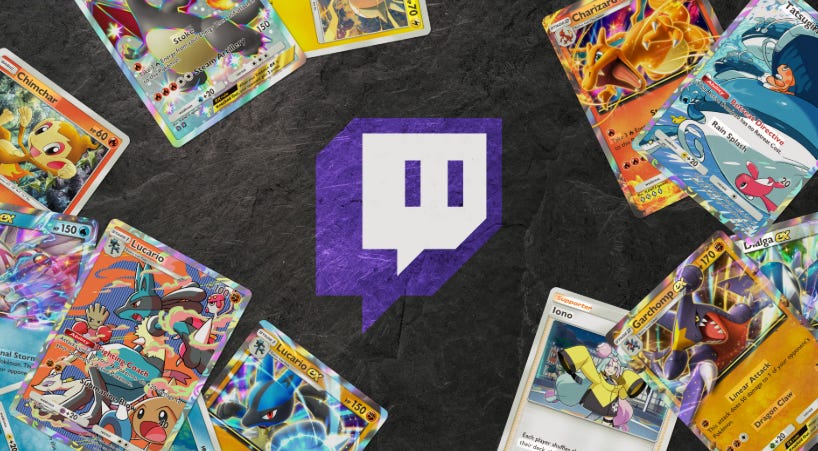
The modern trading card renaissance, especially the pandemic-era surge, didn’t just revive Pokémon cards, it turned them into content. You had creators ripping packs on YouTube and Twitch, nostalgia set designs becoming conversation starters, and a collector wave that pulled adults back in.
The other half of the renaissance is simpler, parents know Pokémon. Elder millennials know Pokémon, and a lot of them collected these cards in the first hype wave, so buying cards for your kids becomes an easy, trusted on-ramp, nostalgia you can literally hold in your hand. And because those parents now have deeper pockets, that on-ramp comes with real spending power behind it, the same adult-buyer dynamic LEGO unlocked with 18+ sets and premium builds, a generational flywheel that feeds itself.
The production scale tells you how big the engine is today. As of the end of March 2025, The Pokémon Company reports total production of the Pokémon Trading Card Game at over 75 billion cards.
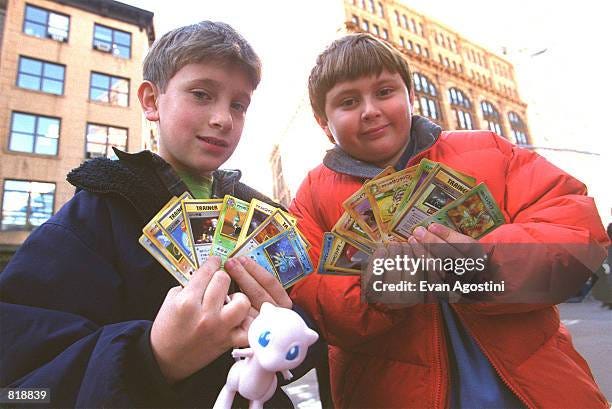
And if you want the kid layer of that demand, it’s back on the playground too. Lunch tables, backpacks, binders, kids negotiating trades like tiny venture capitalists. The teachers have basically had to create rules just to keep it from turning into a daily distraction.
Pocket is just the newest form of the same instinct.
Collect, trade, flex, repeat.
The Film And TV Head, The Cultural Delivery System
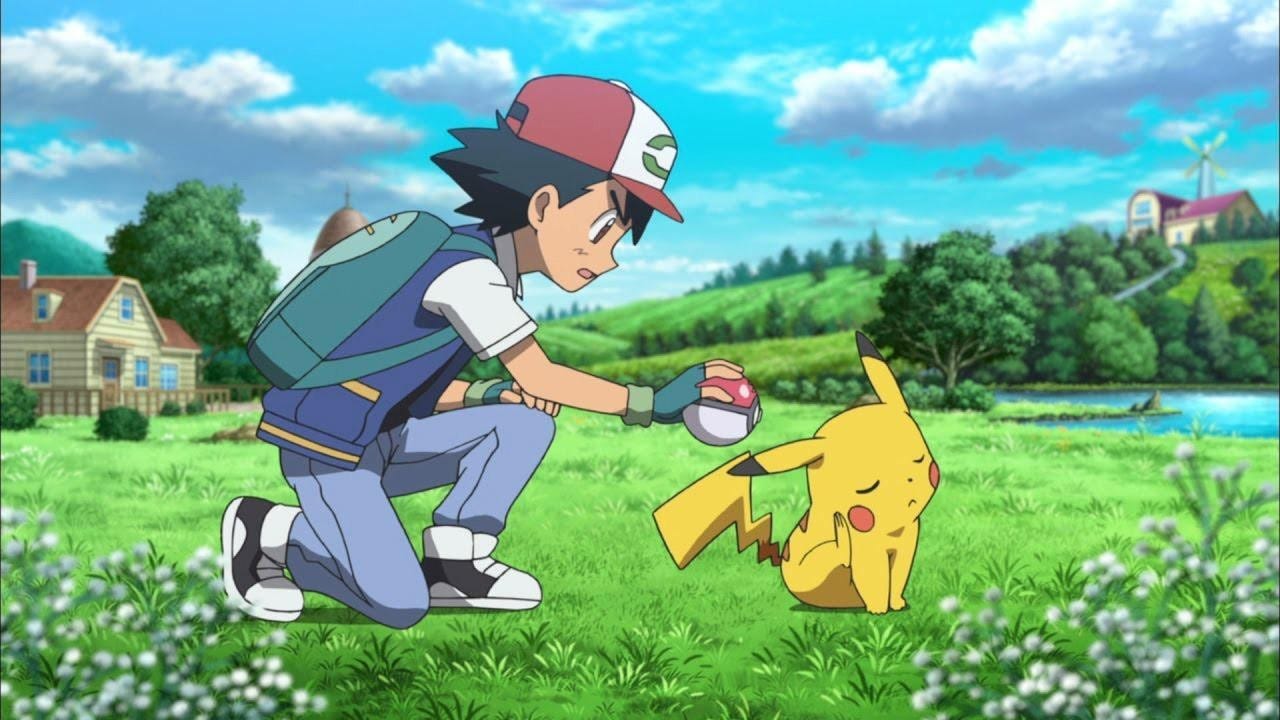
If the games are the anchor, film and TV is the heartbeat.
This is the head that most people have the deepest emotional relationship with, because even if you only played a little Pokémon as a kid, you probably still know Ash Ketchum, Pikachu, and Team Rocket. The show is the delivery system that turned “a bunch of creatures in a cartridge” into characters with personality, quirks, and lore.
Pikachu is the perfect example. In the games, Pikachu is Pikachu. In the anime, Pikachu becomes a character, stubborn, loyal, funny, occasionally dramatic, and that personality is the thing that makes merch work. Same story for Charizard, Snorlax, Eevee, Mewtwo, the list is endless. The show gives the Pokémon texture.
And the truly unfair part is that it never really stops.
In the West we talk about the never-ending animated shows like they’re rare, The Simpsons, South Park, Family Guy. Pokémon belongs in that conversation. It’s been running since the late 90s, it has more than 1,300 episodes, and it keeps refreshing itself in a way that makes it feel permanent.
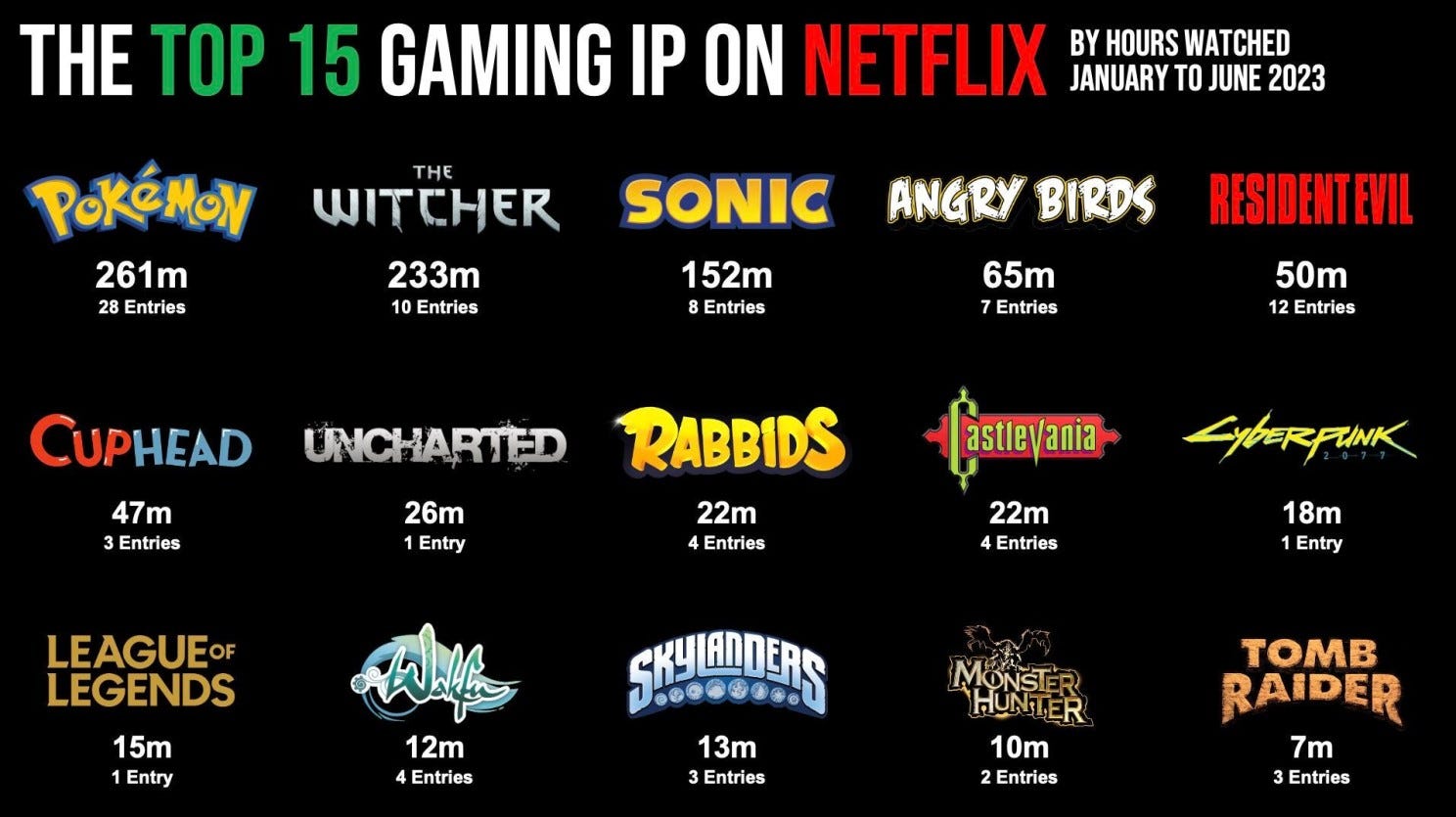
You can see the scale in modern streaming behavior too. On Netflix alone, Pokémon titles logged about 355M hours, roughly 21.3B minutes, in 2024, and it stayed hot in the first half of 2025.
And then there’s the simplest, most universal proof that this show imprinted on an entire generation, the theme song.
It’s one of those rare pieces of pop culture where parents and kids can both sing it, word for word, at least through the opening hook. On Spotify, the original Pokémon theme has over 131M plays on the official Pokémon channel.
And that’s just one platform.
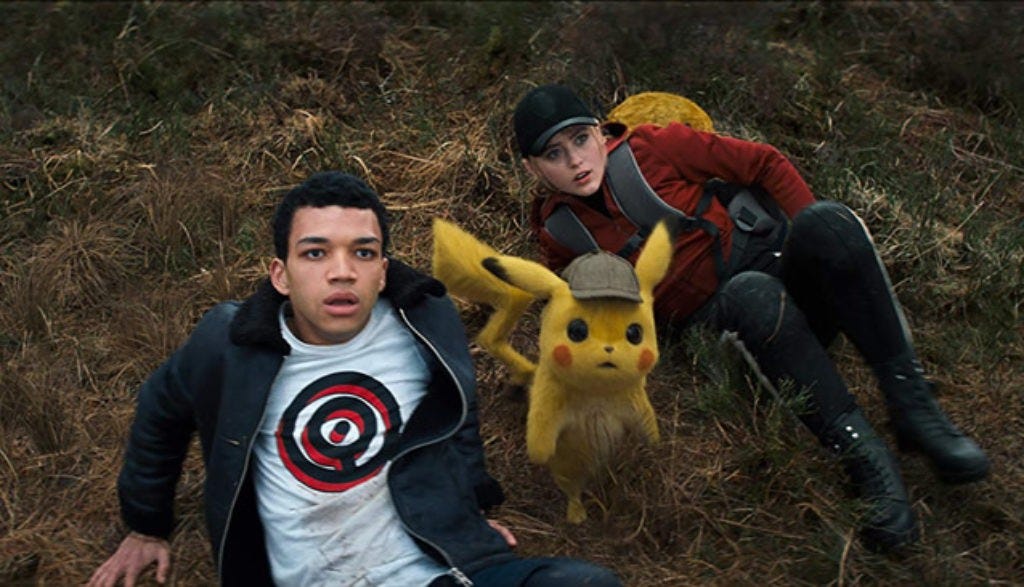
The film layer reinforces the same thing. The first theatrical film, Pokémon: The First Movie, hit in 1998 and became a defining childhood memory for a lot of people (see Mewtwo). There have now been 23 theatrical animated Pokémon films, plus the live-action Pokémon Detective Pikachu, which grossed $433M worldwide, not a mega-blockbuster, but a real proof point that Pokémon can show up in theaters and still pull a crowd.
The manga layer matters here too, not because most people can recite the volumes, but because it’s another pipeline of story and character that keeps the world feeling alive.
All of this is why the “same game” criticism doesn’t really matter as much as you’d think.... because the games aren’t doing the emotional lifting alone.
The show, the films, and the broader story machine keep Pokémon in culture continuously, and that cultural presence is what turns each new game into a reset button instead of a cold-start.
The Merchandise Head, Turning Creatures Into Product
This is where the flywheel becomes unfair.
Pokémon isn’t just selling stories, it’s selling objects, and the objects are the point.
Merch is how Pokémon turns a creature you met in a game into something that lives in your house, on your backpack, on your desk, on your hoodie, on your keychain, in your kid’s toy bin, and on your shelf as a collectible you swear you bought “for the kids.”
It’s also the cleanest place to see why Pokémon is constantly framed as the biggest media franchise in the world by retail sales. In License Global’s Top Global Licensors report, The Pokémon Company International is listed at roughly $12B in retail sales of licensed consumer products in 2024, good for the #7 spot globally. That’s one year of merch, apparel, collectibles, and licensed product, at a scale most entertainment brands can’t even sniff.
And the lifetime story is even more ridiculous. When people say Pokémon is “$100B+,” what they usually mean is retail sales scale, the cumulative consumer-products footprint, not what the company itself books as revenue. But either way, the point holds, Pokémon is everywhere because it’s built to be everywhere.
What does that merchandise machine actually look like?
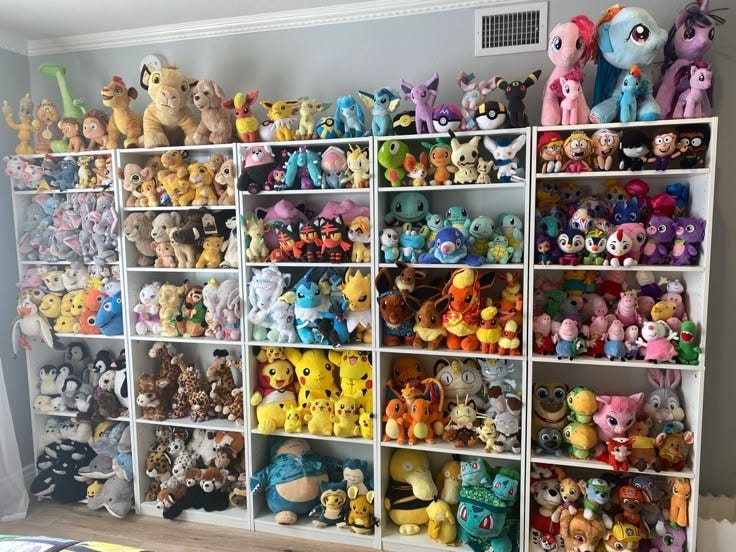
Plushies are the obvious gateway drug. Pikachu, Eevee, Snorlax, the starters, legendaries, seasonal variants, you can build an entire identity around a single creature.

And you can literally see that identity play out in the creator ecosystem. Streamers with rooms full of Pikachus. Eevee corners with every evolution represented. Snorlax stacks. People pick their Pokémon, then build their personal brand aesthetic around it.
Apparel and accessories make it wearable, hats, hoodies, backpacks, sneakers, collaborations, the kind of stuff that lets you broadcast “my Pokémon” without saying a word.
Collectibles make it premium, figures, limited runs, display pieces, the stuff that turns adult nostalgia into adult purchasing.
And then there’s the part that ties straight back to the theme of this week.
Adult money is reshaping play, and Pokémon has been ready for that for years. The parents who grew up with Pokémon now have deeper pockets, and they’re willing to spend, not just because they can, but because the merch is a shortcut to identity and a shortcut to bonding.
On a personal level, it’s painfully obvious in my own house. My son has Charizard, Charmeleon, and Charmander plushies. My daughter has Eevees and Pikachus. That’s not just “kids like cute characters,” it’s the flywheel at work. Film and TV gives the characters personality, merch makes them tangible, and once they’re in your house, the games and cards become the natural next step.
This is also where the LEGO x Pokémon moment snaps into focus.
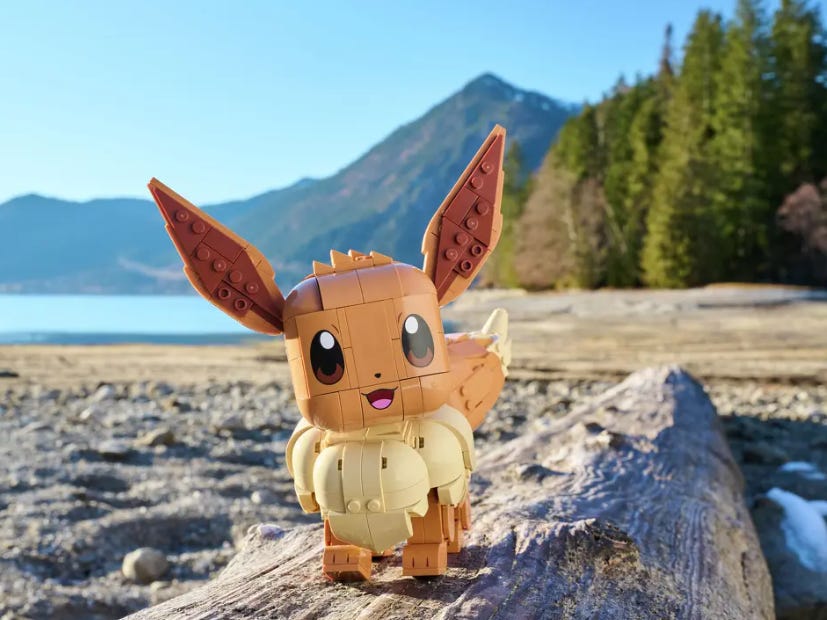
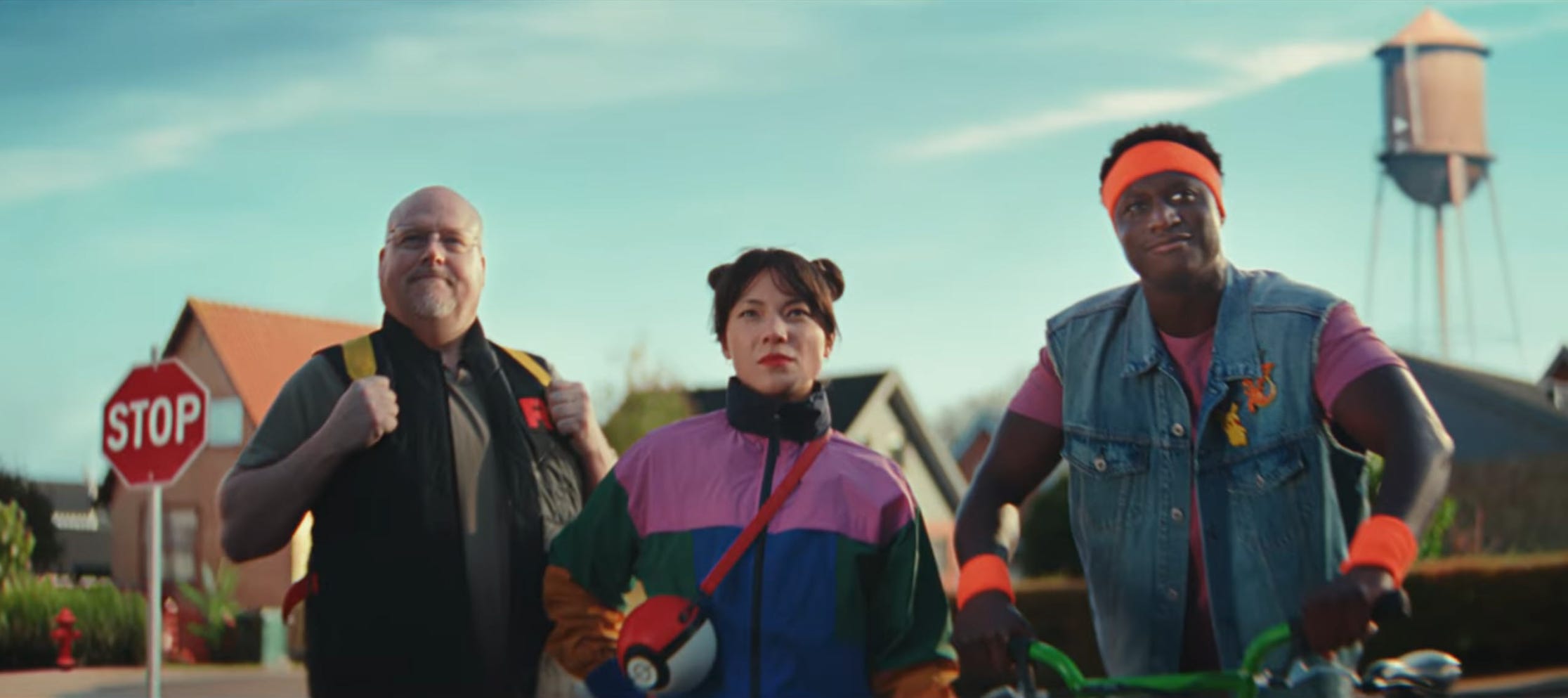
A $650 LEGO set featuring the fully evolved Kanto starters, Charizard, Blastoise, Venusaur, sells through its first wave of pre-orders almost immediately. The Kanto badge gift-with-purchase becomes instant bait for the secondary market. And the campaign itself basically winks at the whole thing, “I gotta build them all.”
That’s not subtle.
It’s Pokémon merch logic applied to premium play.
Take the world’s most powerful collecting IP, fuse it with the world’s most premium play system, aim it directly at the adult superfan, then leave the door open for the kid-friendly sets, set to launch this summer, that turn the purchase into a family activity.
In other words, this collaboration isn’t a side quest.
It’s Pokémon’s merchandise engine expanding into a new category, and LEGO doing what LEGO does best, turning fandom into a product you can build.
The Prime Earning Years
So what do you do with all of this.
The question I was trying to kick the tires on at the top was simple, should gaming companies, and IP companies more broadly, be targeting the cohort that’s aging into prime earning years.
Because the real headline is not that kids stopped playing games, they won’t. The headline is that millennials and younger Gen Xers didn’t stop either. We kept the habit, and now we have the money to buy the premium version.
That’s why the LEGO x Pokémon moment matters. It’s not just a cute crossover. It’s a live demo of what happens when you aim a premium product at an adult superfan who has nostalgia in their bloodstream and a wallet that can actually support it.
And yes, there’s a huge runway for the sub $50 game, the free-to-play game, the “I’m 20 and money is tight” market will always exist. But I think we undersell how much room there still is for full premium games and premium experiences, as long as they’re actually premium. Not just the price tag, the whole ecosystem around them.
Pokémon is the easiest example because it took 30 years to build the machine, games, show, cards, merch, the full Tiamat. Most franchises don’t get to copy paste that.
But you can still borrow the lesson.
If you’re shipping something that feels like a true return to fun, a true return to the stuff people grew up loving, and you deliver it with real craft, you can absolutely win the 30 to 50 crowd.
You can already see that impulse showing up across entertainment.
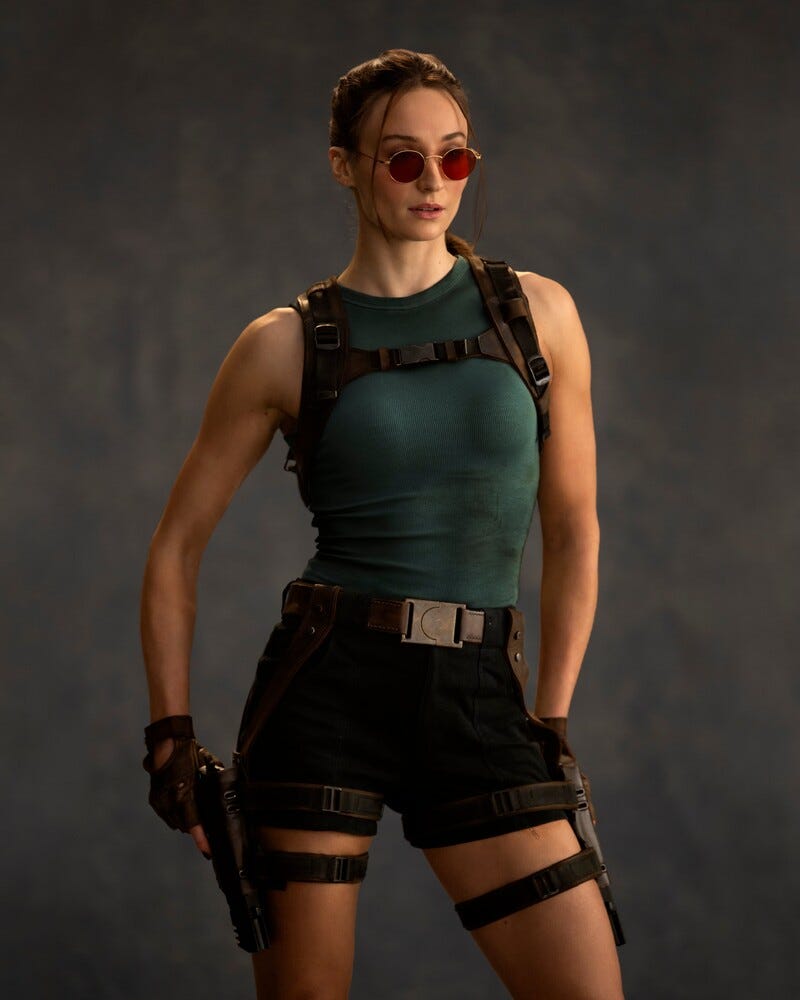
Tomb Raider is a perfect example, the game nostalgia is real, and Amazon’s Prime Video series just dropped a first look at Sophie Turner as Lara Croft that feels like it understands the assignment.
Marvel’s Wolverine is another one. If it delivers the premium experience people actually want, the 90s-era nostalgia around Wolverine isn’t going to stay contained to movies or memes, it’s going to show up in attention, and then it’s going to show up in sales.
Same idea on the broader X-Men wave. If Avengers: Doomsday is part of a real X-Men return that feels like the 90s again, don’t be surprised if that nostalgia lifts a whole ecosystem, not just one title.
The point isn’t “target old people.” Boomers aren’t suddenly going to become console gamers en masse, and that’s fine. The point is that the first true gaming generations are now adults, and we never really grew up.
We just grew into being able to pay for it.
And the companies that understand that, the ones that can turn nostalgia into a modern premium product without making it feel cynical, are going to keep winning.