Content Is Discovery… And Most Games Don't Have Enough Of It

A few quick personal notes before we get into it.
First, 2,000 Patch Notes subscribers (on LinkedIn)… what the heck, thank you 🙏
I started Patch Notes as a way to take my LinkedIn commentary, the stuff I’d normally bury in comments, and put it into a newsletter format based on feedback from people here… and somehow it’s turned into its own giant thing.
If you saw this Q&A earlier in the week, sorry, you’re getting the remix. For everyone who reads Patch Notes via the newsletter, here are the questions I get constantly…
Why are they so long?
Great question… they’re long because I have a lot to say… but also because I’m metrics driven, like Amir, and honestly the longer pieces consistently get the most engagement, views, and they’ve grown the newsletter faster than the short ones 📈
Ok… how much time do you spend on it, and where does that time come from?
Also a great question. I outline during the week (usually Tuesday), research Wednesdays, and write during the evenings. All in, it’s about 10–12 hours per newsletter, especially since I do my own visuals… and no, I am not Bill Young level Canva user yet, but #goals 😂
And you do the Player Driven live stream every week now too?
Yep. It’s a great place to hear my Patch Notes takes early because they’re like 95% baked by the time I get on with Greg Posner. Also, if you don’t want to read and you want to listen instead… follow the Player Driven YouTube channel 🎥
Have you met Greg in real life?
Yes, I swear we have… but no… there is no photographic proof yet.
Are you this snarky in real life?
Ah… maybe? lol. I have takes, and I’m not shy about sharing them. But I like to think the snark is backed by data, and I try to build the case so I’m not just shooting from the hip from the cheap seats 🤝
Are you really that into LEGO?
Yes. I currently have 317 registered sets and 215k+ pieces of LEGO in my house… mostly in my office 🧱
Do you build your own LEGO designs?
Nope. I am not that creative. I live and die by the instruction manual… which I do not throw away. It’s my “physical media,” as it were 😅
All this is to say, thank you for following along, and for reading, sharing, debating, and DM’ing me your questions and feedback. I hope you enjoy reading Patch Notes as much as I like writing it 🙏
Second, quick heads up, GDC is next.
I’ll be in San Francisco Monday through Thursday, March 9–12, I fly out Friday morning. If you want to grab coffee or lunch, talk attention economy, talk gaming intelligence, talk whatever you’re building… hit me up.
My calendar is filling up quickly, but I’ll make room for smart conversations. Here’s my Calendly: https://calendly.com/colan_screenengine/in-person-coffee
Third, I’m just getting home from DICE… and it was awesome.
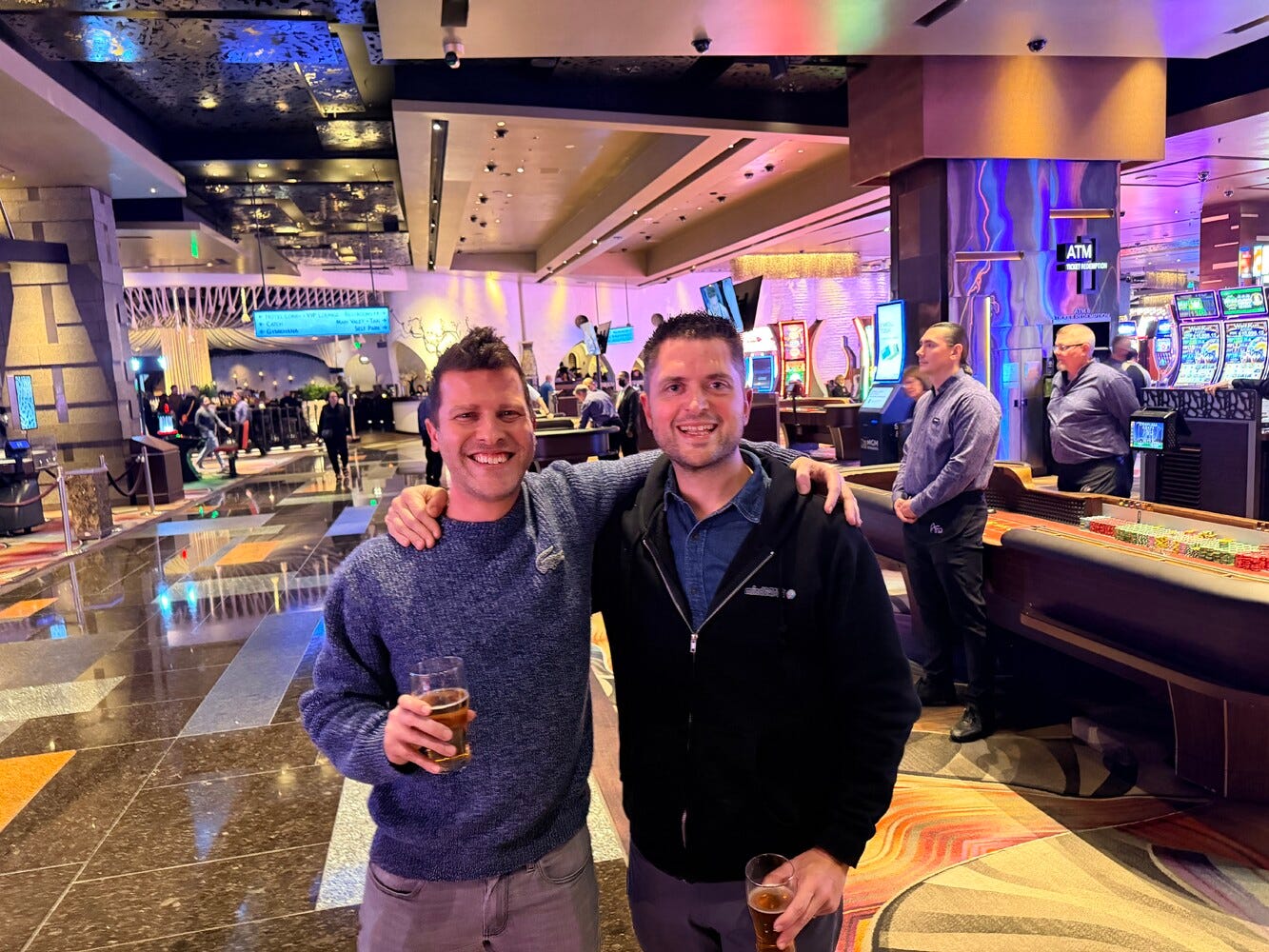
This was my first DICE, I’ve always been more of a GDC guy, and last year I couldn’t make it for personal reasons, so it was pretty fun to finally do the Vegas version of “everyone in one place.”
A few things I loved about it,
I do like that it’s centralized within one location... the Aria is a massive complex, but it still feels like the industry is actually sharing the same physical space for a few days. And the hallway serendipity is real. You bump into people you normally only see as profile photos… and it weirdly flattens the hierarchy between “very senior” and “very not.”
A perfect example is Greg… shout out to Player Driven. He finally got to see Phil Spencer in person, and it was one of those moments where you remember, oh right, this is still a human business… you can literally walk past the head of Xbox Gaming like he’s just another guy trying to make it to a keynote or race to Starbucks.
Now, here’s the part I wasn’t planning on,
I hadn’t planned on writing Patch Notes this week. Honestly, I’m fried. After talking to what felt like 50 people in just three days, I came home with my brain buzzing, ready to collapse into bed. Yet, one theme kept echoing in my mind... an earworm I couldn’t shake.
I often discuss the attention economy, which is central to mindGAME Data. Attention drives interest, interest drives time, and eventually, time drives money. But what we don’t articulate enough is the dependency underlying all of this.
If time is the scarce resource, then discovery becomes the real bottleneck.
The word “discovered” emerged as a consistent theme during my conversations at DICE. The truth is, time is our most limited resource. Every platform is mining it, and in many ways, we become the product because our time is the inventory.
So, if time is the inventory and countless things are competing for it, the biggest challenge in gaming isn’t AI, offshoring, or UGC platforms. It’s discovery. Can a new game earn enough time to matter?
And that’s where the comparison to music becomes unavoidable.
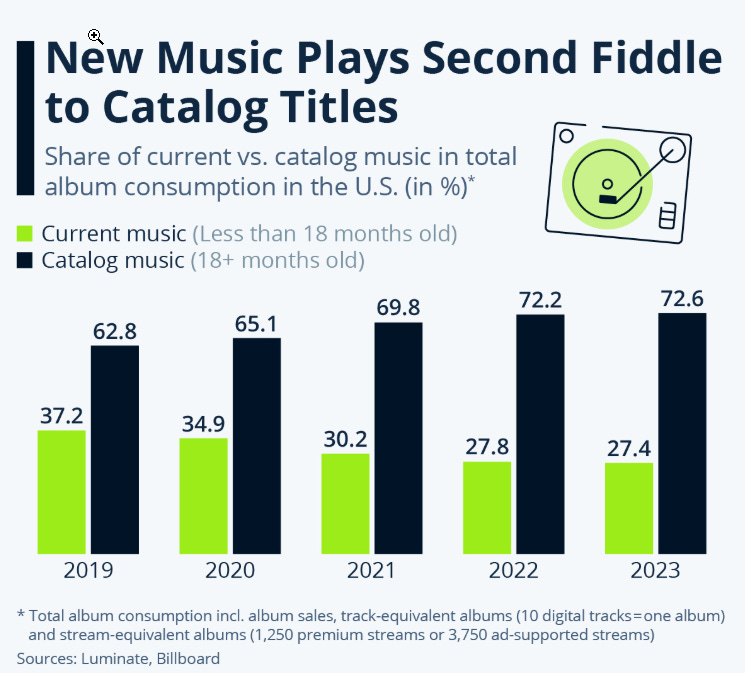
In music, the catalog wins. People often loop songs from 10, 15, or even 20 years ago, leaving new artists scrambling for attention. Gaming follows the same pattern. Our data shows that roughly 85% of player attention and time is devoted to games that are already out, with a significant portion going to titles that have been around for a decade or more. This reflects the power law. Only a small number of games have gravitational pull.
So, “breaking through” isn’t just about competing with this year’s releases. It’s about contending with an entire back catalog of timeless games.
Here’s where the earworm becomes relevant.
If attention rules, then content is the delivery mechanism for that attention.
Yes, the game itself is content, but everything surrounding it counts too. Twitch streams, YouTube breakdowns, Reddit threads, Discord servers and their conversations, dev blogs, patch notes, community posts, event recaps, and feature explainers... it’s all content.
If you’re not producing enough of it, or if your community can’t keep up, you risk going undiscovered week after week.
This brings me to the 90–9–1 rule, or as I like to call it, the blunt version: the 99–1 problem.
Content Is Discovery, The 90–9–1 Rule
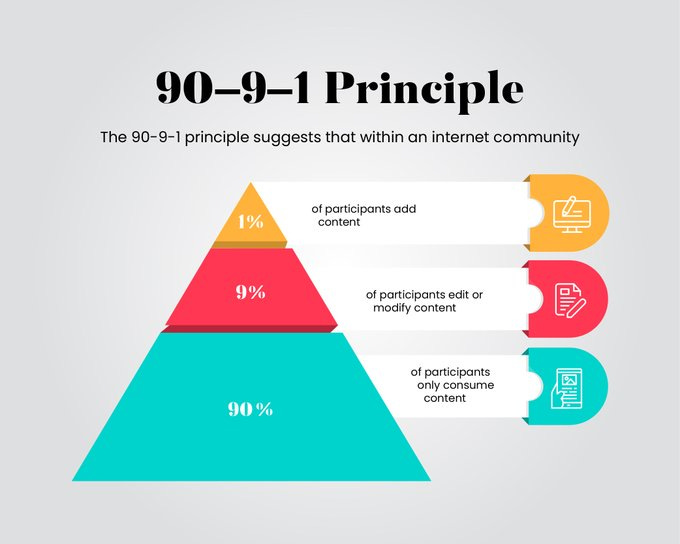
Jakob Nielsen has a blunt way of describing how online communities actually behave.
In most online communities, 90% of users are lurkers who never contribute, 9% contribute a little, and 1% account for almost all the action.
That’s the 90–9–1 rule.
In gaming, I think about it as the “99–1 problem,” because the part that decides whether you get discovered… is whether your 1% exists, and whether it can produce enough content to feed everyone else.
We tell game teams some version of this constantly. Most people do not create content. Most people are the internet. They scroll, they watch, they read, they lurk, they decide.
That’s also what mindGAME Data measures day in and day out… consumption volume. Video views, minutes watched, search queries, TikTok views, Twitch hours watched. Time spent.
But there’s a mirror image behind every consumption metric… supply. Content is the inventory. And the simplest version of the thesis is this: the more content a game generates, the more chances it has to be consumed, and the more that consumption shows up as “attention.”
It sounds obvious when you say it out loud, but it’s the part that gets missed. Teams treat content like marketing output, something you plan, produce, and post on a calendar. Instead of treating content like the delivery mechanism of discovery, which is what it actually is.
If you want to see what I mean, look at what the biggest games generate.
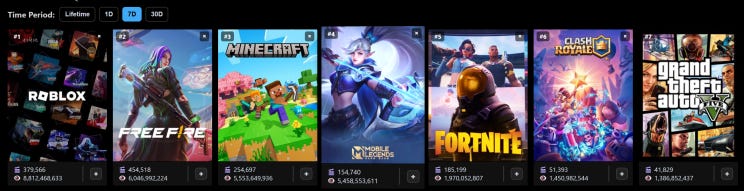
Garena Free Fire is one of the most extreme examples on TikTok. It has ~1.3T lifetime views across 100M+ videos. That’s not a bragging-rights stat, that’s a distribution engine. It means there are millions of entry points into the game… clips, loadouts, memes, highlights, creator arcs, community trends.
And the “per day” layer is what really breaks your brain. In mindGAME Data, Free Fire is generating ~56,000+ new videos per day and ~800M daily views against that supply.
That’s the noise floor you’re competing with.
It’s not just Free Fire either. Fortnite is another reminder that at-scale games are basically media engines. In mindGAME Data it sits at ~70M+ TikTok videos and ~848M lifetime views. And unreleased titles can generate the same dynamic when the internet decides to chew on them. Grand Theft Auto VI content on TikTok is already at 1M+ videos, and even without a live game loop it’s pulling ~24M daily eyeballs on ~700+ new videos per day.
So when a team tells me “we just need discovery,” what they’re really saying is… “we need enough content supply for the internet to notice us.”
Now here’s where the rule becomes operational. It’s not a philosophy, it’s a map of who does what, and what kind of content actually moves.
The 90%, The Market

The 90% is where your TAM lives.
They are not writing Steam reviews. They are not making TikToks. They are not streaming on Twitch. They are not posting threads. They’re not even necessarily talking in Discord. They’re consuming whatever shows up.
That’s why discovery is so unintuitive for developers. You can ship something great… and still fail to matter… because the 90% only knows what the internet places in front of them. This is the same dynamic we’ve written about with Highguard, with Splitgate 2, with basically every shooter that launched into a power-law market and couldn’t generate enough oxygen to survive. The game can be fun. If there’s no content supply carrying it into feeds, the 90% never sees it.

This is also why “sentiment” gets abused. Sentiment isn’t useless, it’s just biased. The 90% is mostly silent. If you build your worldview from the loudest replies, you’re sampling the smallest sliver of the market and mistaking it for the whole. We see this in the data all the time… the gap between what the internet says about a game and what the internet does with a game can be enormous, and the doing is what we measure.
And it’s why the worst possible outcome for a new game isn’t negative discourse… it’s silence.
No content, the 90% never sees you. The 90% never sees you, you don’t earn time. You don’t earn time, the game never gets a second chance.
The 1%, The Supply Side
The 1% is the supply side of discovery.
Creators, streamers, YouTubers, TikTok editors, guide writers, modders, Discord organizers… the core community that shows up every day and turns a game into a living thing.
This is why I keep saying the model is really a “99–1 problem.” Because the 1% is not a nice-to-have. It’s the part that manufactures the inventory the 90% consumes. When we talk about content as the delivery mechanism of discovery, the 1% is the factory floor.
When the 1% is healthy, you get a constant flow of entry points… guides for new players, clips that travel, debates that create urgency, patches that restart the conversation. That’s what you see with the forever games. Free Fire, Fortnite, Minecraft, VALORANT, they all have a 1% that never stops producing, and that production is what keeps the 90% fed.
When the 1% is unhealthy, content supply collapses… and the game goes quiet.
And yes, content tone matters.
Positive content is the upside. It’s sticky, it compounds, it creates durable demand. This is what you want, and it’s what the best forever games generate at scale, a self-sustaining loop where each piece of content creates the conditions for the next one.
Negative content is not what you want, but it’s still oxygen. It keeps the game in circulation, even if it’s fleeting, even if it burns hot and fades fast. We saw this with Highguard… the discourse was brutal, but the discourse kept the game in conversation. The problem wasn’t the negativity. The problem was what happened after the negativity burned off.
No content is the dead zone. No oxygen. No discovery. No momentum.
The 9%, The Accelerant

The 9% is the bridge.
They don’t create the original piece most of the time, but they make it matter. They share it, stitch it, quote it, comment on it, argue about it, defend it, dogpile it. They teach the algorithm what to push.
And that’s the invisible layer behind “content is discovery.” The 9% is what turns one creator’s clip into a feed-wide moment that the 90% can’t avoid.
If you’ve ever wondered why a random TikTok about a game you’ve never heard of suddenly has 4M views, it’s because the 9% decided it was worth amplifying. That amplification is the mechanism, and it’s the part that makes the whole system feel less like “marketing” and more like weather. You can’t fully control it. You can only create the conditions for it.
Two Layers Of Gravity
Now stack two realities on top of each other.
Inside any single community, the 90–9–1 rule is a power law. A tiny group produces most of the content.
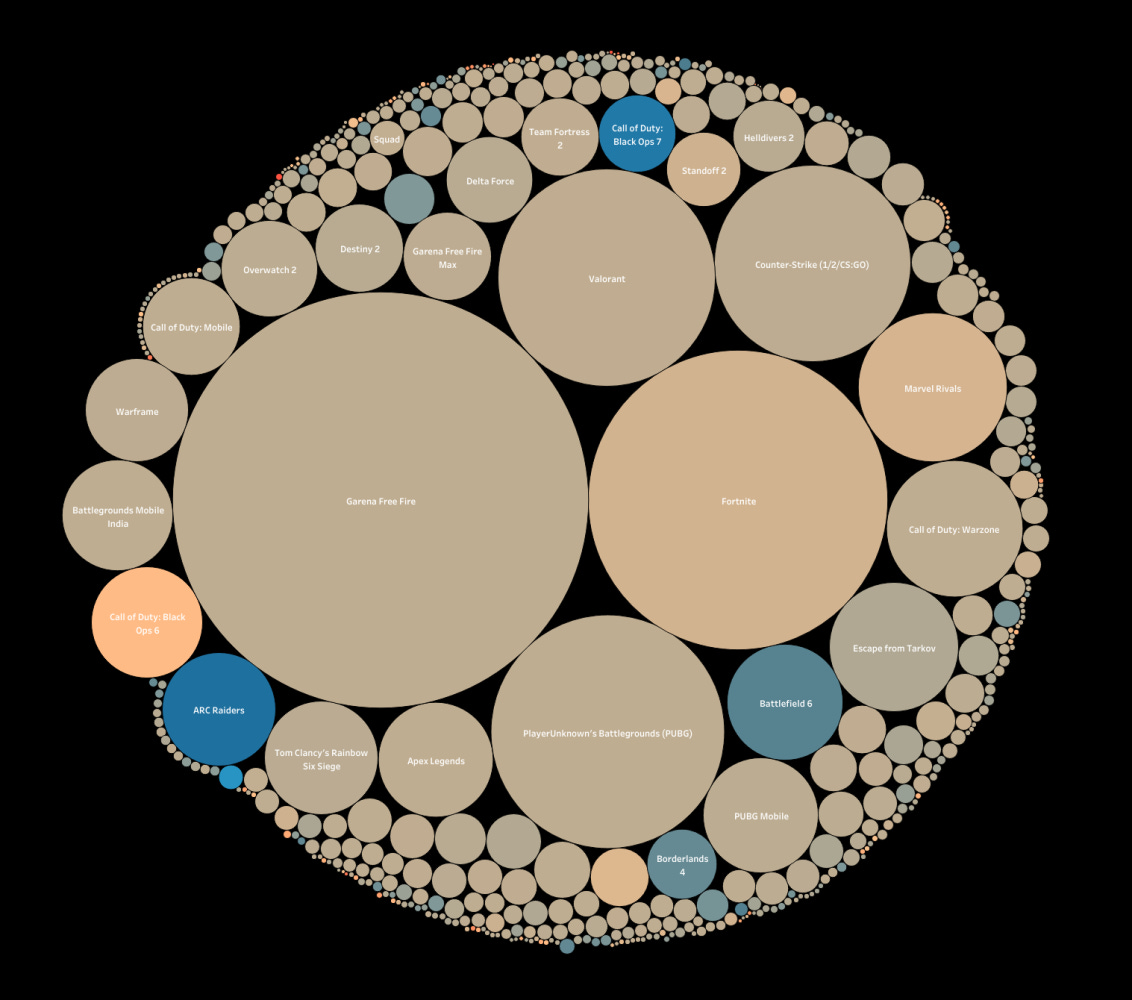
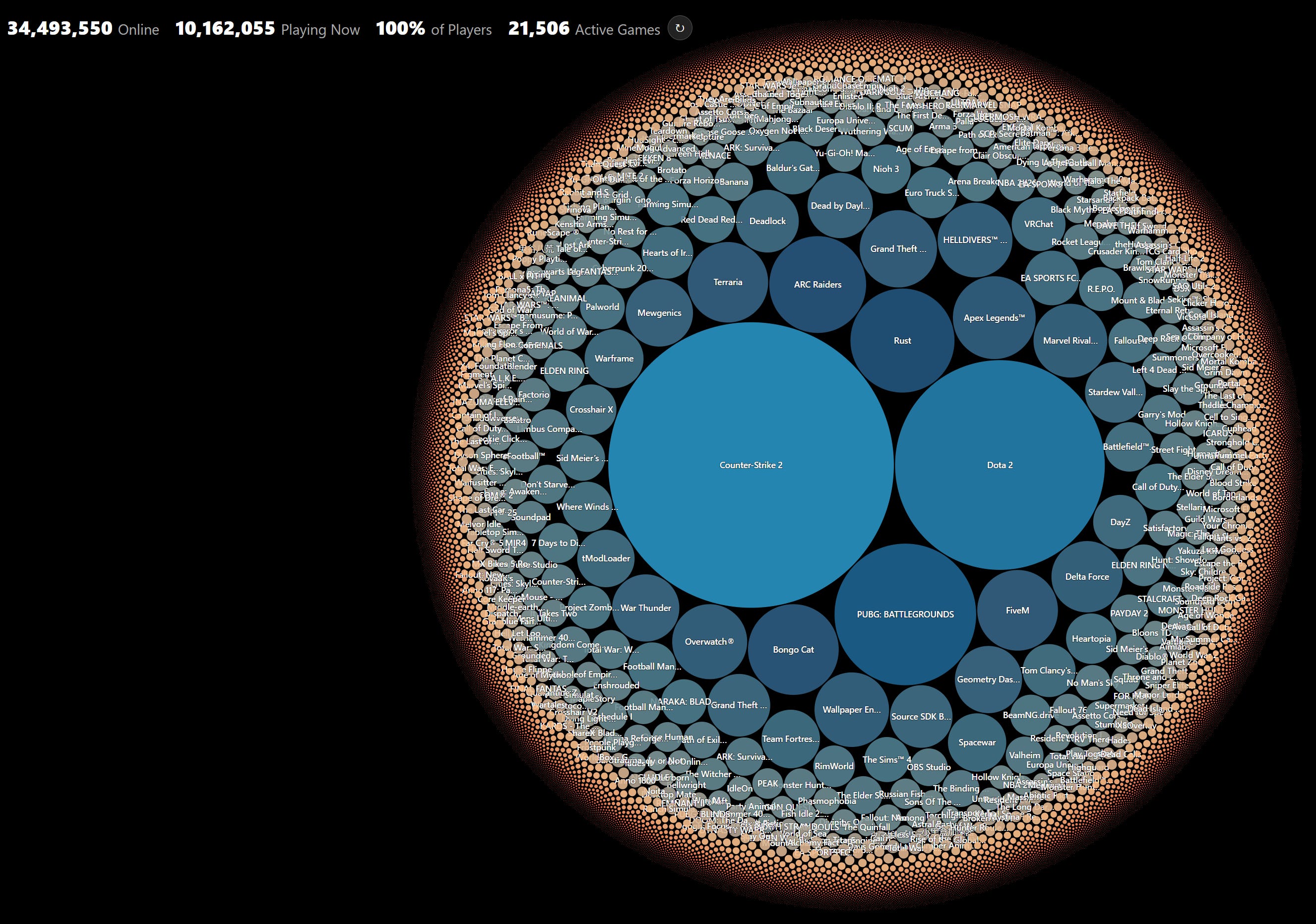
Across the entire market, game attention is also a power law. A small number of forever games capture most of the time. We showed this in the Highguard piece, the shooter market hasn’t really changed its top cluster in five years, and the same pattern holds across nearly every genre we track at mindGAME Data.
So if you’re a new title, you’re fighting two layers of gravity at once. You’re trying to earn time away from the catalog… while competing against games that generate tens of thousands of new pieces of content every day.
That’s why discovery is the core problem.
It’s not “do we have awareness.” It’s “do we have enough content supply, and a strong enough 1%, for the internet to distribute us.”
And that framing changes the way you should think about almost everything in a go-to-market plan. The question isn’t “how do we get press coverage” or “how do we trend on X for a day.” The question is “who is our 1%, are they activated, and can they sustain production long enough for the 9% to notice and the 90% to show up.”
If the answer is no, you’re in trouble before you even ship.
With that model in mind, I want to look at two very different outcomes.
Pearl Abyss, and how Black Desert Online became a community machine that can help Crimson Desert break out beyond the MMO core. Then Highguard, and what it looks like when the narrative turns negative fast… and the content environment can’t stabilize.
Pearl Abyss, And The Decade-Long Experiment
Pearl Abyss is a South Korean developer that became globally relevant on the back of one franchise… Black Desert.
The journey matters because it’s the opposite of the “one big launch moment” myth. Pearl Abyss didn’t just ship a game, they built a live service business, and then they had to earn the right to keep operating it, year after year, across regions, across platforms, across an audience that doesn’t forgive you if you stop showing up.
Black Desert went live in Korea on December 17, 2014, then expanded globally over time. That matters because the MMO genre doesn’t forgive early mistakes, you’re not just selling a box, you’re building a place people live. And Pearl Abyss has been building that place for over a decade now.
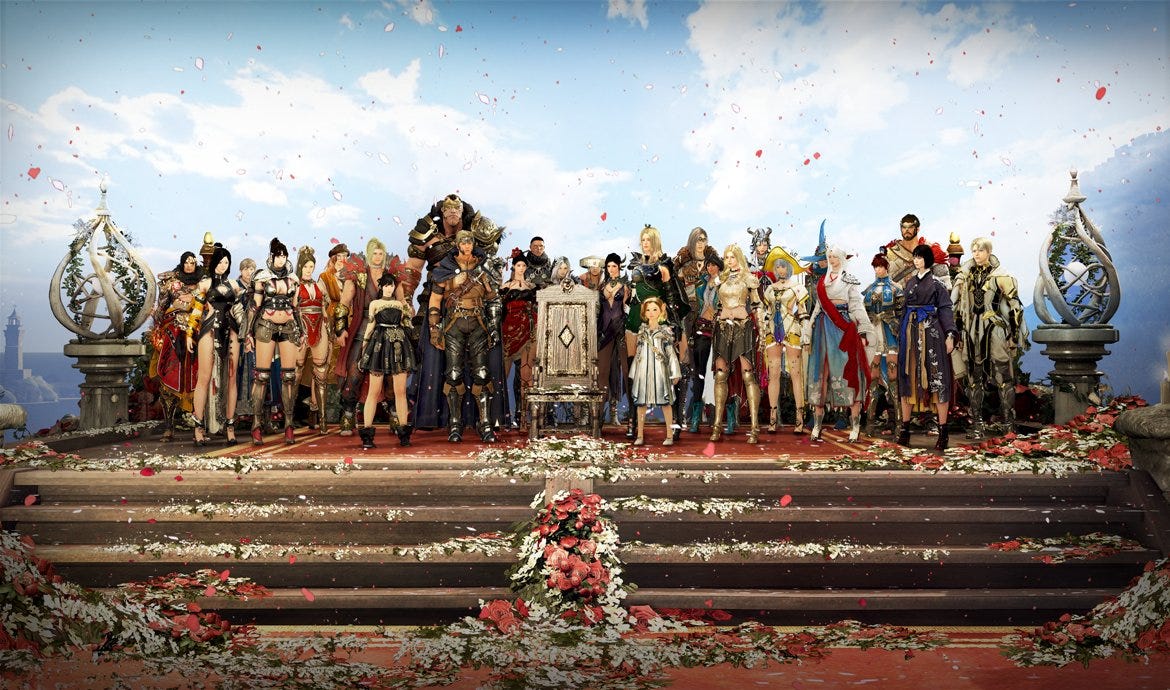
The milestones tell the story in shorthand. By April 2019, Pearl Abyss said the Black Desert franchise had surpassed $1B in gross sales, with 18M registered users across 150+ countries. Then in January 2021, Pearl Abyss took over publishing and live service for Black Desert Online in North America and Europe, previously handled by Kakao Games, and in that same announcement they cited $2B+ in revenue and 40M+ players across platforms. And by early 2024, they were publicly citing 55M registered users and 3T won in lifetime franchise revenue.
Those numbers matter less because they’re big, and more because they tell you what your gut already knows about MMOs… this category is brutally sticky, brutally community-driven, and brutally power-law. If you can’t keep people showing up, you don’t get to have a ten-year story.
Where BDO Sits In The MMO Totem Pole
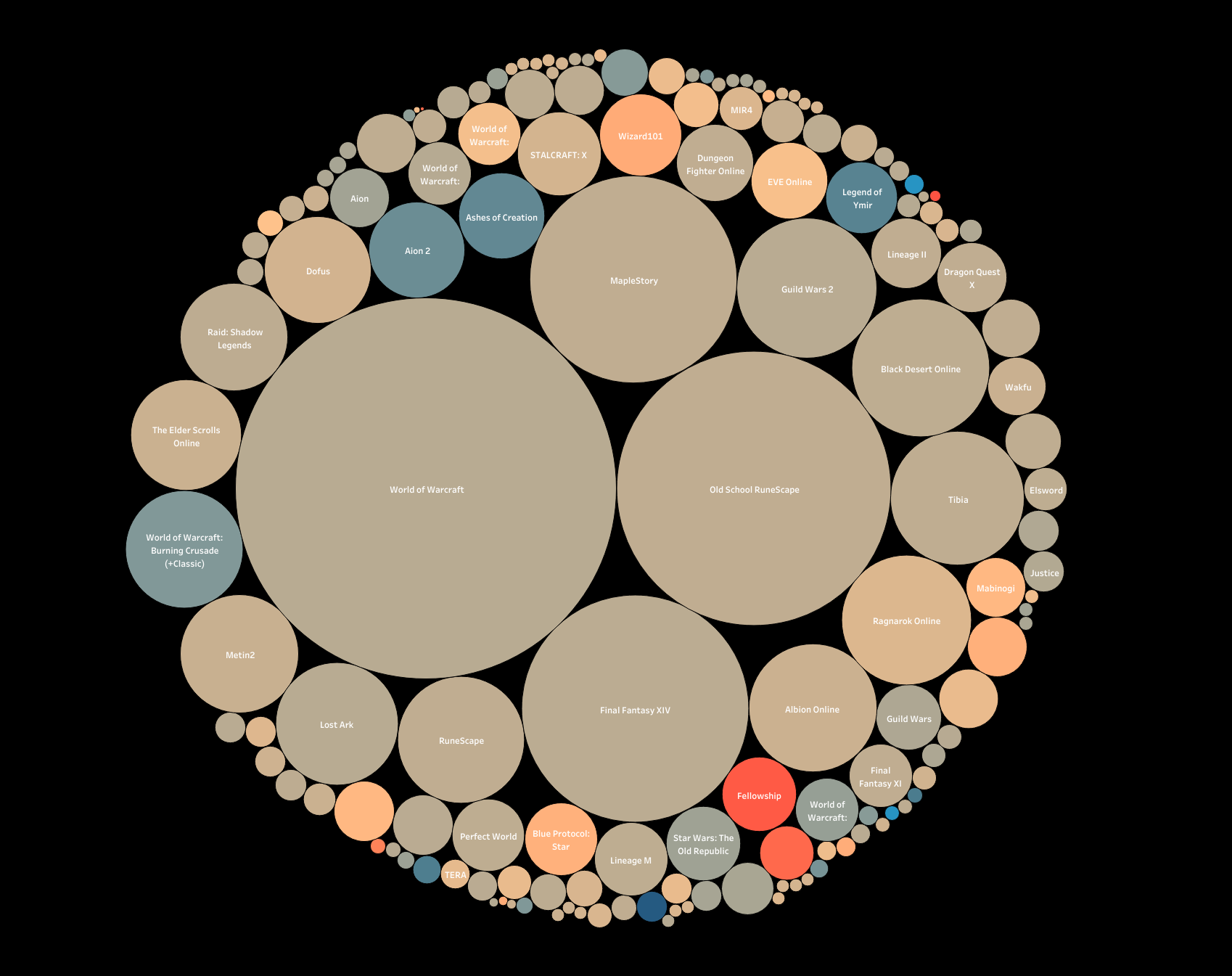
Here’s how I’d frame BDO in 2026. It’s not a Tier 1 MMO that eats the whole genre. But it is absolutely a game of consequence.
In mindGAME Data, over the last quarter, Black Desert Online sits at 2.694% share of the MMO category, which puts it at #6. The Tier 1 cluster is still the usual gravity wells, World of Warcraft, Old School RuneScape, and Final Fantasy XIV, those three alone take an absurd share of the category. Then you’ve got the next tranche, MapleStory, Guild Wars 2, and Black Desert Online, games that aren’t swallowing the genre but are absolutely sustaining real communities and real economies.
BDO’s geographic shape is also telling. In our data, you see strength in Korea and across Europe first, with pockets in Japan and parts of Southeast Asia… which is part of why the English-language creator footprint looks different than a U.S.-first MMO.
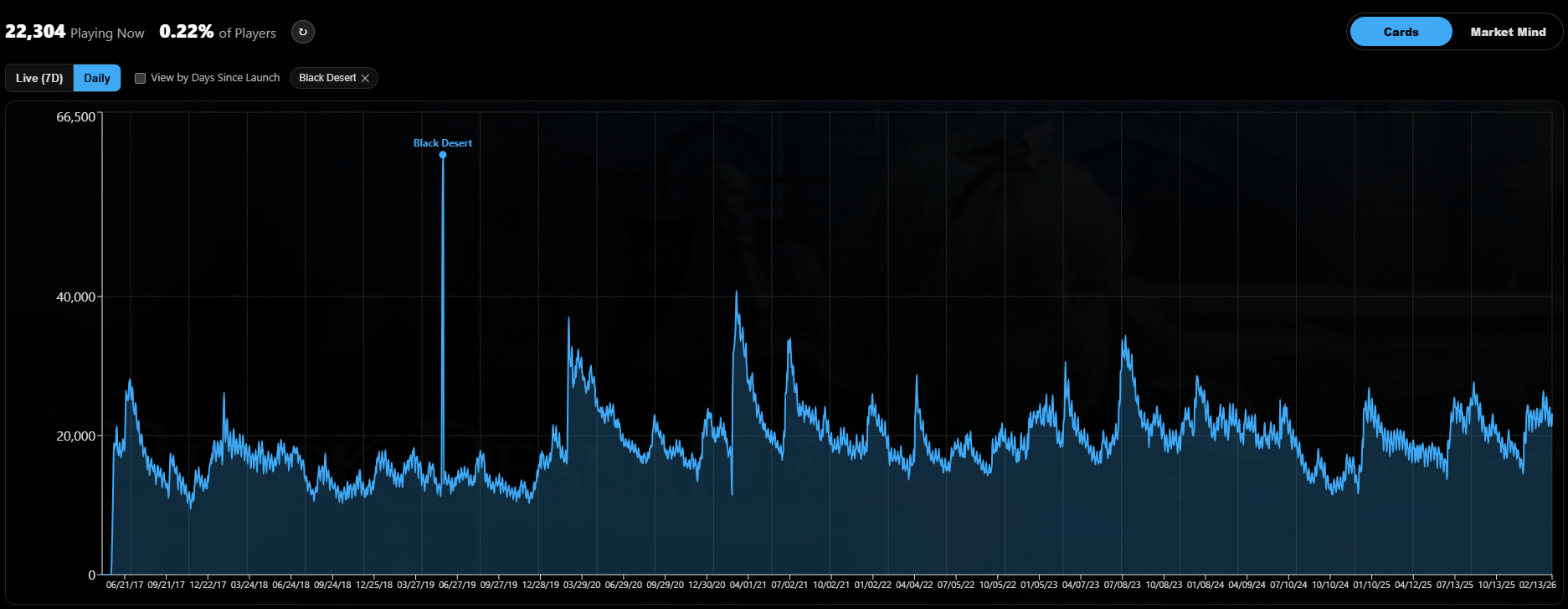
On Steam, BDO is the kind of game that quietly prints concurrency without ever making the front page. Day-to-day it tends to live in the high teens to mid-20Ks CCU… and its all-time Steam peak hit 60,395 on May 27, 2019. If you’re wondering what happened in that window, it lines up with Steam’s 2019 Spring Cleaning event, where BDO was one of the games available free for the weekend, which is exactly the kind of moment that spikes a long-tail MMO.
On Twitch, BDO is usually not a monster, which makes sense because Twitch isn’t where Korea lives. In mindGAME Data, it tends to hover around ~10K concurrent viewers with spikes up to ~60K in bigger moments. On TikTok, it’s solid, not insane… ~140M lifetime views across ~21K videos, which is what you’d expect from a decade-old MMO that built its base outside the U.S. core.
None of those metrics scream “top three MMO.” But together they paint a picture of something durable, a game with durable community demand and a durable content layer around it. And that durability is the whole point when you’re trying to understand how content becomes discovery.
BDO is basically a decade-long experiment in keeping the 1% producing… so the 90% stays fed… so the game keeps earning time.
The Community Operating System
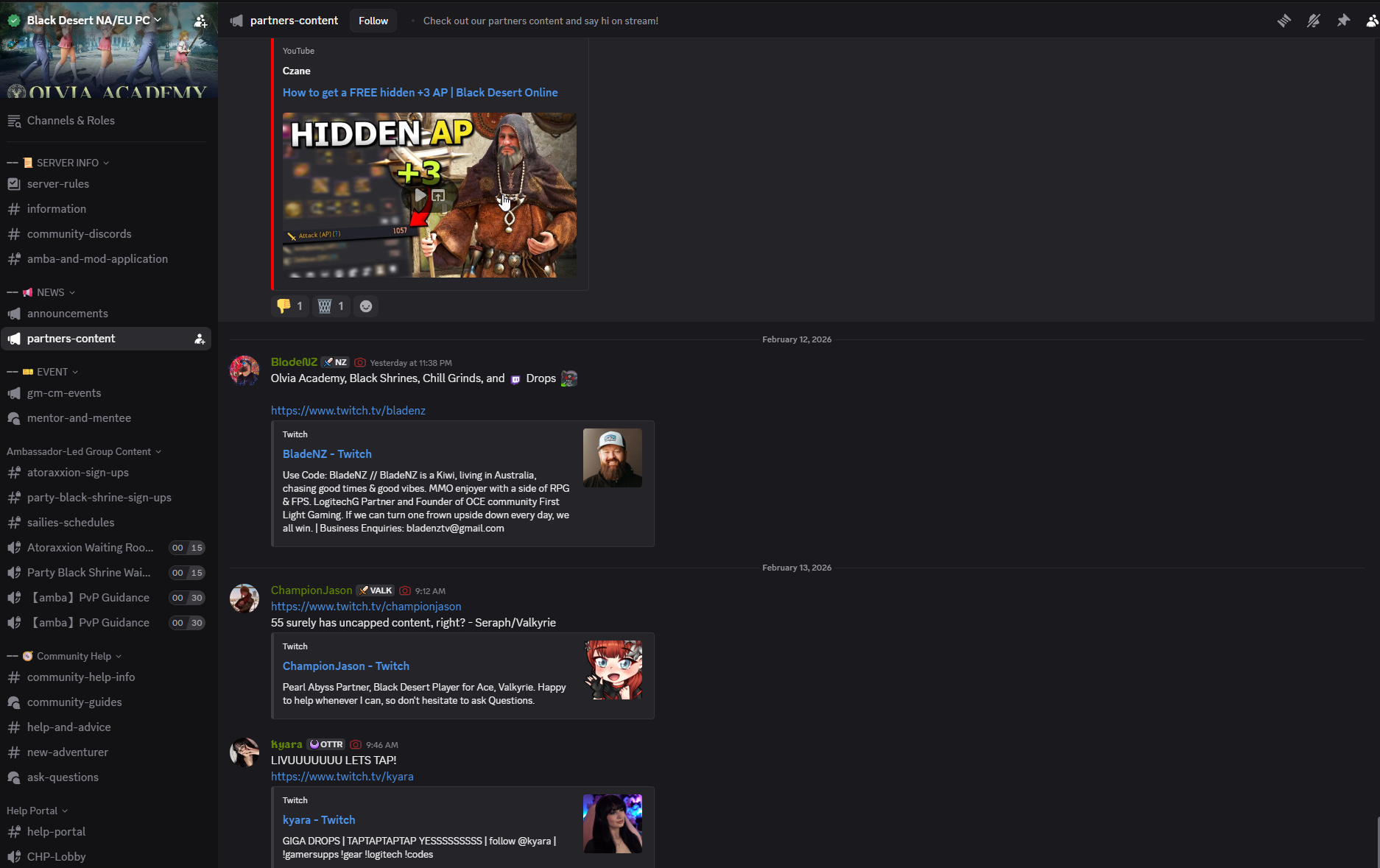
Pearl Abyss’ community work isn’t one tactic or one program. It’s closer to an operating system, and if you look at it through the 90–9–1 lens, the pieces start to make sense together.
Start with what the 90% actually sees. The passive majority doesn’t want homework, they want to feel connected without logging in every day. So BDO ships with a steady cadence of official content that gives them reasons to stay in the loop. Weekly patch notes detailed enough that creators can riff on them. “Events at a glance” style calendars that tell you what matters this week. A living “Known Issues” post that keeps trust intact when things break. And digest packaging like BDO Monthly that treats screenshots, fan art, and community highlights as first-class content, not afterthoughts. On top of that, the Ball events function like rituals… roadmap reveals and shared moments the whole ecosystem can react to.
Then there’s the scaffolding that nudges the 9% from watching into participating. Ambassador programs, organized group content, structured onboarding… the stuff that makes it easier for someone to go from “I lurk in this Discord” to “I showed up for that guild run.” That transition sounds small, but it’s how you manufacture stories, and stories turn into content.
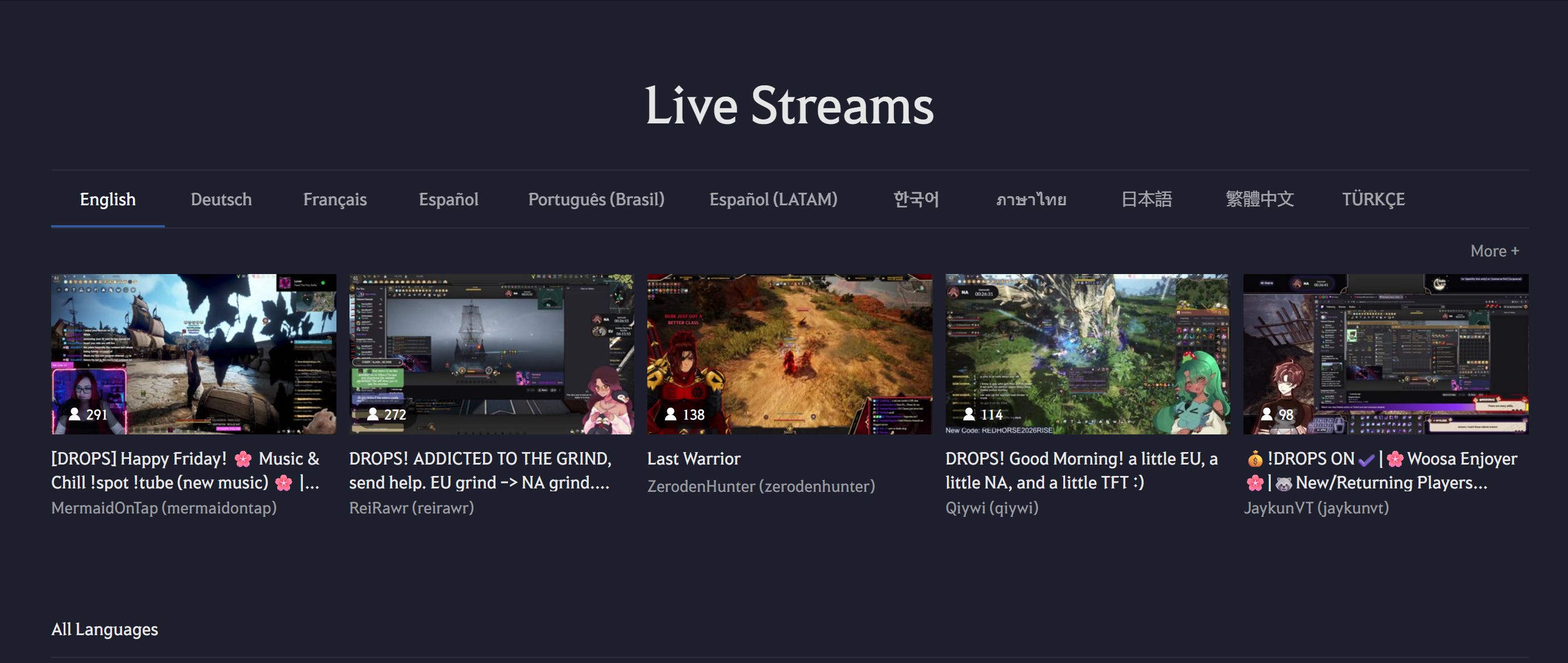
And then the 1%, the actual supply side. This is the part most studios underfund, and Pearl Abyss goes in the other direction. They explicitly allow fan content creation and monetization. They provide a fan site kit with official assets. They run a partner program and a broader creator program hub. They tie creator-run events to official rewards. They have support-a-creator code mechanics. They even built a dedicated Black Desert TV creator funnel.
If you add all of that up, it stops looking like “good community management” and starts looking like an actual content supply chain, one designed to keep the 1% producing, the 9% amplifying, and the 90% fed. It’s not glamorous. It doesn’t go viral. But it compounds, and in MMOs that compounding is the ballgame.
Crimson Desert, And The Bet That It Transfers
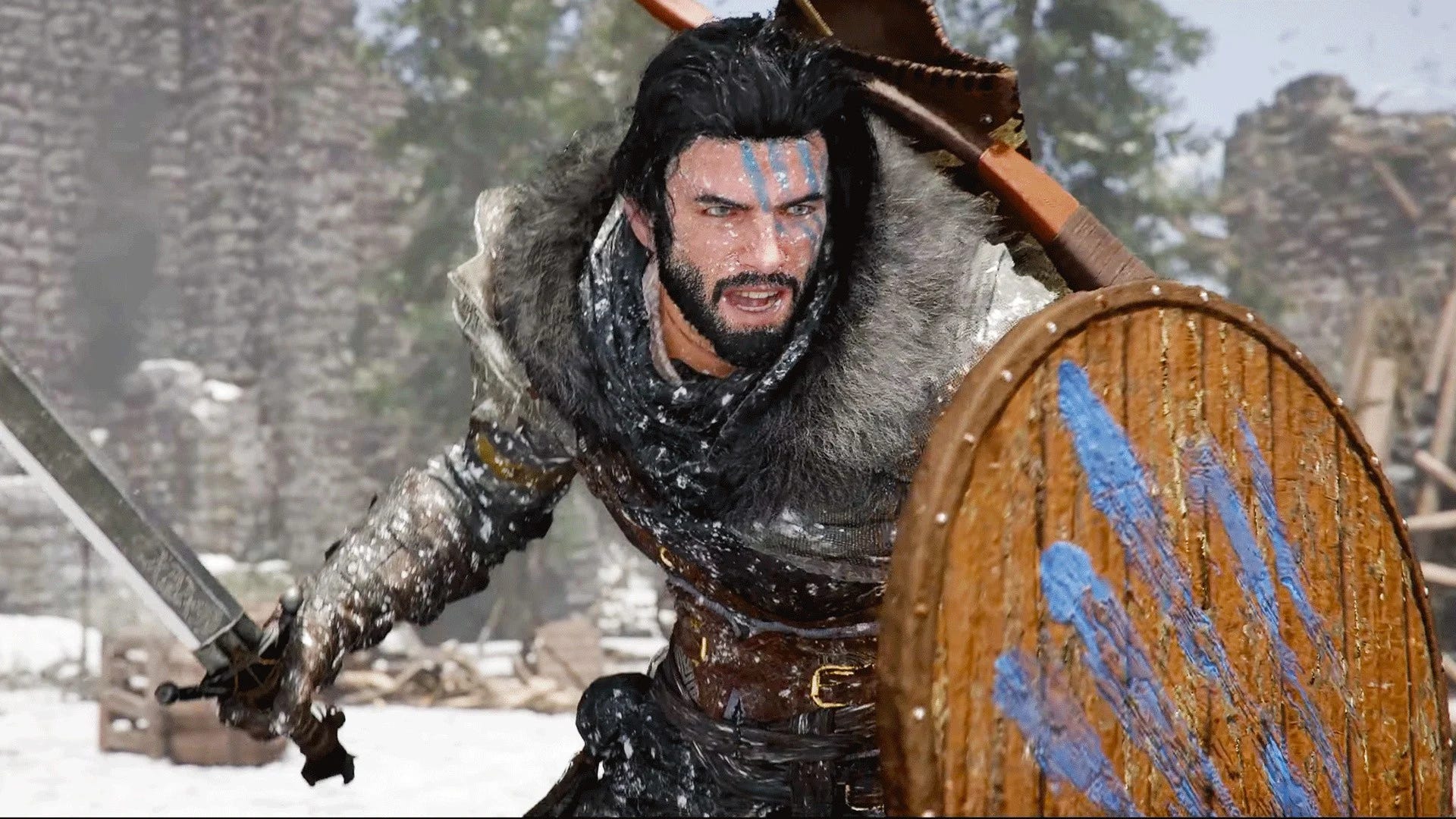
This is the part I’ve been wanting to get to, because Crimson Desert is more than “a new game from the Black Desert people with a long dev cycle.”
Pearl Abyss didn’t start this as a clean-sheet action RPG. In 2019, they described Crimson Desert as a project that began as a Black Desert prequel concept, then evolved into a standalone IP as development progressed. That evolution is interesting to me because it reads like a deliberate TAM decision. A second “sweaty MMO” would have kept them inside the same gravity well. An action RPG, with MMO DNA in the systems layer, is how you try to take the craft you built in live ops and apply it to a wider audience.
You keep the things Pearl Abyss is actually great at… combat feel, world density, progression depth. You repackage it into something that more people will try. That’s the strategic pivot I see when I look at how they’ve positioned Crimson Desert over time, though I’ll admit I’m reading between the lines a bit here.
Now layer in the part that matters for this week’s thesis… content.
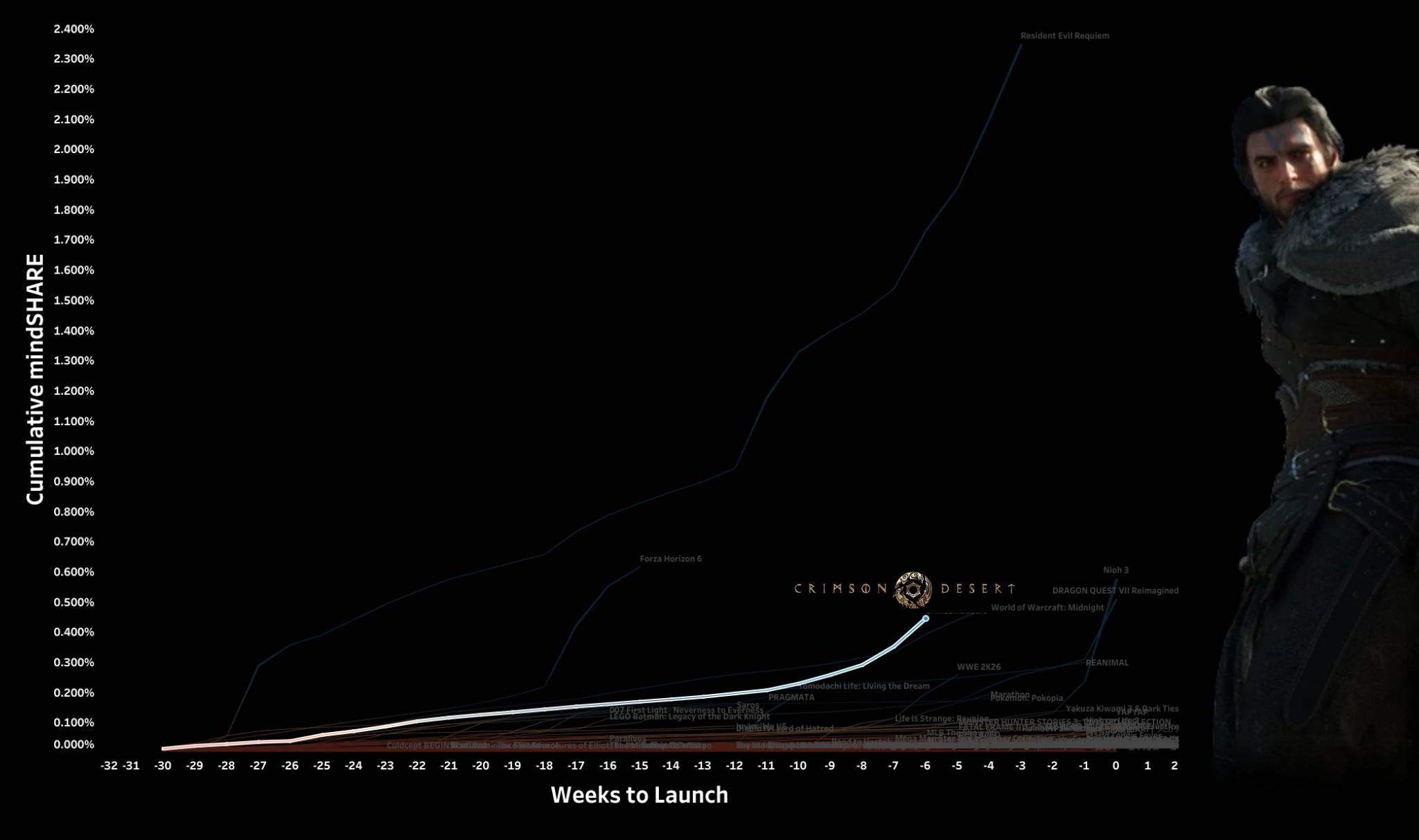
In mindGAME Data, Crimson Desert is currently the #3 unreleased title for the rest of the quarter by cumulative mindSHARE, sitting at 0.443%. It’s also sitting in the top 200 in both YouTube and Search on a typical week, and the curve is rising with a slightly higher velocity than most of the games you’d normally compare it to.
Six-ish weeks from launch, that’s a real signal. The game went gold in January, and the way I’d frame it right now… Crimson Desert has a B-tier floor with A-tier upside.
It’s tracking close to Arknights Endfield and looks like it’ll pass it in the coming weeks, it’s still below Hytale, which has been the biggest launch curve we’ve seen this year so far, and it’s well positioned to be one of the bigger hits of the first half. I still think Resident Evil Requiem is the real 1H crown when that cycle fully arrives… but Crimson Desert is already sitting in the “of consequence” cluster, and the trajectory is moving in the right direction.
So why do I think those numbers aren’t a happy accident.
Because if content is discovery, the question isn’t “how do we market an ARPG.” It’s “how do we keep oxygen in the system long enough for the 9% to amplify and the 90% to show up.” And Pearl Abyss has been doing exactly that, running the same playbook they built inside BDO, just aimed at a new audience.
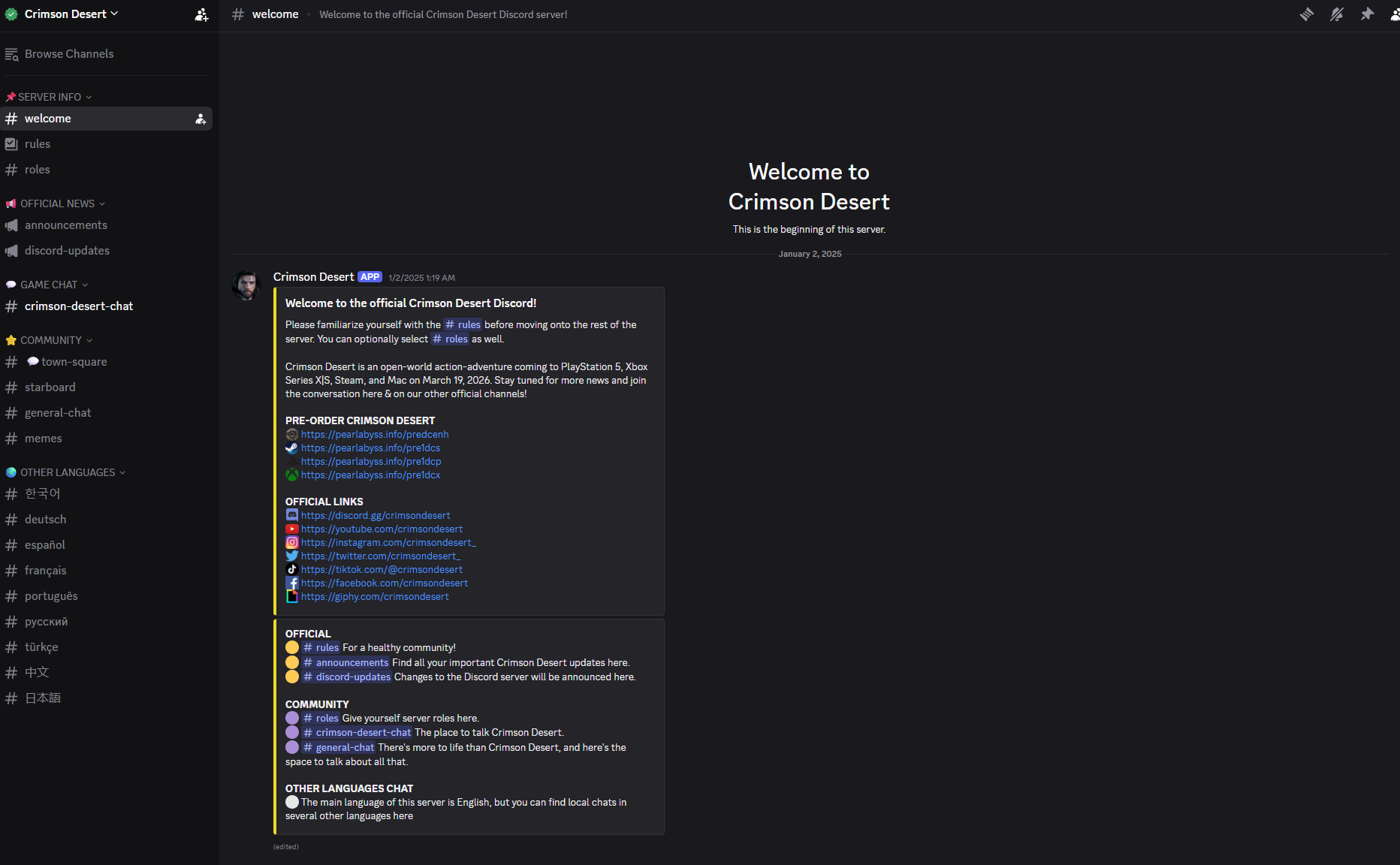
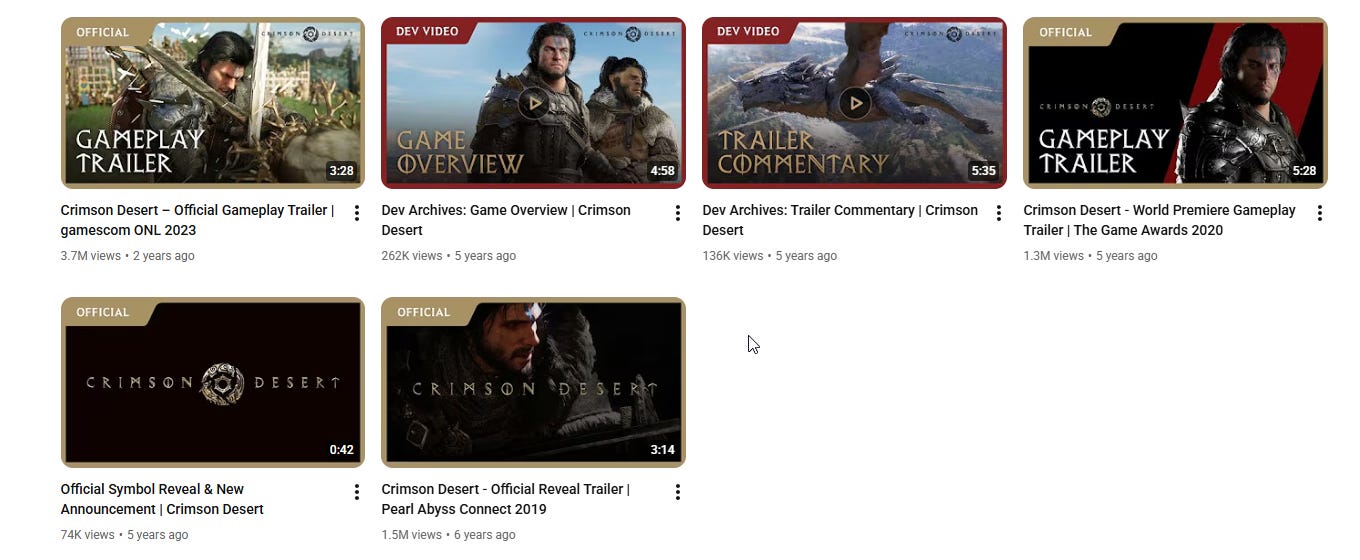
They stood up owned community channels early. The official Crimson Desert Discord server went live in December 2020, years before anyone was playing this game. They created repeatable official content formats… “Dev Archives” style breakdowns and, more recently, the pre-launch Features Overview series (#1, #2, #3)… which is essentially a structured drip of explainers that the 90% can consume and the 1% can react to.
They took the game on the road. PAX East, gamescom, Tokyo Game Show. Public demos are basically content factories, because they seed the 1% with captureable moments and give the 9% something to amplify. And they didn’t keep it isolated, they cross-pollinated with Black Desert via pre-order bonus items and event framing, which is about as direct as it gets when you’re trying to bootstrap a new IP off an old machine.
Even the early community scaffolding tells you something. As of this week, Crimson Desert is already at ~11,000 Discord members with ~2,700 online, built like a real global community from day one… multiple language lanes, lots of channels, lots of places for the 1% to organize and start creating. Contrast that with Highguard, which has ~7,300 Discord members, and you can start to see the difference in how the content supply chain gets built before anyone’s even playing.
I think the meta point here is pretty simple. The 1% doesn’t magically appear on launch day. You either build the places where they can form, give them reasons to show up early, and invest in the infrastructure that keeps them producing… or you ship into silence and hope the launch moment is loud enough to compensate.
Pearl Abyss chose the first path, and the early signals suggest it’s working.
But not everyone gets this right. And honestly, most teams don’t, not because they’re lazy or because they don’t care, but because the “content is discovery” model requires a kind of long-term community investment that doesn’t fit neatly into a traditional marketing plan. It’s easier to buy a Twitch day, run a press tour, and hope the product speaks for itself.
Which brings us to Highguard.
I’ve already written about Highguard in detail, the shooter market gravity, the paid Twitch spike, the Steam cliff, the press disconnect. If you read that piece, you know the shape of the story. But what I want to do here is reframe it through the lens we’ve been building all week… because among all the problems Highguard faced, and there were many, the most structural one might be the simplest.
There was no 1%.
There was no content supply chain. There was no community machine feeding the 90%. And when you don’t have that, it doesn’t matter how good the spotlight moment is, because the moment ends, and there’s nothing underneath to catch the fall.
Highguard, And What Happens Without A 1%
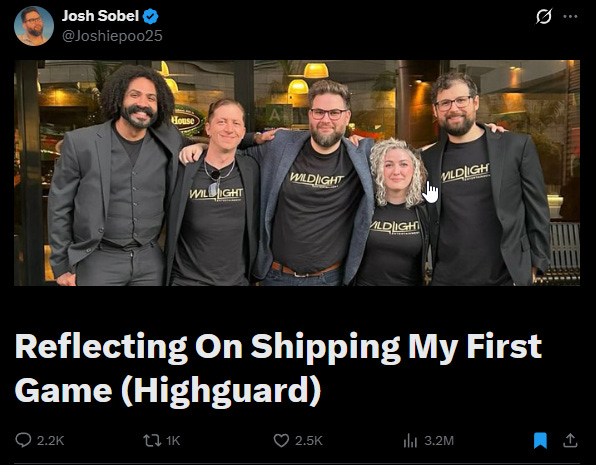
Before I get into Highguard… I want to start with the human part.
A former Highguard developer named Josh posted a thread on X that hit me, because it wasn’t PR. It was a developer processing what it feels like to ship your first game… and then get turned into content.
He describes getting personally targeted, mocked, and dogpiled… including genuinely gross bullying that had nothing to do with the game itself. People laughed at him for being proud of his work, told him to get out the McDonald’s applications, mocked him for listing having autism in his bio. Content creators made videos about him. Hundreds of angry strangers showed up in his replies.
To be clear, I’m highly sympathetic to that. Nobody deserves to be cyberbullied for being proud of their work. What happened to Josh, and to a lot of the Highguard team, is the kind of thing that makes people leave this industry. And I think anyone who has shipped something into the modern internet knows how fast the pile-on can start, and how personal it gets.
So what I’m about to say is not “gamers are right,” and it’s not “devs should take it.”
It’s more uncomfortable than that.
Because when I read Josh’s post, I kept coming back to one line that, to me, unintentionally reveals the structural problem behind Highguard‘s arc.
“There is much constructive criticism that can be and has been said about Highguard’s trailer, marketing, and launch, but I don’t think it’s my place to commentate on that. I also don’t think there’s any way to know whether the launch would have fared better or worse…”
I get why he feels that way. He’s a developer, not a marketing strategist, and he’s processing something painful. I don’t blame him for not wanting to dissect it.
But I don’t agree with the conclusion.
We do know, at least directionally. Not because the internet is fair… it isn’t. Not because cruelty is “deserved”… it never is.
We know because the only people paying attention to Highguard were the people who were mean to it.
That’s the failure.
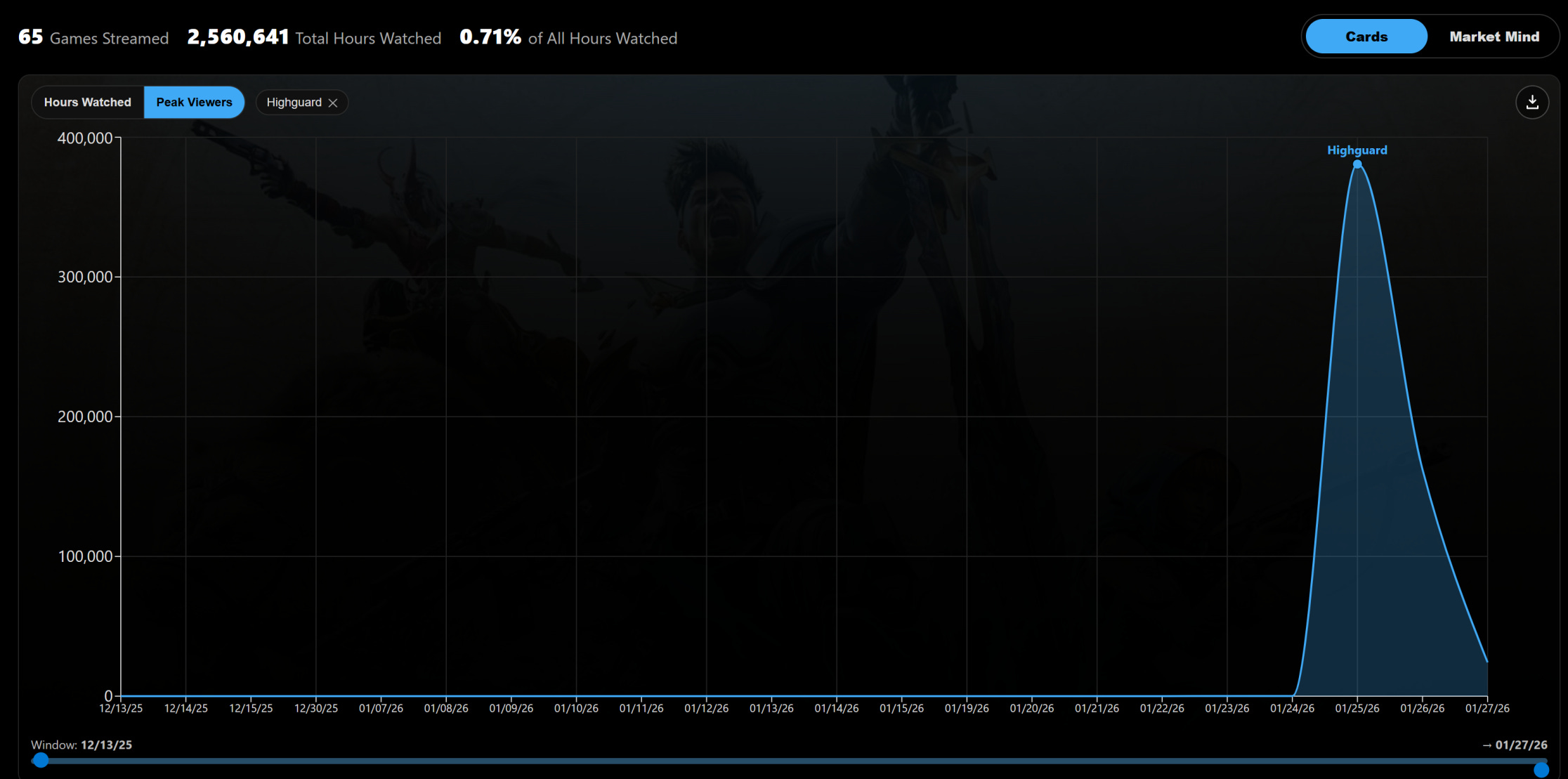
Not the game. Not the team. Not the developers who poured years into something they believed in. The failure is that Highguard didn’t build enough positive oxygen, enough community, enough content supply, to compete with the cruelty. If the only content that travels is trolling and negativity… you’ve already lost the narrative. And that’s not a game design problem or a community toxicity problem, that’s a marketing and leadership problem. Full stop.
I feel bad for someone like Josh, I really do. But this whole Patch Notes has been building toward the same point. In the modern attention economy, you don’t “get a chance.” You manufacture chances… by building the content ecosystem before the spotlight hits.
Owned And Operated
If content is discovery, the first place you look is owned and operated. What did the studio build, themselves, to seed the 1%… to give the 9% something to amplify… and to feed the 90% when the algorithm starts paying attention.
And with Highguard, that’s where things get bleak.
Start with Discord, because Discord isn’t just “where the community hangs out.” It’s scaffolding. It’s where players learn the language of the game, where memes form, where clips get shared, where creators get discovered, where the 1% starts organizing… and where the 9% finds things worth amplifying.
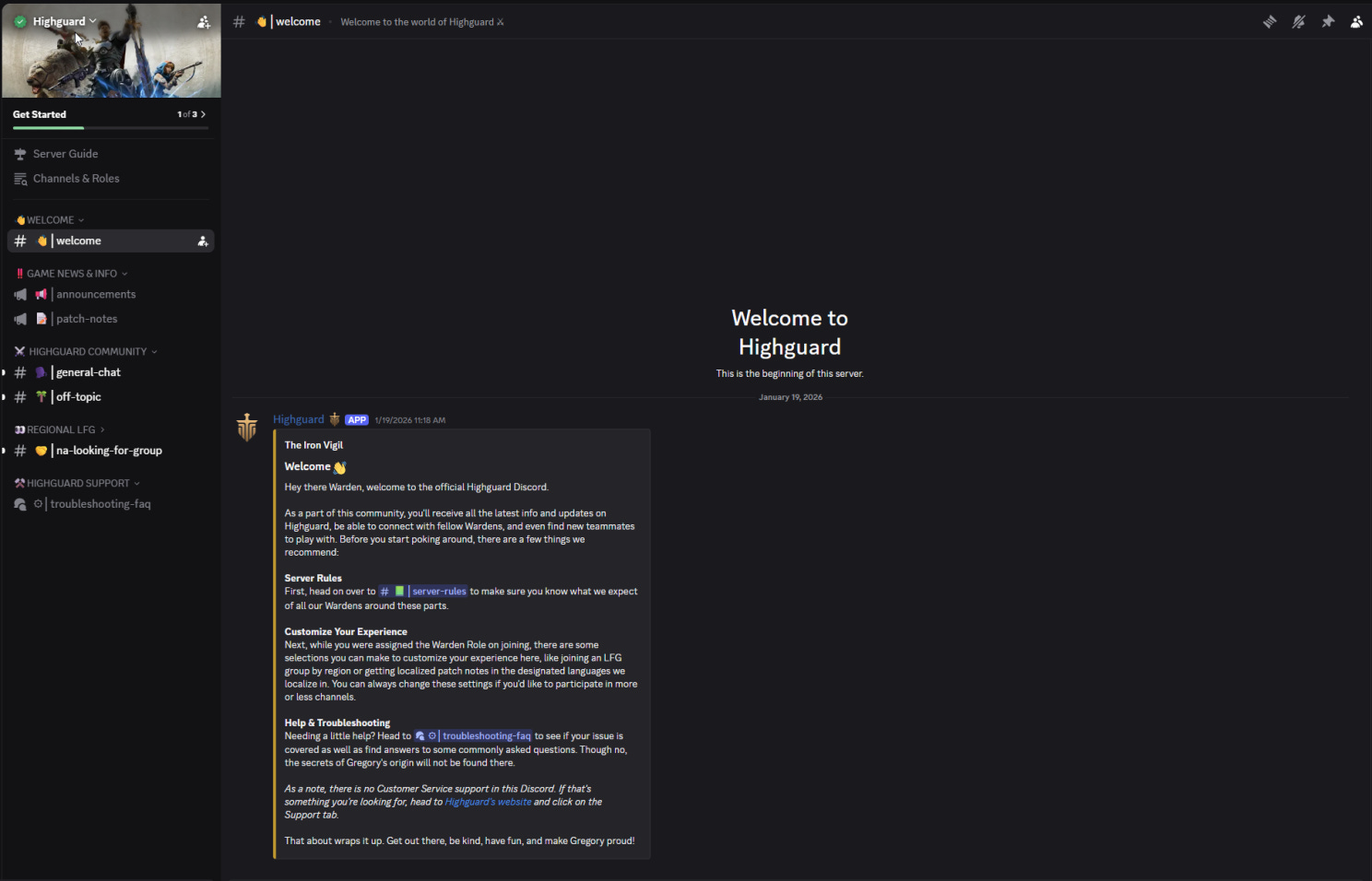
When I open Highguard‘s official Discord, it’s basically a minimum viable server. A welcome channel, announcements, patch notes, general chat, off-topic, looking for group. That’s it. And look… a small server can still be a great server. The issue is what it signals. This doesn’t look like a community being cultivated. It looks like a lobby. Contrast that with Crimson Desert, a game that isn’t even out yet, already set up for multiple languages, with more channel surface area, clearer places for culture to form, and obvious “town hall” style lanes that invite discussion instead of just hosting it.
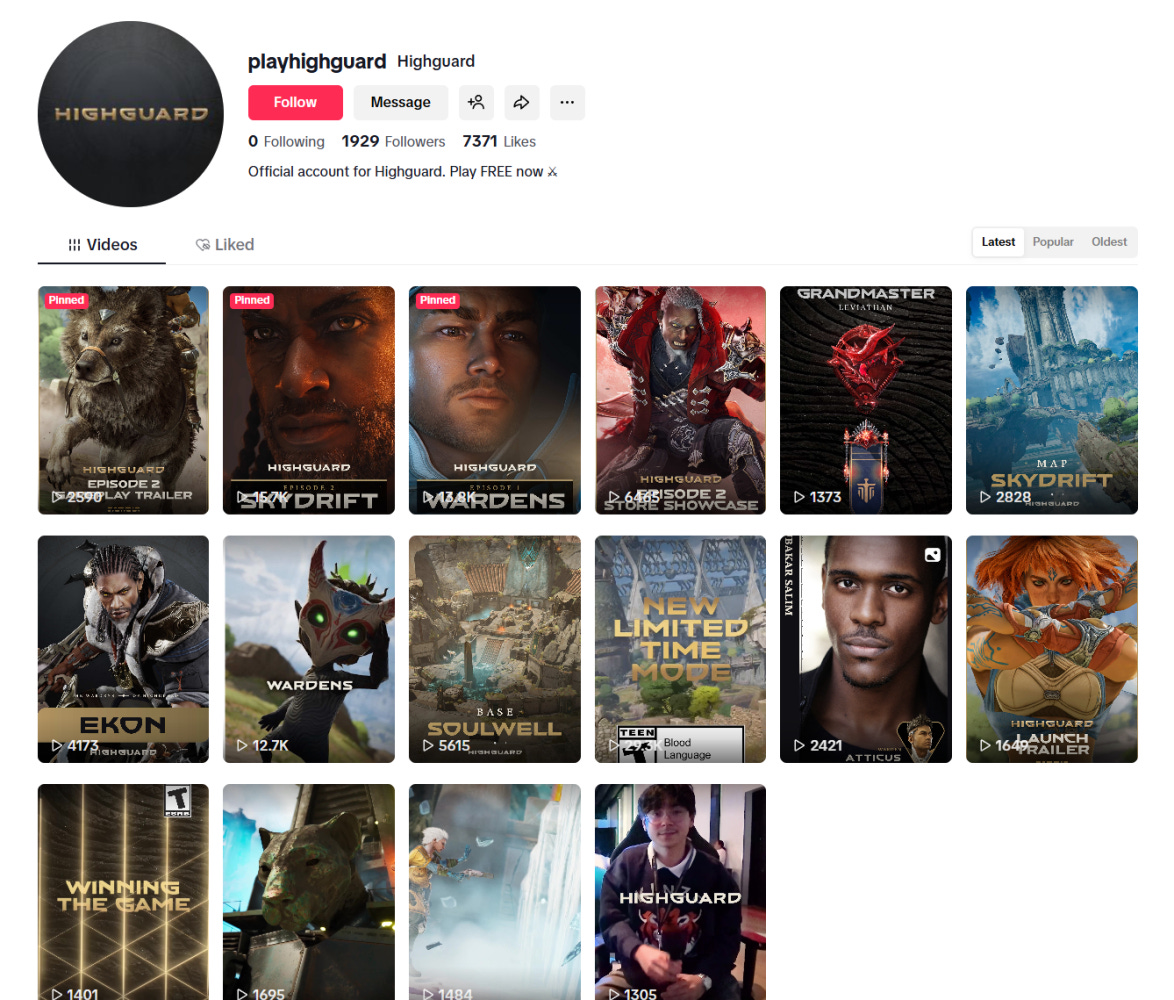
TikTok tells a similar story. Owned content is how you set tone, it’s how you establish repeatable formats, it’s how you teach the community what to clip, what to remix, what hashtags to use, what counts as a “moment.” On Highguard‘s official TikTok, there were 14 videos. Crimson Desert already has 30+. The number itself isn’t the point, the implication is. If you’re barely producing content on the platform where discovery actually happens in 2026, you’re asking the 1% to invent the ecosystem from scratch… while the algorithm is already moving on.
YouTube is the same pattern but with runway. With Highguard, meaningful owned content on YouTube showed up very close to launch, basically at the last minute. With Crimson Desert, the first major trailer moment was years ago, and that early content has had time to sit in the ecosystem and compound. That doesn’t guarantee success, nothing does. But it’s a meaningful difference in how each game entered the content economy… early versus late, compounding versus cold-starting.
The Lesson Isn’t “The Internet Was Mean”
Here’s where I want to land this.
The lesson from Highguard isn’t that the internet can be cruel. We already know that. The lesson is that if you don’t build the 1%… the only people left to define the story are the people who want to clown on you.
Josh is right about one thing that’s awkward to say out loud… negativity performs. Ragebait travels. He saw it firsthand, negative content about Highguard got 10x the engagement of positive content, and that ratio isn’t a fluke, that’s how the attention economy works.
But the response can’t be “please be nicer.” The response has to be… build enough positive content supply that negativity doesn’t get to be the only thing in the feed. That’s the work. Community investment. Micro-influencers. Being grungy early. Giving creators a reason to care before the big moment… not after. Because buying attention for a week is not the same thing as building a community.
Paid spikes are flash-in-the-pan. We showed that in the first Highguard piece, and the Twitch cliff told the story as clearly as any chart could. But communities compound, and the compounding is the whole game.
If you want to win the attention economy in 2026, you can’t just track attention. You have to make sure you have a healthy supply of creators on the other side… the 1%… the people who will produce enough content to feed the 90% long enough for discovery to actually happen.
That’s the difference between a launch moment… and a launch floor.
Pearl Abyss spent a decade learning that lesson inside Black Desert. Crimson Desert is the bet that the lesson transfers. Highguard is the reminder of what happens when you skip it.